Summary
Sleep trackers under the microscope
What is a sleep tracker? A sleep tracker uses various sensors to record data such as movement, heart rate and breathing rate, and uses this to estimate, amongst other things, sleep duration and sleep stages.
What are the benefits of a sleep tracker? A sleep tracker can help you gain a better understanding of your own sleep and highlight links between sleep, stress, exercise and other habits.
What data is measured? Modern sleep trackers record, amongst other things, sleep duration, heart rate, heart rate variability (HRV), respiratory rate and, in some cases, skin temperature or oxygen saturation.
What are the limitations of sleep trackers? Sleep trackers are no substitute for a medical diagnosis or a sleep laboratory. Furthermore, individual readings or sleep scores can be misinterpreted and should therefore not be overestimated.
Where does my sleep data go? The recorded data is usually stored in the manufacturer’s app and, in some cases, processed on servers. Before using the device, it is worth checking the privacy settings and privacy policy.
What is a sleep tracker and how does it work?
More and more people are using so-called wearables to track their sleep. These include, for example, smartwatches, fitness trackers and smart rings. These devices record various physiological data throughout the night and provide information on sleep duration, sleep patterns, periods of wakefulness during the night and other parameters.
The key difference compared to a sleep laboratory study is that sleep trackers do not measure brain activity. Instead, they combine several sensors with the manufacturer’s own algorithms to draw conclusions about sleep.
Depending on the device, different measurement methods are used:
- Motion sensors (accelerometers): These record movements during the night. Longer periods of stillness are interpreted as sleep, whilst frequent turning or getting up are interpreted as periods of wakefulness.
- Heart rate sensors: These continuously measure the pulse. As the heart rate changes during the different stages of sleep, this data can be used to draw conclusions about sleep.
- Heart rate variability (HRV): The variations in the time between individual heartbeats provide an indication of how active the autonomic nervous system is. This information is also factored into the calculation of sleep data.
- Other sensors: Some devices also monitor skin temperature, blood oxygen saturation (SpO₂) or respiratory rate. Some smartphone apps also use the microphone to record snoring or other ambient noises.
Important to know: Sleep trackers measure movement, heart rate and, depending on the model, a few other physiological parameters. Sleep stages, sleep scores and recovery metrics are estimated using algorithms that manufacturers do not disclose.
In a sleep laboratory, by contrast, sleep stages are determined using electroencephalography (EEG), which records brain activity. Information on light, deep and REM sleep is therefore based on estimates rather than actual measurements.
What are the benefits of sleep tracking?
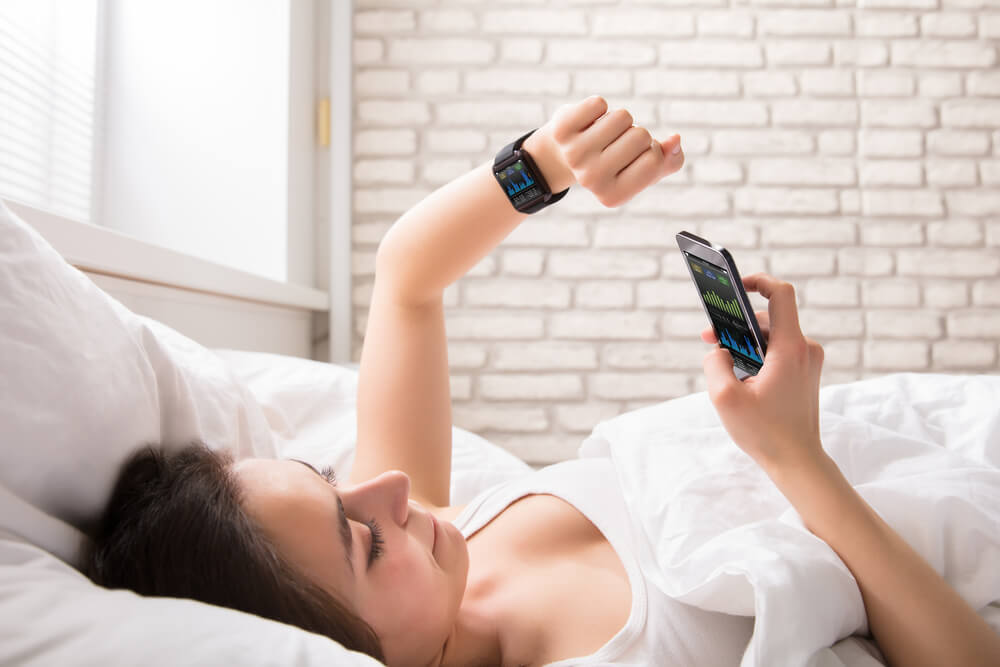
Sleep tracking can help you to better understand your own sleep habits. Many people misjudge the duration or quality of their sleep compared to what it actually is. Regular recording allows patterns to be identified that often go unnoticed in everyday life – such as the impact of stress, exercise, alcohol or irregular bedtimes on sleep.
Sleep tracking is particularly helpful when data is collected over a longer period. Individual nights can be affected by stress, illness or travel and are therefore usually not very meaningful.
Sleep trackers can, amongst other things, help you
- better understand your own sleep patterns
- identify the impact of exercise, stress or alcohol on sleep
- observe changes in sleep habits over weeks or months
- track the success of measures to improve sleep hygiene, and
- better describe your sleep habits when discussing them with a doctor
Studies suggest that sleep trackers can boost health awareness and help people develop healthier sleep habits. However, there is as yet no clear scientific evidence that sleep trackers alone improve sleep quality.
Which sleep tracker is best for me?
Sleep trackers come in various designs. The most common types are smartwatches, fitness trackers, smart rings and contactless sleep sensors. They all share the same aim – to monitor sleep as accurately as possible – but differ in terms of measurement methods, comfort and additional features.
| Type of sleep tracker | Advantages | Disadvantages | Particularly suitable for |
|---|---|---|---|
| Smartwatch | As well as sleep, it also tracks heart rate, activity, exercise and often other health data such as skin temperature or oxygen saturation. | Needs to be charged regularly and not everyone finds it comfortable to wear at night. | People who want to keep a holistic eye on their health and physical activity. |
| Fitness tracker | Often cheaper than a smartwatch, with long battery life and good sleep and activity tracking. | Smaller display and fewer health or smartwatch features. | Beginners and people who want to track their sleep and activity in a straightforward way. |
| Smart ring | Small, lightweight and often more comfortable to wear than a watch. Many models are specifically designed for sleep and recovery data and have a long battery life. | Fewer features for sport or notifications | People who want to monitor their sleep as comfortably and discreetly as possible. |
| Contactless sleep sensor | Measures sleep without a device on the body, for example via a sensor placed under the mattress. | Suitable only for sleep tracking and cannot be used whilst on the move. For double beds, measurement may be limited depending on the model. | People who do not want to wear a watch or a ring at night. |
There is no single ‘best’ sleep tracker, as it needs to suit your needs. If you want to track your activity and exercise as well as your sleep, a smartwatch is usually a good choice. Smart rings are particularly suitable for people looking for the most comfortable solution possible. Contactless sleep sensors, on the other hand, are a good choice if you do not want to wear a device whilst sleeping.
Smartphone apps can also be a useful addition. They are usually designed to analyse the recorded data and present it clearly. There are also apps that analyse sleep using only your smartphone – for example, by measuring movement or noise. These can give you an initial impression of your sleep patterns, but generally provide less meaningful results than wearables or dedicated sleep sensors.
Regardless of the device, the best sleep tracker is the one you use regularly. Individual readings or a low sleep score should not be overemphasised. What matters most is recognising long-term changes and recurring patterns in order to better understand your own sleep and sleeping habits.
What data is measured and what does it mean?
Depending on the device, sleep trackers record a wide variety of different metrics. Not all of these are measured directly; some are calculated or estimated from the recorded data.
| Metric | What does it mean? |
|---|---|
| Sleep duration | Indicates how long you have slept in total. |
| Time taken to fall asleep | Shows how long it takes you to fall asleep after going to bed. It is normal to take a little longer to fall asleep from time to time. |
| Waking periods | Short periods of wakefulness during the night are part of normal sleep. However, frequent or prolonged awakenings can impair sleep quality. |
| Light, deep and REM sleep | Sleep trackers estimate the distribution of the individual sleep stages based on movement and body data. |
| Heart rate | Your heart rate usually drops whilst you’re asleep. Changes can be influenced by factors such as stress, alcohol, illness or physical exertion. |
| Heart rate variability (HRV) | HRV describes the time intervals between individual heartbeats. It provides an indication of how well the body is recovering from stress. It is particularly meaningful when compared with one’s own values over a longer period of time. |
| Respiratory rate | Some devices measure how often you breathe per minute. Noticeable changes may indicate health problems, but they are no substitute for a medical examination. |
| Oxygen saturation (SpO₂) | Some sleep trackers measure the oxygen level in the blood. Repeatedly low readings may be an indication of sleep-related breathing disorders, but do not in themselves allow a diagnosis to be made. |
| Skin temperature | Changes in skin temperature can be influenced by factors such as infections, the menstrual cycle or the sleeping environment. |
| Sleep score | Many manufacturers combine various measurements into an overall score. However, how this score is calculated varies from device to device and is therefore best suited for comparisons within the same system. |
Most measurements are most meaningful when viewed over time. Individual nights should therefore not be over-interpreted. Only when recurring patterns emerge over several weeks can the data provide helpful insights.
How accurate are sleep trackers?
Modern sleep trackers are now significantly more accurate than they were a few years ago. Accuracy depends heavily on which metric you are looking at. The basic distinction between sleeping and being awake, as well as the question of when and for how long you slept, works best. Things become significantly less reliable when it comes to the time taken to fall asleep and the breakdown into individual sleep stages.
Sleep trackers do not measure everything with the same level of accuracy
| fairly reliable | To be interpreted with caution |
|---|---|
| Sleep duration | Deep sleep |
| Sleep-wake cycle | REM sleep |
| Heart rate | Light sleep |
| Respiratory rate | Sleep score |
Can a sleep tracker detect sleep apnoea?
A sleep tracker can indicate an increased risk of sleep apnoea, but cannot reliably detect or diagnose sleep apnoea. Modern sleep trackers measure, amongst other things, oxygen saturation (SpO₂), respiratory rate, heart rate, movements and, in some cases, snoring sounds. Any abnormalities may indicate an increased risk of sleep-related breathing disorders, but are not sufficient for a diagnosis.
Sleep apnoea is characterised by repeated pauses in breathing during sleep. These can lead, amongst other things, to brief awakenings and a drop in blood oxygen saturation, causing sleep to be repeatedly interrupted – often without the person affected being aware of it. However, to diagnose sleep apnoea with certainty, specialised tests are required, such as an outpatient sleep study at home (polygraphy) or an examination in a sleep laboratory (polysomnography).
Some manufacturers now offer features that may indicate an increased risk of sleep apnoea. Such indications may be a reason to seek medical advice to investigate any symptoms. However, a normal sleep tracker recording does not rule out sleep apnoea, just as abnormal readings do not definitively confirm the condition.
Seek medical advice about sleep problems if you also experience typical symptoms, such as:
- loud, regular snoring
- observed pauses in breathing during sleep
- severe daytime tiredness or a tendency to fall asleep
- morning headaches
- problems with concentration or memory
If you experience several of these symptoms, you should seek medical advice regardless of the data from your sleep tracker.
What are the benefits of a sleep tracker?
A sleep tracker does not improve your sleep on its own. However, it can help you better understand your own sleep patterns and identify habits that affect the quality of your sleep. Whether your sleep actually improves ultimately depends on whether the insights gained lead to changes in your daily routine.
The biggest benefit of a sleep tracker is that it highlights connections that often go unnoticed in daily life. For example, it can help you see how stress, exercise, alcohol, caffeine or irregular bedtimes affect your sleep.
Here’s what sleep tracking can offer you in your daily life
Documenting changes: Sleep trackers help you monitor trends over several weeks or months and can support discussions with a doctor.
Gain a better understanding of your sleep pattern: Sleep trackers show when you fall asleep, how long you sleep and how regular your sleep pattern is. This makes it easier to spot changes or unhealthy habits.
Recognising the influence of lifestyle: The recorded data helps you better understand the links between sleep and factors such as stress, exercise, alcohol, caffeine or irregular bedtimes.
Promoting healthy habits: Regular sleep tracking makes many people more mindful of their sleep. This can, for example, motivate them to go to bed at a more regular time, improve their evening routine or avoid alcohol and caffeine in the evening.
Assessing recovery and training more effectively: In addition to sleep, many smartwatches and smart rings also track heart rate, heart rate variability (HRV), activity and training load. This makes it easier to assess how well the body is recovering from physical or mental strain.
Limitations of sleep trackers: What they cannot do
Sleep trackers provide valuable information about your own sleep patterns, but they are no substitute for a medical examination or diagnosis.
Identifying sleep disorders
Sleep trackers can provide indications of abnormalities, but cannot reliably diagnose a sleep disorder such as sleep apnoea or chronic insomnia. If you experience persistent sleep problems, severe daytime tiredness or suspect you may have a sleep disorder, you should therefore always seek medical advice.
Measuring sleep perfectly
Even modern sleep trackers have their limitations. Data on light, deep and REM sleep, as well as the sleep score, are based on calculations and should therefore be treated as a guide. It is not so much the result of a single night that matters, but rather the trend over a longer period.
When sleep tracking becomes a source of stress
For some people, sleep trackers can create additional pressure. Those who focus too much on sleep scores or individual readings may end up worrying unnecessarily – even if their sleep is objectively sufficient. Experts refer to this phenomenon as orthosomnia. Sleep trackers should therefore help you to better understand your sleep and not lead you to feel the need to sleep as perfectly as possible every night.
Where does my sleep data go?
Sleep trackers record a wide range of personal health data every night. This information is initially stored on the device and then usually synchronised with the manufacturer’s app. Depending on the provider, the data is also stored on servers so that sleep patterns can be analysed over a longer period.
The stored data is used, amongst other things, to:
- displaying sleep patterns and statistics
- to provide personalised analyses and recommendations
- to develop new features
- further improving the sleep tracker’s algorithms
Depending on the provider, anonymised or pseudonymised data may also be used for scientific studies or for the further development of algorithms and products. Whether and to what extent this occurs is governed by the respective manufacturer’s privacy policy.
What should you bear in mind?
Before using a sleep tracker, it’s worth taking a look at the privacy settings. The following questions are particularly important:
- Where is my data stored? Depending on the manufacturer, the servers may be located either within or outside the European Union.
- What data is collected? Some devices store only sleep data, whilst others also record activity, heart rate, location or other health data.
- Who has access to the data? You can often decide for yourself whether data is shared with other apps or health platforms.
Sleep data is classified as health data and is therefore particularly worthy of protection. Within the European Union, manufacturers must comply with the requirements of the General Data Protection Regulation (GDPR). Nevertheless, it is worth checking your privacy settings regularly.
What role does artificial intelligence play in sleep trackers?
The analysis of sleep data has always been based on machine learning algorithms; it is not the method that is new, but the volume of signals processed simultaneously. In the past, devices primarily analysed movement patterns; today, heart rate, HRV, respiratory rate, skin temperature and the temporal progression throughout the night are all incorporated into the analysis.
This enables modern devices to detect changes over time more reliably and to illustrate the relationships between sleep, stress and recovery.
One limitation remains, however: even a better model does not overcome the limitations of the sensor technology. Deep sleep, as defined by an EEG, cannot be reliably reconstructed from heart rate and movement at the wrist – regardless of how powerful the algorithm is. The missing information cannot be calculated retrospectively.
Furthermore, manufacturers’ models are not disclosed and are generally not independently verified. Recommendations made by an app regarding sleep hygiene or recovery are based on statistical correlations in the available data, rather than on an assessment of you as an individual.
FAQ
Sleep trackers do not measure deep sleep directly, but estimate it on the basis of movement, heart rate and other physiological data. In a sleep laboratory, on the other hand, sleep stages are determined using an electroencephalogram (EEG), which records brain activity. The data on deep sleep may therefore differ from the actual sleep stages and should be regarded as a guide. However, they are certainly helpful for monitoring long-term changes.
Sleep trackers can provide indications of changes in sleep patterns, but they cannot reliably detect or diagnose a sleep disorder. In the event of persistent sleep problems, severe daytime tiredness or a suspected condition such as sleep apnoea or insomnia, a medical assessment should always be carried out. Sleep trackers can usefully complement a medical examination, but they cannot replace it.
No. In a sleep laboratory, brain activity, eye movements and muscle tension are measured alongside heart rate and breathing. This allows sleep stages and sleep disorders to be assessed much more accurately. Sleep trackers are particularly useful for monitoring sleep in everyday life over a longer period, but they are no substitute for professional diagnosis.
Yes, in some cases. If you focus too much on sleep scores or individual readings, you may feel unnecessary pressure as a result. Experts refer to this as orthosomnia. Sleep trackers should therefore be seen as a tool for identifying long-term trends – not for assessing every single night.
A sleep score can be a useful guide, but it should not be overrated. The way the score is calculated varies from manufacturer to manufacturer. More important than the sleep score for a single night is how the scores develop over several weeks and whether you feel rested and able to perform well during the day.
Every manufacturer uses its own sensors and algorithms to analyse sleep data. This is why a smartwatch, smart ring or sleep sensor may display different figures for deep sleep, REM sleep or the sleep score for the same night. Such variations are normal and do not necessarily mean that a device is measuring incorrectly.
If you want to identify long-term changes, you should wear or use the sleep tracker as regularly as possible. However, the occasional night without a reading is not a problem. The key is to collect sufficient data over a longer period of time.
That depends on personal preference. Whilst many people hardly notice a smartwatch or ring at night, others find wearing one uncomfortable. In that case, a contactless sleep sensor placed under the mattress can be a good alternative.
Yes, the recorded sleep data can help to provide a clearer picture of sleep patterns or changes. It can usefully supplement a consultation with a doctor, but it is no substitute for a medical examination or diagnosis.
Not necessarily. From a medical point of view, anyone who sleeps well on a regular basis, feels refreshed during the day and has no health issues does not need a sleep tracker. Many people use one nonetheless, to gain a better understanding of their sleep habits or to observe the link between sleep, exercise and recovery.


https://www.dak.de/dak/gesundheit/koerper-seele/schlaf/schlaftracker_144850, accessed July 2026
https://kaernten.orf.at/radio/stories/3344143/, accessed July 2026
https://www.lungenliga.ch/blog/diagnose-schlafapnoe-am-handgelenk, accessed July 2026
https://www.focus.de/gesundheit/gesundleben/lohnt-sich-nicht-immer-mediziner-erklaeren-ob-schlaftracking-wirklich-sinnvoll-ist_ef28b80e-7e09-41d3-badf-97aa9888776d.html, accessed July 2026
https://www.derstandard.at/story/3000000173532/wann-sie-ihren-schlaf-tracken-sollten-und-wann-besser-nicht, accessed July 2026
https://www.bsi.bund.de/DE/Themen/Verbraucherinnen-und-Verbraucher/Informationen-und-Empfehlungen/Internet-der-Dinge-Smart-leben/Smart-Home/Wearables/wearables_node.html, accessed July 2026
https://pmc.ncbi.nlm.nih.gov/articles/PMC12038347/, accessed July 2026
https://www.hopkinsmedicine.org/health/wellness-and-prevention/do-sleep-trackers-really-work, accessed July 2026
https://health.clevelandclinic.org/sleep-tracking, accessed July 2026
https://pmc.ncbi.nlm.nih.gov/articles/PMC6579636/?, accessed July 2026