Summary
Perimenopause
Definition:
The period from before the menopause (the time of the last menstrual period) up to one year after the menopause
Signs and symptoms: hot flushes, night sweats, breast tenderness, water retention, headaches, irregular or disrupted periods, vaginal dryness, joint pain, muscle aches, weight gain, digestive problems; sleep disturbances, tiredness, difficulty concentrating (‘brain fog’), mood swings, irritability, low mood, loss of sexual desire, dyspareunia,…
Coping strategies and treatment: a balanced, nutrient-rich and low-irritant diet, exercise (particularly strength training), sleep hygiene, dietary supplements; non-hormonal medication: fezolinetant, gabapentin, certain antidepressants; hormone replacement therapy (HRT)
What is perimenopause?
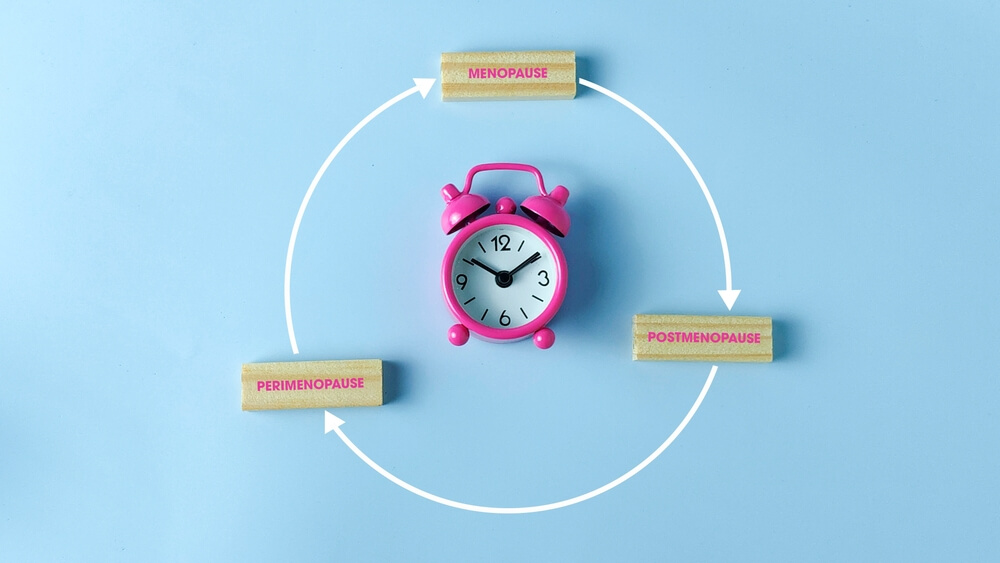
Your period changes, your nights become more restless, or you suddenly experience hot flushes: these are some of the ways perimenopause can make itself felt. Perimenopause is the transitional phase surrounding the menopause, during which the ovaries’ hormone production changes. Levels of oestrogen and progesterone become increasingly fluctuating. This can affect your periods, sleep and general well-being.
The onset and duration of perimenopause vary greatly from person to person. Not every woman experiences pronounced symptoms, and not every symptom can be clearly attributed to hormones. The onset and duration also vary: perimenopause usually begins in a woman’s 40s and lasts for several years.
If such changes to the menstrual cycle occur before the age of 40, this should be investigated by a doctor. According to the standard definition, this transitional phase ends twelve months after the last period. Until then, ovulation – and therefore pregnancy – remains possible.
At what age does perimenopause begin?
Perimenopause usually begins in one’s 40s, though for some women it can start as early as their late 30s. It often lasts for several years. If changes to the menstrual cycle or possible menopausal symptoms occur before the age of 40, these should be investigated by a doctor. Among other things, the doctor will check for premature ovarian insufficiency (POI), i.e. a premature decline in ovarian function. According to the standard definition, perimenopause ends one year after the last menstrual period.
What are the first signs of perimenopause?
You may find that your period suddenly comes earlier than usual. Or you may lie awake at night even though you are tired, and feel more irritable in your day-to-day life. Perimenopause can manifest itself in various ways. Some women initially notice only minor changes, whilst others feel significantly affected by the symptoms. Many women affected report:
Changes in sleep, concentration and mood:
- Sleep disturbances and tiredness
- Difficulty concentrating (brain fog)
- Mood swings and irritability
- Depressive moods
Physical changes:
- Breast tenderness
- Water retention
- Headaches
- Shorter or longer cycles
- Irregular bleeding
- Changes in bleeding (heavier or lighter, sometimes including breakthrough bleeding)
- Hot flushes
- sudden bouts of sweating, including at night
- Joint and muscle pain
- Changes to the skin, hair and mucous membranes, for example vaginal dryness
- Weight gain
- Digestive problems
Not all of the symptoms listed are typical early signs or can be definitively attributed to perimenopause. Particularly heavy bleeding and breakthrough bleeding should be investigated by a gynaecologist.
What symptoms can occur during perimenopause?
During perimenopause, a woman’s hormonal balance shifts. Oestrogen levels fluctuate significantly and decline as perimenopause progresses. As ovulation occurs less frequently, less progesterone is produced during these cycles. The concentration of follicle-stimulating hormone (FSH) tends to rise, but may also fluctuate. This can have numerous effects:
Changes to the menstrual cycle and bleeding
Due to the significant fluctuations in hormone levels, menstrual bleeding may become less frequent. Heavier bleeding (hypermenorrhoea) or prolonged bleeding are also possible. There is no fixed pattern to these changes.
Although changes in bleeding patterns can be a normal part of perimenopause, you should seek gynaecological advice if you experience particularly heavy or prolonged bleeding, or breakthrough bleeding. In early perimenopause, menstrual cycles become increasingly variable. A characteristic feature is the repeated occurrence of differences of at least seven days between consecutive cycle lengths. In late perimenopause, hormone levels continue to fluctuate; ovulation often ceases and there are significant variations in cycle length (which may then exceed 60 days).
Hot flushes and sweating
A sudden, intense sensation of heat spreads, particularly across the face, neck and upper body. This may be accompanied by sweating, sometimes followed by a feeling of chill. At night, such episodes can disrupt sleep. The frequency and intensity vary from woman to woman.
Sleep disturbances
Difficulty falling asleep and staying asleep are also common problems experienced by women going through perimenopause.
Brain fog
Recently, research has increasingly focused on the phenomenon of ‘brain fog’, which refers to cognitive difficulties that are also recognised as symptoms of other conditions, such as pain, post-viral syndromes or sleep disorders. Brain fog is often associated with the feeling of being unable to think clearly and forgetting even the simplest things. Specifically, these often involve attention and memory problems that can affect daily life and quality of life. However, these are not symptoms of early-onset dementia, and the symptoms are typically mild, variable and temporary.
Symptoms in the genital area and when passing urine
Vaginal dryness can lead to a burning sensation, irritation or pain during sex. Frequent urges to urinate, recurrent urinary tract infections or involuntary urine leakage may also occur. Sexual desire may also change. Such symptoms can begin as early as the perimenopausal phase, but often only become more pronounced later on.
Other possible symptoms include headaches, muscle and joint pain, and breast tenderness. Not every change is caused by hormones. It is therefore also important to consider whether symptoms are new, persistent or causing you distress in your daily life.
Why do hormone levels change during perimenopause?
Behind these hormonal changes lies a natural ageing process: the supply of egg cells, known as follicles, decreases over the course of a woman’s life. During perimenopause, this causes the interplay of hormones that previously regulated your cycle to become increasingly irregular.
The pituitary gland releases increased levels of follicle-stimulating hormone (FSH). This stimulates the remaining follicles to grow and produce oestrogen. As a result, oestrogen levels do not initially fall at a steady rate. At times, they may even be higher than before and fluctuate significantly from one cycle to the next.
At the same time, ovulation is more frequently absent. Consequently, no corpus luteum forms, which normally produces progesterone after ovulation. The usual rise in this hormone during the second half of the cycle therefore does not occur. In this situation, the cycle becomes more irregular. Bleeding may last for a shorter time than usual, or, conversely, it may last significantly longer. The intervals between periods may also become longer, and other symptoms, as described above, may occur.
Hormone status: Diagnosing perimenopause
Hormone levels are determined by a blood test. Depending on the specific issue being investigated, the test may measure follicle-stimulating hormone (FSH), luteinising hormone (LH), oestradiol and progesterone. However, these values only reflect a snapshot in time, as hormone levels fluctuate significantly during perimenopause.
For women aged 45 and over with typical symptoms, a hormone profile is therefore not usually necessary. Doctors primarily recognise perimenopause on the basis of age, typical symptoms and changes to the menstrual cycle. Other possible causes are investigated if necessary. In younger women, targeted hormone tests, particularly for FSH, may be useful for diagnosis.
What helps with symptoms during perimenopause?
Not all women experience symptoms during perimenopause, but when they do occur, there are a number of steps that can be taken to alleviate them:
Diet
As we get older, the body’s fat mass, water content and muscle mass also change. Fat increases, whilst water and muscle mass decrease, leading to a lower energy requirement.
It is now particularly important to eat a balanced and nutrient-rich diet. Eat wholegrain products, plenty of protein, fruit and vegetables, as well as vegetable oils containing unsaturated fatty acids. Drink plenty of water or unsweetened drinks. Calcium, found in dairy products for example, is also important for bone health. Choose wholegrain products over white flour products and cut down on foods high in sugar. You should give up smoking and avoid alcohol as much as possible.
Exercise
As muscle mass and strength can decline with age, it is important to counteract this through regular exercise tailored to your own fitness level. Strength training in particular can help maintain muscle mass and support bone health. Combined with endurance exercise, it promotes cardiovascular health, metabolism and mental wellbeing. It can also improve the quality of your sleep.

Non-hormonal medicines
If hormone therapy is not an option or is not desired, non-hormonal medicines can be an alternative. They are not used exclusively for mild symptoms. The active ingredient fezolinetant has recently been used to treat hot flushes. It acts specifically on the thermoregulatory centres in the brain, thereby preventing the problem from arising in the first place.
Gabapentin (a medicine used to treat epilepsy) can also relieve hot flushes and night sweats. Certain antidepressants in low doses are also used; these help with mood swings and depressive moods and can improve sleep.
Hormone replacement therapy (HRT)
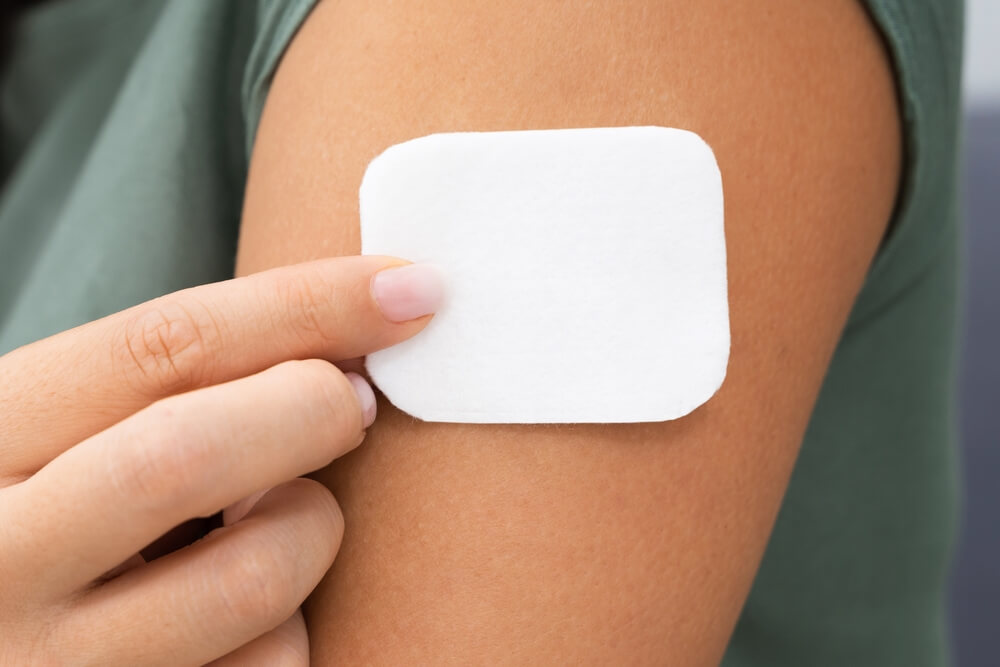
HRT may be considered for severe menopausal symptoms following an individual assessment of the benefits and risks. It is particularly effective against hot flushes and night sweats. associated sleep problems may also improve. Furthermore, it can alleviate other symptoms such as mood swings, sleep disturbances, ‘brain fog’, urogenital symptoms and loss of libido. Today, so-called bioidentical hormones are primarily used; their chemical molecular structure is identical to that of the body’s own hormones.
Dietary supplements and herbal preparations
Dietary supplements can help the body to balance out the effects of the sharply fluctuating oestrogen and progesterone levels experienced during perimenopause. For example, magnesium is said to improve the nervous system, sleep and muscle relaxation. Vitamins D3 and K2 can support bone health, the immune system and mood. Monk’s pepper is primarily used for premenstrual symptoms; there is insufficient evidence to support its effectiveness against hot flushes and night sweats. Certain black cohosh extracts are used as herbal remedies for menopausal symptoms. However, the results cannot be generalised to every preparation. Herbal remedies can also have side effects and interactions.
Hormone therapy during perimenopause: when is it an option?
Hormone replacement therapy during perimenopause may be considered if the hormonal changes lead to a significant impairment of quality of life. Following an individual assessment of the benefits and risks, it may be appropriate for:
- severe symptoms such as pronounced hot flushes and night sweats
- sleep disturbances associated with menopausal symptoms
- depressive moods occurring in conjunction with other menopausal symptoms. Depression requiring treatment necessitates a separate assessment and course of treatment.
- Other symptoms such as vaginal dryness, itching, pain during sexual intercourse or recurrent urinary tract infections.
Systemic hormone therapy also protects against bone loss. In selected cases, it may be considered for the prevention of osteoporosis. However, it is not a blanket preventative measure for all women in the perimenopausal phase and is usually not the first-line treatment for existing osteoporosis.
Hormone therapy can effectively alleviate distressing symptoms. For many healthy women approaching the menopause, the benefits outweigh the risks. However, these depend on personal medical history, the hormones used, the route of administration and the duration of treatment. Combined oestrogen-progestogen therapy may increase the risk of breast cancer, particularly with long-term use. Oestrogen administered through the skin carries a lower risk of thrombosis than when taken as a tablet. The doctor will always discuss on a case-by-case basis which treatment is suitable for the patient.
When should you seek medical advice about symptoms?
It is always advisable to consult a gynaecologist if the symptoms significantly impair your quality of life, if the symptoms are severe, or if warning signs appear. It is also important to see a doctor because many symptoms that occur during the perimenopause may also be caused by other medical conditions.
Contact your doctor immediately if:
- you experience unusually heavy or prolonged bleeding
- you experience repeated breakthrough or spotting
- bleeding resumes after at least twelve months without a period
- you are troubled by severe depressive moods, feelings of anxiety or panic attacks
- you suffer from new or recurring palpitations, shortness of breath or dizziness
- you experience severe joint or muscle pain
- you gain or lose a significant amount of weight for no apparent reason
- you are experiencing a high level of distress
- typical symptoms occur before the age of 40.
In the event of acute, severe shortness of breath, chest pain, fainting or very heavy bleeding accompanied by circulatory problems, call the emergency services on 144. If you are having suicidal thoughts, you should seek help immediately, for example by calling the telephone counselling service on 142. If you are in immediate danger to yourself, dial 144.
FAQ
Yes, taking the combined contraceptive pill can mask many of the typical symptoms of perimenopause. These include, in particular, changes to the menstrual cycle and hormonal fluctuations, although hot flushes and sleep disturbances may still occur.
For women who suffer from PMS as such, the symptoms may either worsen or ease during perimenopause. This is due to fluctuating hormone levels, as oestrogen and progesterone do not decline at a steady rate during perimenopause, and these fluctuations also affect mental well-being.
Yes, migraines can become noticeably worse during perimenopause. Women affected report more frequent, more intense or longer-lasting migraine attacks. This is also linked to the significant hormonal fluctuations and, in particular, the drop in oestrogen levels during this period, as oestrogen also influences pain processing in the brain and can trigger attacks. However, other perimenopausal symptoms such as hot flushes, sleep disturbances and mood swings can also act as indirect triggers for migraines.
There is no single, reliable test that can confirm perimenopause. Tests available from pharmacies or blood tests carried out by a doctor usually measure follicle-stimulating hormone (FSH) and only provide a snapshot of the current situation. Doctors diagnose perimenopause primarily on the basis of the individual’s circumstances, symptoms and menstrual cycle.
There is some evidence to suggest that creatine may help with brain fog, as it plays an important role in supplying energy to brain cells. Research shows that creatine supplementation can increase creatine levels in the brain, which could explain some of the positive effects on memory and concentration. However, the results of studies to date are not sufficient to prove any definite benefit.
During perimenopause, the metabolism changes and the body’s need for certain nutrients increases. For this reason, taking micronutrients can be beneficial. Magnesium helps with sleep disturbances and migraines. Vitamins D3 and K2 promote calcium absorption and thus help protect bones against the risk of osteoporosis. Vitamin B6 can help with mood swings and irritability. Omega-3 fatty acids support cardiovascular health and can alleviate joint pain and mood swings. Zinc and selenium are important for thyroid function, which often becomes unbalanced during perimenopause.
Herbal remedies often contain phytoestrogens, which have a similar effect in the body to the body’s own oestrogen, albeit a weaker one. Examples include black cohosh, red clover and soya isoflavones, which can have a beneficial effect on hot flushes, night sweats and inner restlessness; as well as monk’s pepper, which is recommended for breast tenderness and menstrual cycle irregularities; St John’s wort, which can help with depressive moods, as well as sage for night-time sweating and valerian for calming and to help with sleep problems.
As well as herbal remedies such as herbal teas made from hops, lemon balm, lavender or sage to combat hot flushes and restlessness, the experts particularly recommend alternating hot and cold showers, which strengthen the blood vessels and improve thermoregulation, a suitable diet consisting of light meals, good sleep hygiene, mindful breathing exercises, and reducing or avoiding coffee and alcohol.
For hot flushes during perimenopause, the range of treatments extends from simple home remedies (contrast showers, herbal teas, etc.) to herbal remedies such as black cohosh, sage, phytoestrogens, … to medical interventions such as hormone replacement therapy or the use of certain antidepressants or so-called neurokinin-3 receptor antagonists.


Lasch, L et al: Basic Gynaecology and Obstetrics, Springer Berlin Heidelberg 2017.
Perimenopause and Postmenopause – Diagnosis and Interventions: ‘
https://register.awmf.org/assets/guidelines/015-062l_S3_HT_Peri-Postmenopause-Diagnostik-Interventionen_2021-01.pdf
’ guideline
, Accessed September 2026
https://www.gesundheit.gv.at/krankheiten/sexualorgane/weibliche-hormone-zyklus/wechseljahre-koerper-hormone.html, accessed September 2026
https://www.deutsche-apotheker-zeitung.de/news/artikel/2024/10/07/perimenopause-achterbahnfahrt-der-hormone, accessed September 2026
https://medizin-transparent.at/kreatin-gehirn/, accessed September 2026
Forbes SC et al: Effects of Creatine Supplementation on Brain Function and Health. Nutrients. 22 February 2022;14(5):921. doi: 10.3390/nu14050921. PMID: 35267907; PMCID: PMC8912287.
https://pmc.ncbi.nlm.nih.gov/articles/PMC8912287/
, accessed September 2026
Wegrzynowicz AK et al: Insights into Perimenopause: A Survey of Perceptions, Opinions on Treatment, and Potential Approaches. Women (Basel). March 2025;5(1):4. doi: 10.3390/women5010004. Epub 31 January 2025. PMID: 40264725; PMCID: PMC12014197
https://pmc.ncbi.nlm.nih.gov/articles/PMC12014197/
, accessed September 2026
Duralde ER et al: Management of perimenopausal and menopausal symptoms. BMJ. 8 August 2023;382:e072612. doi: 10.1136/bmj-2022-072612.
https://pubmed.ncbi.nlm.nih.gov/37553173/, accessed September 2026