Summary
Heart attack
Heart attack (myocardial infarction): Blockage of a coronary artery, resulting in a part of the heart muscle no longer receiving an adequate supply of oxygen.
Causes: Usually hardening of the coronary arteries (atherosclerosis). If a deposit (plaque) ruptures or the artery wall is damaged, a blood clot may form and block the artery. Less commonly, the cause may be a spasm of the blood vessel or a blood clot from another blood vessel.
Risk factors: High cholesterol, high blood pressure, diabetes, smoking, being overweight, lack of exercise, an unhealthy diet, advanced age and a family history of the condition
Typical symptoms: Sudden severe pain or a feeling of pressure and tightness in the chest, which may radiate to one or both arms, the neck or the jaw; also shortness of breath, cold sweats, nausea, paleness, restlessness and anxiety. Women may also experience less typical symptoms.
Diagnosis: Electrocardiogram (ECG), blood tests for cardiac markers such as troponin, an ultrasound scan of the heart and, depending on the situation, further imaging tests
Treatment: Rapid restoration of blood flow via a cardiac catheter and stent, medication or bypass surgery
Aftercare: Medication to prevent a further heart attack, treatment of risk factors, regular medical check-ups and cardiac rehabilitation
Prevention: Do not smoke; take regular exercise; follow a balanced diet; maintain a healthy body weight; and manage and treat high blood pressure, diabetes and high cholesterol levels
What is a heart attack?
The human heart is surrounded by blood vessels, which supply it with oxygen. A heart attack, also known as a myocardial infarction, occurs when one of these vessels becomes blocked. A blood clot often forms at a point where the vessel is already narrowed. If a coronary artery or one of its branches becomes blocked, the affected part of the heart muscle no longer receives sufficient oxygen. If the blood supply remains cut off, the heart muscle tissue dies. In a heart attack, the first signs of damage can occur within just a few minutes. The longer the blood supply is disrupted, the more likely it is that tissue will die. The dead tissue leaves scars on the heart, which lie alongside healthy tissue. These changes can lead to cardiac arrhythmias. Severe cardiac arrhythmias can cause the heart to lose its pumping function. In the worst-case scenario, this leads to cardiac arrest. 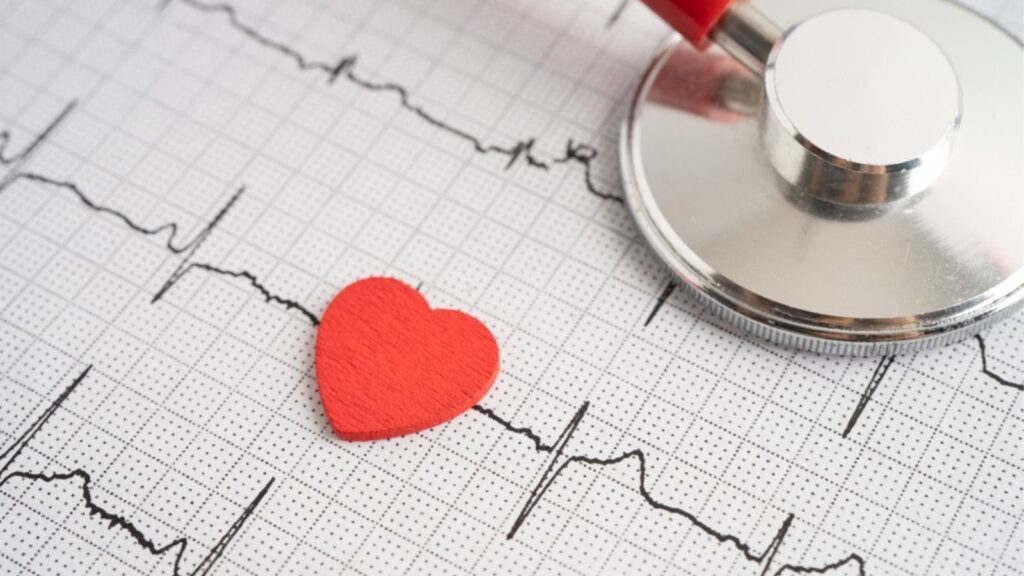
What types of heart attacks are there?
There are different types of heart attacks. These are distinguished on the basis of various characteristics. In hospital, the ECG (electrocardiogram) is primarily examined for changes. This involves measuring the heart’s electrical activity. Based on specific ECG changes, two types are distinguished:
- STEMI (ST-elevation myocardial infarction): The abbreviation stands for ‘ST-Elevation Myocardial Infarction’. In this form, the ECG shows a typical elevation of the so-called ST segment, a specific section of the ECG curve. These heart attacks affect the entire heart wall.
- NSTEMI (non-ST-elevation myocardial infarction): In this form, not the entire heart wall is affected. There are no sustained ST-segment elevations. The ECG may show other changes or be unremarkable. The symptoms and blood tests are therefore also crucial for diagnosis, in particular the measurement of the cardiac marker troponin.
Depending on which part of the heart is affected, a distinction is also made between different types of heart attack:
- Anterior wall infarction: In the most common form of heart attack, a blood vessel supplying the front wall of the heart and parts of the septum is usually affected.
- Posterior wall infarction: Here, the right coronary artery is frequently affected. This can cause damage to the posterior wall of the heart. Parts of the right side of the heart may also be affected.
- Lateral wall infarction: This involves a blood vessel that supplies the side wall of the heart with blood. Parts of the posterior wall may also be damaged.
What causes a heart attack?
A heart attack usually occurs as a result of atherosclerosis (hardening of the arteries). This involves the build-up of fat or other substances on the inside of the coronary arteries, causing them to narrow. This leads to the formation of so-called plaques. The main risk factors include high LDL cholesterol, high blood pressure, smoking and diabetes mellitus. A lack of exercise and poor dietary habits also contribute to the risk. The situation becomes dangerous when a plaque ruptures or its protective surface is damaged. Experts refer to this as a plaque rupture. It is the most common cause of a heart attack. During this process, the substances contained within the plaque are released into the bloodstream. This promotes the formation of blood clots, which can block blood flow through an artery. Another possible cause of a heart attack is plaque erosion. In this process, a blood clot forms on the surface of a damaged plaque. This, too, can block a coronary artery.
Heart attack without narrowed coronary arteries – myocardial infarction
Sometimes patients experience the typical symptoms of a heart attack, even though no significant narrowing of the coronary arteries is detected. Experts refer to this as MINOCA. The abbreviation stands for ‘myocardial infarction with non-obstructive coronary arteries’. Possible causes include a spasm of the coronary arteries or a blockage caused by a blood clot that has travelled to the heart from another part of the body.
How can you prevent a heart attack?
You can reduce your own risk of a heart attack. It is particularly important to live a smoke-free life, take regular exercise and manage risk factors. The following measures protect the heart and blood vessels:
- Do not smoke: Giving up smoking is one of the most effective preventative measures.
- Regular exercise: Walking, cycling or swimming strengthen the cardiovascular system. Getting more exercise in your daily life also helps.
- Eat a heart-healthy diet: Choose vegetables, fruit, whole grains, pulses, nuts and vegetable oils. Limit foods high in salt, sugary drinks and foods high in saturated fats.
- Lose excess weight: Excess abdominal fat in particular can increase your risk. Sustained, gradual weight loss can have a beneficial effect on blood pressure and metabolism.
- Have your blood pressure, blood lipids and blood sugar checked: Elevated levels often go unnoticed for a long time. Preventative check-ups help to detect them at an early stage. Take any prescribed medication regularly.
Other factors, such as age, gender and genetic predisposition, cannot be influenced. The risk of a heart attack increases when several risk factors are present at the same time. The best way to prevent a heart attack is to maintain a healthy lifestyle with a balanced diet and sufficient exercise, and to avoid smoking. Screening tests can also help to identify risk factors that cause little or no symptoms. These include high blood pressure, elevated blood lipid levels or early-stage diabetes. If these risk factors are identified and treated in good time, the risk of a heart attack can be significantly reduced. 
What are the symptoms of a heart attack?
The symptoms of a heart attack can vary from person to person. Certain symptoms also occur with different frequencies in women and men. Chest pain or a feeling of pressure in the chest are common in both sexes. However, women are more likely to experience less typical symptoms, such as nausea, shortness of breath or pain in the back or upper abdomen. Possible symptoms in women and men include:
- sudden, severe pain or a feeling of pressure behind the breastbone (angina pectoris)
- pain that may radiate into one or both arms, the neck or the jaw
- cold sweats and paleness
- A feeling of tightness in the chest
- Nausea
- Shortness of breath
- Restlessness and anxiety
The symptoms may occur suddenly and severely, but may also start off mildly and gradually worsen. They often last for several minutes or disappear temporarily before returning. Sometimes shortness of breath, nausea or pain outside the chest are the main symptoms. If you suspect a heart attack, call the emergency services on 144 immediately. Do not wait to see if the symptoms subside on their own. In rare cases, a heart attack causes no symptoms at all. This is known as a ‘silent heart attack’. It can occur, for example, in people with diabetes. Nerve damage can reduce the sensation of pain.
Heart attacks in women: what’s different?
Heart attacks are sometimes recognised and treated later in women. One reason for this is that symptoms are not always linked to the heart. Furthermore, heart attacks are still often regarded as a typically male condition. This can lead to women underestimating their own risk and seeking medical help too late. You can find out more about the specific characteristics, risk factors and possible reasons for a delayed diagnosis in the article ‘Heart attacks in women’.
How is a heart attack diagnosed?
The most important test when a heart attack is suspected is an ECG (electrocardiogram). This records and displays the electrical signals that trigger the heartbeats. The ECG can provide clues as to exactly where the heart muscle has been damaged. However, a normal ECG on its own does not rule out a heart attack. If necessary, the test is repeated. In addition, the blood is tested for cardiac markers, particularly troponin. This protein is released into the blood in increased amounts when heart muscle cells are damaged. Several measurements are often required to detect changes in the level. The results are assessed in conjunction with the patient’s symptoms and the ECG. If the ECG or blood test does not provide sufficient information, further investigations may be necessary. These include, for example, echocardiography. This can determine whether certain areas of the heart muscle are moving less effectively than others, which may be a consequence of a heart attack. A cardiac catheterisation (coronary angiography) can reveal narrowings and blockages in the coronary arteries. If necessary, the affected artery can be treated immediately during the procedure.
How is a heart attack treated?
A heart attack is a medical emergency. If a heart attack is suspected, you should therefore call the emergency services (144) immediately. Immediate measures, often carried out by A&E doctors, include administering painkillers, providing oxygen and administering vasodilators. An ECG is also usually carried out. The aim is to restore the blood supply to the heart as quickly as possible. There are several ways to do this:
- Cardiac catheterisation: Angiography is used to identify which blood vessel is blocked. A catheter is then inserted into the blood vessel and guided up to the heart. There is a small balloon at the tip of the catheter. Once in the correct position, the balloon is inflated. This stretches the blocked blood vessel. The balloon at the tip of the catheter widens the blocked blood vessel. A stent is then often inserted. A stent is a small wire mesh that keeps the blood vessel open.
- Drug treatment: Medicines can be used to dissolve the blood clot blocking the blood vessel. This is known as lysis therapy. This method is appropriate when treatment using a cardiac catheter is not currently possible, or if the symptoms have persisted for some time.
- Bypass surgery: The narrowed section is bypassed using a section of blood vessel taken from elsewhere in the body. This is harvested beforehand from the chest wall or the leg. This method is used when it is not possible to insert a stent or when several blood vessels are narrowed at the same time.
In addition, depending on the situation, medication is administered in hospital. This includes:
- Medicines to dilate the blood vessels
- Painkillers
- Sedatives
- Anticoagulants
- Medicines to reduce the heart’s oxygen consumption
Who treats a heart attack?
The ambulance service provides initial care and transports the patient to a suitable hospital as quickly as possible. Once there, treatment is primarily provided by cardiologists. Depending on the severity of the condition and the required treatment, other specialists, such as radiologists and cardiac surgeons, may also be involved. 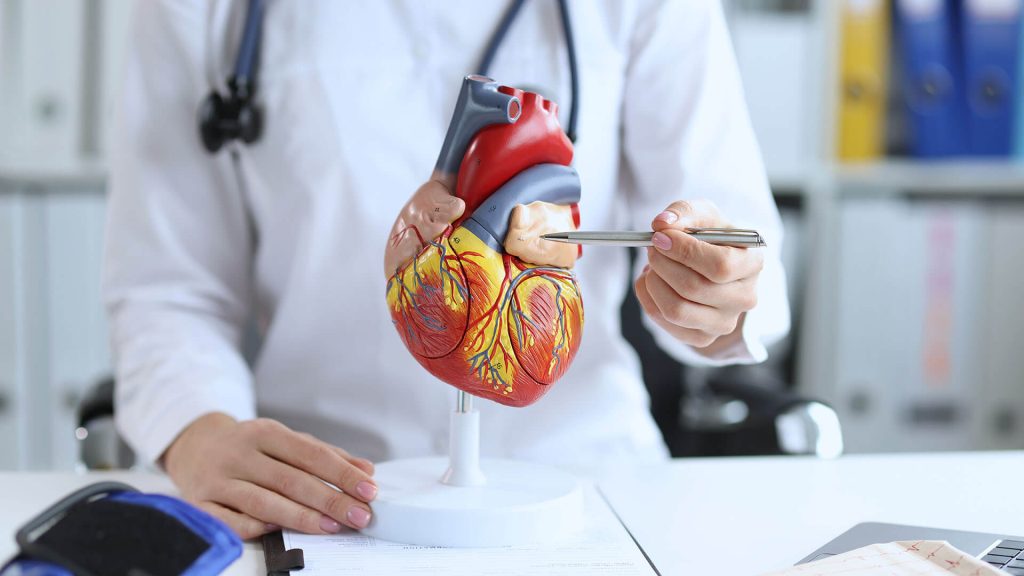
What happens after a heart attack?
After a heart attack, the focus is on recovering physically and mentally and reducing the risk of another heart attack. Cardiac rehabilitation helps with this. The programme includes, amongst other things, exercise training supervised by a doctor, dietary advice and support with giving up smoking. Any fears or uncertainties can also be addressed there. Regular follow-up appointments are important for monitoring heart function, as well as blood pressure, blood lipid levels and blood sugar. Prescribed medication should be taken as directed and should not be stopped without medical advice. This applies in particular to medicines that prevent blood clots from forming following the insertion of a stent. When work, sport and other everyday activities can be resumed depends, amongst other things, on the extent of the heart damage and the individual’s capacity for physical exertion. Physical activity is generally recommended, but should be increased gradually and in accordance with your doctor’s advice. A heart attack can also take a psychological toll. It is understandable to worry about another episode. If anxiety or low mood are affecting your daily life, psychological support can help.


https://www.internisten-im-netz.de/krankheiten/herzinfarkt/ursachen-risikofaktoren.html [Accessed September 2026]
https://www.msdmanuals.com/de/heim/herz-und-gefäßkrankheiten/koronare-herzkrankheit/acute-coronary-syndromes-heart-attack,-myocardial-infarction,-unstable-angina-pectoris [Accessed September 2026]
Gesundheit.gv.at. Angina pectoris. https://www.gesundheit.gv.at/krankheiten/herz-kreislauf/herzinfarkt/angina-pectoris.html [Accessed September 2026]
Gesundheit.gv.at. Heart attack: What is it? https://www.gesundheit.gv.at/krankheiten/herz-kreislauf/herzinfarkt/was-ist-das.html [Accessed September 2026]
Gesundheit.gv.at. Heart attack: Treatment. https://www.gesundheit.gv.at/krankheiten/herz-kreislauf/herzinfarkt/therapie.html [Accessed September 2026]
Gesundheit.gv.at. Heart attack: Symptoms. https://www.gesundheit.gv.at/krankheiten/herz-kreislauf/herzinfarkt/herzinfarkt-symptome.html [Accessed September 2026]
German Heart Foundation. Recognising a heart attack in time: Signs to look out for. https://herzstiftung.de/infos-zu-herzerkrankungen/herzinfarkt/anzeichen [Accessed September 2026]
Deutsches Ärzteblatt. Heart attack: What happens in the years that follow? https://www.aerzteblatt.de/archiv/herzinfarkt-was-kommt-in-den-jahren-danach-14778391-5760-4b1a-a1e8-e8846d3918bb [Accessed September 2026]
German Centre for Cardiovascular Research. Heart attack. https://dzhk.de/erkrankungen/ueberblick/herzinfarkt [Accessed September 2026]
Brush, J. E., Jr, Chaudhry, S. I., Dreyer, R. P., D’Onofrio, G., Greene, E. J., Hajduk, A. M., Lu, Y., & Krumholz, H. M. (2023). Sex Differences in Symptom Complexity and Door-to-Balloon Time in Patients With ST-Elevation Myocardial Infarction. The American Journal of Cardiology, 197, 101–107. https://doi.org/10.1016/j.amjcard.2023.03.009 [Accessed September 2026]