Summary
Rotavirus vaccination
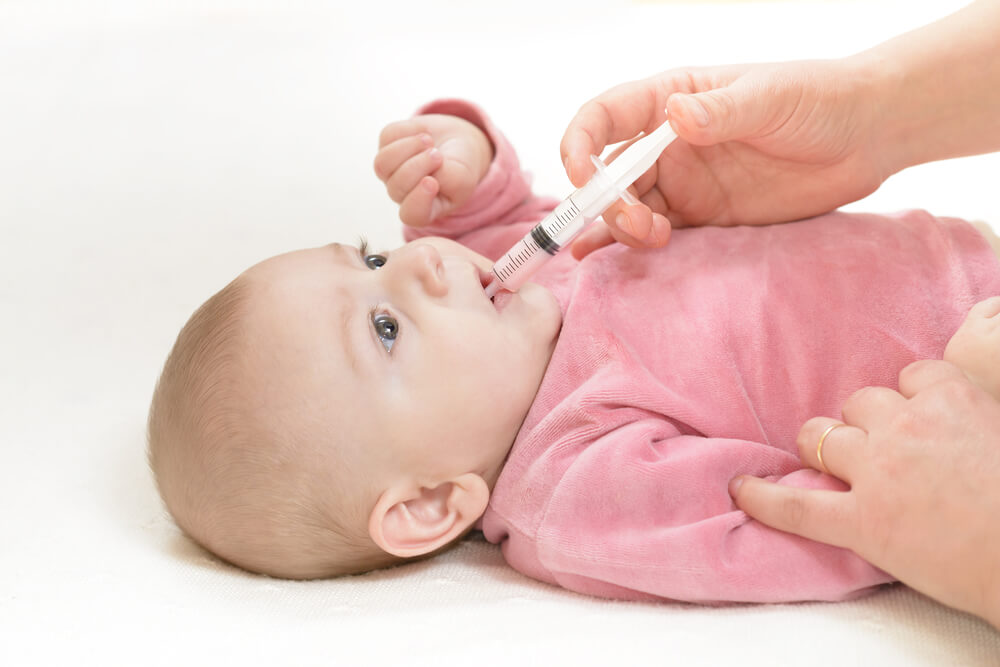
Definition: An oral vaccine containing live, attenuated viruses, designed to trigger an immune response in the body and thus protect against infection with rotaviruses
Dosage: two or three doses
Recommended for: Babies from the end of their sixth week of life
Contraindications: immunodeficiency, a tendency to develop intussusception, hypersensitivity or intolerance to any component of the vaccine, acute febrile infection
Cost: none
What is the rotavirus?
Rotaviruses belong to the Reoviridae family and are divided into seven groups (A–G). Group A is the most significant, as it is responsible for 90 per cent of cases. Rotaviruses are the most common cause of viral gastrointestinal infections in children. Children between six months and two years of age are particularly affected. This is because babies and toddlers are especially susceptible due to their still-developing immune systems. However, older children and adults can also contract rotavirus. This highly contagious disease peaks seasonally between February and April.
How is rotavirus transmitted?
Infection with rotaviruses usually occurs via contact transmission. This means that the viruses are passed on via tiny traces of faecal matter on the hands, entering the mouth and from there the digestive tract. Transmission can also occur via contaminated surfaces, such as toilets and door handles, and, more rarely, via contaminated water or food.
After infection, the illness usually develops within one to three days. The risk of transmission persists for up to eight days after the symptoms have subsided. In premature babies or people with a weakened immune system, the risk of transmission can last considerably longer.
What are the symptoms?
The symptoms of an intestinal infection caused by rotaviruses typically last between two and six days. Symptoms include:
- Watery, sometimes bloody diarrhoea
- Vomiting
- Abdominal pain
- A mild fever, a runny nose and a cough are also common
The infection can be more severe than other diarrhoeal illnesses, particularly in infants and young children. This also applies to older people or those with a weakened immune system. A severe course of the illness can lead to significant fluid loss. If this is not replenished in time, life-threatening conditions can sometimes arise. As a result, affected children often need to be treated in hospital.
What is the rotavirus vaccine?
The rotavirus vaccine is an oral vaccine containing a live virus that protects against rotavirus infection. The vaccine consists of attenuated, live rotaviruses which cannot cause a genuine infection in the body but do stimulate it. Instead, they stimulate the immune system to produce antibodies, enabling the immune system to fight off an infection with real rotaviruses more quickly and effectively.
How often does the vaccine need to be administered?
Two rotavirus vaccines are available in Austria. Depending on the vaccine, two or three doses are administered, with a minimum interval of four weeks between doses.
What does the rotavirus vaccination schedule for children entail?
The oral rotavirus vaccine is included in the free vaccination programme and is authorised for infants from the end of their sixth week of life. Depending on the vaccine used, either two (Rotarix) or three doses (RotaTeq) are required:
- For a two-dose schedule, the vaccination must be completed by the child’s 24th week of life at the latest.
- For a three-dose schedule, the vaccination should be completed by the end of the 32nd week of life.
It is important to note that the two available vaccines are not interchangeable. This means that the primary course of vaccination must be completed using the same vaccine with which it was started.
The rotavirus vaccination can be administered at the same time as other vaccinations recommended for this age group.
How effective is the vaccine?
The oral vaccine provides more than 70 per cent protection against rotavirus diarrhoea and more than 90 per cent protection against severe rotavirus vomiting and diarrhoea.
Can adults also be vaccinated against rotavirus?
There is no rotavirus vaccine intended for adults. The reason for this is that rotavirus infections in adults are usually much milder than in children. Furthermore, after recovering from a rotavirus infection – which can occur quite frequently over the course of a person’s life – the body builds up antibodies, providing better protection.
What are the possible side effects of the vaccine?
As with any vaccination, temporary side effects may occur following the rotavirus vaccination. These mainly include:
- Fever
- Diarrhoea
- Vomiting
In some cases, cold-like symptoms, abdominal pain or bloating may also be observed. Rarely, blood in the stools, middle ear infections or skin rashes may occur.
A very rare but serious side effect is an increased risk of intussusception. This causes severe abdominal pain and vomiting, which can become life-threatening if left untreated. The risk of intussusception is estimated at one to two people per 100,000 vaccinated individuals. This side effect occurs mainly in older infants, which is why it is recommended that the rotavirus vaccination be administered as early as possible within the recommended age range.
Rotavirus vaccination: yes or no?
Rotaviruses are the most common cause of intestinal infections in infants and young children. The infection is usually more severe in these children than other diarrhoeal diseases and can, in some circumstances, lead to life-threatening conditions. For this reason, the oral rotavirus vaccine has been included in the Austrian vaccination programme, and experts recommend it from the age of six weeks.
However, there are exceptions where vaccination should be avoided:
- If the child has a weakened immune system
- If the baby has a hypersensitivity or intolerance to any component of the vaccine
- If there is a known predisposition to intussusception
How much does the rotavirus vaccine cost?
The oral rotavirus vaccine is included in the free Austrian childhood vaccination programme and is therefore free of charge.
Where can you get vaccinated?
The rotavirus vaccination is available from doctors participating in the vaccination programme and at public vaccination centres.
FAQ
Premature babies born at least at 25 or 27 weeks’ gestation can and should be vaccinated against rotavirus, as they, in particular, are at increased risk of severe infection and hospitalisation right at the start of their lives. The first oral vaccine dose should also be administered to them from six weeks after birth.
Although the rotavirus vaccine provides 70 per cent protection against the disease, it is still possible to become infected. However, the illness is usually milder.
Worldwide, rotaviruses are the viruses most commonly responsible for diarrhoea in babies and young children. 90 per cent of all three-year-olds have already had a rotavirus infection, and among five-year-olds, the figure is almost 100 per cent.
Before the introduction of the oral rotavirus vaccine, rotaviruses caused almost half of all cases of gastroenteritis in babies and young children. In Austria, around 3,000 to 4,000 children used to be hospitalised each year due to a rotavirus infection. Following the introduction of the vaccine, these figures fell by 90 per cent.


Federal Ministry of Social Affairs, Health, Care and Consumer Protection: Austria’s 2023 Vaccination Schedule (Version 1.1 of 23 December 2022)
https://www.sozialministerium.at/Themen/Gesundheit/Impfen/Impfplan-Österreich.html, accessed in February 2024
https://www.gesundheit.gv.at/leben/gesundheitsvorsorge/impfungen/ueberblick/rotavirus.html, accessed February 2024
https://www.impfen-info.de/impfempfehlungen/fuer-kinder-0-12-jahre/rotaviren/, accessed February 2024
https://www.rki.de/DE/Themen/Infektionskrankheiten/Impfen/Impfungen-A-Z/Rotaviren/Rotaviren.html, accessed February 2024
https://www.rki.de/DE/Content/Infekt/EpidBull/Merkblaetter/Ratgeber_Rotaviren.html, accessed February 2024
https://www.virologie.meduniwien.ac.at/fileadmin/virologie/files/Epidemiologie/2013/2113.pdf, accessed February 2024