Summary
Ashwagandha
Definition: a medicinal plant native to India belonging to the nightshade family, to which numerous health-promoting effects are attributed
Active ingredients: withanolides, alkaloids, saponins
Effects: Stress reduction and hormone regulation, calming of the nervous system, support for concentration and memory, muscle strength and cardiorespiratory endurance, as well as the immune system; increased testosterone levels; anti-inflammatory effects, …
Side effects: Gastrointestinal complaints, tiredness/drowsiness, headaches, dizziness, skin rashes or mild allergic reactions, liver damage!, increased thyroid hormone levels, reduced blood pressure and blood sugar levels
.
Contraindications:
Children and adolescents, pregnant and breastfeeding women, people with known or previous liver disease (Caution: people with diabetes, thyroid disorders and hypotension)
What is ashwagandha?
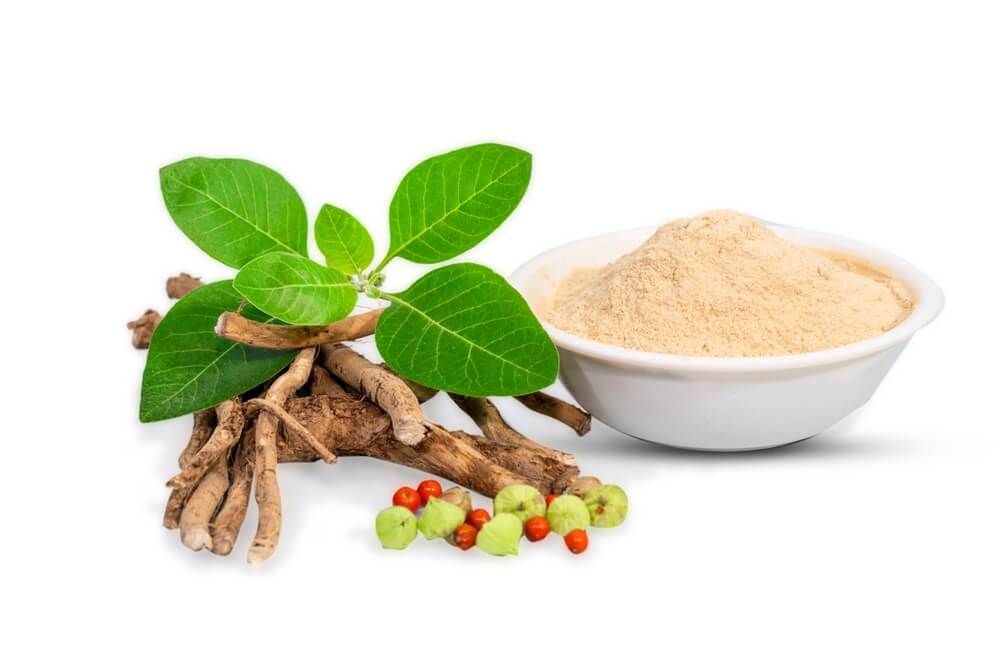
Ashwagandha is a medicinal plant native to India, belonging to the nightshade family. It has been used for thousands of years in Ayurvedic medicine to support health and is now also used in Europe. Only the root and extracts derived from it are used; the plant is also known as ‘sleepberry’ or ‘Indian ginseng’.
The active compounds it contains are classified as ‘adaptogens’. These are said to help the body adapt better to stress and other strains. The plant grows in places such as the Canary Islands, the Mediterranean region, North Africa and South-West Asia.
What is Ayurvedic medicine?
The term ‘Ayurveda’ comes from the ancient Indian language Sanskrit and means ‘knowledge of life’. Ayurveda is a comprehensive diagnostic and therapeutic system that encompasses a wealth of empirical healing knowledge.
It has been practised in South Asia as traditional folk medicine for over 2,000 years. This makes Ayurveda one of the oldest naturopathic systems in the world.

How does ashwagandha work in the body?
Ashwagandha is classified as an adaptogen in traditional Indian medicine (Ayurveda). This means it is said to help the body adapt better to stress and stabilise its internal balance (homeostasis). Its effects in the body are multifaceted, but focus primarily on regulating the stress response.
Stress reduction and hormone regulation
- Lowering cortisol: One of the most important effects of ashwagandha relates to the stress hormone cortisol. Chronically elevated cortisol levels can lead to fatigue, increased susceptibility to infection and other health problems. Studies suggest that ashwagandha can help to lower cortisol levels and thereby reduce the subjective perception of stress.
- Adaptogenic effect: Ashwagandha is said to support the function of the adrenal glands, which play a central role in the stress response. This could make the body more resilient to physical and psychological stress.
Calming the nervous system
- Effect on GABA: It is believed that ashwagandha influences the GABA system in the brain. GABA (gamma-aminobutyric acid) is the most important inhibitory neurotransmitter and has a calming effect. It helps to reduce anxiety, inner restlessness and overexcitement.
- Improved sleep: By reducing stress and exerting a calming effect on the nervous system, ashwagandha can make it easier to fall asleep and improve the quality of sleep.
Other possible effects
In addition, Ashwagandha is said to have further effects:
- Studies suggest it may support attention and memory.
- During physical activity, ashwagandha may support muscle strength and cardiorespiratory endurance.
- It may support the immune system by indirectly reducing stress and influencing the activity of certain immune cells.
How quickly does ashwagandha work?
Ashwagandha does not work immediately, but takes effect gradually, as it is an adaptogen. The first mild effects may be noticeable after a few days to around two weeks.
More pronounced and long-lasting effects, particularly in terms of stress reduction (lowering cortisol levels) and improved sleep quality, usually only become apparent after four to twelve weeks of consistent daily use.
What active ingredients does ashwagandha contain?
The main active ingredients in ashwagandha are the so-called withanolides. These are specific steroidal lactones that are responsible for the adaptogenic (stress-regulating) effect and many of the health-promoting properties.
The plant also contains various alkaloids such as withanin, somniferin and anaferin. These, too, contribute to the effects traditionally described.
It also contains saponins. These are secondary plant compounds, often referred to as sitoindosides.
What health benefits are attributed to ashwagandha?
Ashwagandha is said to have numerous health benefits. Among the most important and best-studied effects are:
- Stress reduction: Ashwagandha can make the body more resilient to stress and lower levels of the stress hormone cortisol.
- It can help to alleviate anxiety and reduce inner restlessness.
- It is used to support brain function, particularly memory and concentration.
- Thanks to its calming effect on the nervous system, it can make it easier to fall asleep and improve sleep quality.
- When combined with strength training, it can support muscle growth and improve strength and endurance.
- It can increase testosterone levels in men and is used to support male fertility.
- It is also said to have anti-inflammatory properties.
Furthermore, there is ongoing discussion as to whether ashwagandha may:
- lower cholesterol and triglyceride levels,
- lower blood pressure,
- reduce blood sugar levels in people with diabetes.
Please note: Although traditional uses and numerous studies point to positive effects, institutions such as the Federal Institute for Risk Assessment (BfR) emphasise that the available data is not yet sufficient in this country to allow for a reliable risk assessment and safe dosage of ashwagandha supplements.

What does the science say?
The scientific assessment of ashwagandha is mixed. Many findings are considered promising, but research is not yet complete.
- Positive findings from studies: Several clinical studies show a significant reduction in the stress hormone cortisol. This may be associated with a reduction in stress and anxiety, as well as an improvement in sleep quality. There is also positive study data regarding increases in muscle strength and endurance.
- Scientific reservations: Authorities such as the German Federal Institute for Risk Assessment (BfR) point out that long-term safety data are as yet insufficient. There is a lack of large-scale, high-quality long-term studies, as well as clear recommendations on maximum dosage, particularly with regard to potential liver damage.
What are the side effects of ashwagandha?
Like any active substance, ashwagandha can also cause side effects. Reports include both common, mostly mild symptoms and potentially serious risks, particularly in relation to liver health.
Possible side effects include:
- Gastrointestinal complaints: nausea, upset stomach, diarrhoea or vomiting.
- Fatigue or drowsiness: Due to its calming effect, it may lead to increased drowsiness or reduced alertness.
- Headaches
- Dizziness
- Skin rashes or mild allergic reactions
- Liver damage (hepatotoxicity): Cases of liver damage, ranging from acute hepatitis to liver failure, have been reported internationally and were temporally associated with the use of ashwagandha preparations. The exact mechanism is as yet unclear. However, these reports have prompted regulatory warnings.
- Effects on thyroid function: Ashwagandha may increase thyroid hormone levels. People with thyroid disorders or those taking thyroid medication should seek medical advice before taking it.
- Blood sugar and blood pressure: Ashwagandha may lower blood sugar levels (risk of hypoglycaemia in people with diabetes) and reduce blood pressure (risk of hypotension).
The German Federal Institute for Risk Assessment (BfR) advises against use by the following groups of people due to the as yet insufficient scientific data on safety:
- Children and adolescents
- Pregnant and breastfeeding women
- People with existing or previous liver disease
People with diabetes, thyroid disorders or low blood pressure should also consult their doctor before taking it.
Which medicines might ashwagandha interact with?
Due to its mechanisms of action, ashwagandha may interact with various medicines. It may either enhance or reduce their effects.
Medicines for the nervous system (sedatives)
As ashwagandha has a calming, sedative effect and can promote sleep, there is a risk of increased (additive) sedation when taken in combination with certain medicines:
- Sedatives and sleeping pills such as benzodiazepines or Z-drugs
- Certain antidepressants or antipsychotics with sedative effects
Thyroid medication
Ashwagandha can increase levels of thyroid hormones (T3 and T4). If taken at the same time as thyroid hormones, this may lead to an overdose.
Medicines used to regulate blood sugar and blood pressure
As ashwagandha has the potential to lower blood sugar and blood pressure, combining it with such medicines may lead to an excessive reduction:
- Antidiabetics: medicines that lower blood sugar (e.g. insulin, metformin). There is a risk of hypoglycaemia (low blood sugar).
- Antihypertensives: medicines that lower blood pressure (e.g. beta-blockers, ACE inhibitors). There is a risk of hypotension (low blood pressure).
Immunosuppressants
Ashwagandha may have an immunomodulatory effect. This could weaken the effect of medicines that suppress the immune system:
- Immunosuppressants: medicines used following organ transplants or for autoimmune diseases (e.g. ciclosporin, corticosteroids such as prednisone).
Can ashwagandha be taken during pregnancy and whilst breastfeeding?
No. Taking ashwagandha during pregnancy and whilst breastfeeding is strongly discouraged. Due to insufficient data on safety and potential risks to the child, pregnant and breastfeeding women should avoid consuming ashwagandha.
What is the recommended dosage for ashwagandha?
The dosage of ashwagandha depends heavily on the form of administration (e.g. powder or extract) and the intended purpose. Various dosages have been investigated in scientific studies. Several studies suggest that a daily intake of around 250 to 600 mg of extract may help to reduce stress.
As ashwagandha takes some time to exert its adaptogenic effects, daily, consistent intake over at least four to eight weeks is generally recommended.
When is the best time to take it?
The timing of intake depends on the intended goal: to promote relaxation and sleep, ashwagandha is usually taken in the evening.
To support stress resilience during the day, it is often recommended to take it in the morning or to split the dose between the morning and afternoon.
What forms is it available in?
Ashwagandha is available in various forms, which differ in terms of active ingredient concentration and method of use:
- Capsules and tablets: These allow for precise dosing, as they often contain standardised extracts. They also avoid the bitter taste that some people find unpleasant.
- Powder: This is the traditional form. The powder allows for individual dosing and can be stirred into water, juice, smoothies or warm milk. The concentration of active ingredients is usually lower than in standardised extracts.
- Drops (tinctures) and oils: These are generally taken orally; some oils can also be applied topically. They offer a flexible way of taking the product.
- Tea: This allows for a relaxing ritual and is a milder form of intake. However, the concentration of withanolides is usually lower than in extracts, so the effect may be limited in cases of higher stress.
Recipe: Golden Moon Milk with spices
Ingredients (1 serving)
- 250 ml unsweetened plant-based milk (almond, oat, rice milk, etc.)
- 1 tsp ashwagandha powder
- ½ tsp turmeric
- 1 small pinch of black pepper
- 1/4 tsp cinnamon
- 1/8 tsp ground ginger
- 1 small pinch of nutmeg
- 1 tsp honey (optional)
Method
- Gently heat the milk in a small saucepan (do not boil).
- Stir in the spices and leave to infuse gently for 3–5 minutes.
- Then stir in the ashwagandha powder.
- Finally, stir in honey to taste.
Pour the Moon Milk into a cup, allow it to cool slightly, and enjoy whilst still warm.

What quality features are important to look for when buying?
- Look for standardised extracts (not just powder) that contain a defined level of withanolides – ideally at least 5 per cent.
- The product should be derived exclusively from the root (Withania somnifera root).
- Make sure the product has been tested for heavy metals, pesticides and other contaminants. Indications of this include, for example, organic certification labels or independent laboratory tests.
FAQ
Yes, ashwagandha should be taken daily, as it is an adaptogen and requires a consistent intake over a period of four to twelve weeks to achieve its full stress-reducing effect. Daily use over a period of several months is also considered safe, although some experts recommend taking a break after three to six months.
KSM-66® is a premium branded raw material which, thanks to its standardisation, pure extraction process and scientific evidence, is often used as a benchmark for high-quality ashwagandha supplements.
Yes, ashwagandha is an adaptogen. This means it helps the body to increase its resilience to various types of stress and to restore its internal balance (homeostasis) without adversely affecting normal bodily functions. It works primarily by regulating the HPA axis (the central stress system).
Yes, ashwagandha can increase testosterone levels in men, particularly if levels were previously low or if its use is combined with strength training. Several studies, particularly those involving men wishing to have children or men who are not very active, suggest that taking ashwagandha can significantly improve serum testosterone levels. It is thought that this occurs through the reduction of stress (cortisol), which is an antagonist of testosterone.
Yes, there are several adaptogens and herbal alternatives that have similar stress-reducing, mood-lifting or performance-enhancing effects to ashwagandha. These include Rhodiola rosea, Korean ginseng, Schisandra chinensis, tulsi (holy basil) and L-theanine, an amino acid found in green tea.
It depends on your personal goal: if you’re primarily looking to boost your resilience to stress and your energy levels during the day, you’re well advised to take ashwagandha in the morning. If you want to improve your sleep and relaxation, you should take the supplement in the evening before going to bed. Many users split the dose between the morning and the evening to maximise both benefits (stress management and sleep). The most important thing, however, is to take it consistently every day.
The effects of ashwagandha do not take effect immediately, but gradually, and require consistent daily intake. Subtle effects (mild relaxation) may be noticeable after the first two weeks. The noticeable effects on stress reduction (lowering cortisol levels) and sleep quality usually only become apparent after four to six weeks. The optimal and full adaptogenic effect on mood, stamina and strength is generally achieved after eight to twelve weeks of daily use.
Adaptogens are natural substances (mostly plant extracts) that are said to help the body adapt to stress and maintain its internal balance (homeostasis). They do not act on a specific organ, but on the entire system. They balance physiological functions; they lower elevated cortisol levels, but do not raise them unnecessarily. Well-known examples include ashwagandha, Rhodiola rosea and ginseng.


https://www.bfr.bund.de/cm/343/ashwagandha-schlafbeeren-praeparate-mit-moeglichen-gesundheitsrisiken.pdf
, Accessed December 2025
https://ayurveda-dachverband.de/2024/09/26/stellungnahme-des-ayurveda-dachverbands-deutschland-e-v-adaved-zu-ashwagandha/
, Accessed December 2025
https://www.aerzteblatt.de/archiv/ayurveda-traditionelle-indische-medizin-mehr-als-ein-wellnesstrend-5a5d2a84-1019-49e4-8b1b-46a94da3d5f2, accessed December 2025
Lopresti A L et al: Modulation of the hypothalamic-pituitary-adrenal (HPA) axis by plants and phytonutrients: a systematic review of human trials. Nutr Neurosci
. August 2022;25(8):1704–1730
https://pubmed.ncbi.nlm.nih.gov/33650944/
, accessed December 2025
Chandrasekhar K et al. A prospective, randomised, double-blind, placebo-controlled study of the safety and efficacy of a high-concentration, full-spectrum extract of ashwagandha root in reducing stress and anxiety in adults. Indian J Psychol Med. 2012
, accessed December 2025