Summary
Pelvic floor exercises
Causes of a weak pelvic floor: pregnancy and childbirth, surgery, being overweight, chronic cough, constipation, poor posture, genetic predisposition
Possible consequences: urinary incontinence, a feeling of an incompletely emptied bladder or bowel, pain when urinating, pain in the pelvic region, testicular and groin pain, faecal incontinence, pain during sex
Benefits of pelvic floor exercises: general strengthening, postural control and stabilisation, treatment for existing symptoms
What is the pelvic floor?
The pelvic floor is a sheet of muscle that extends from the pubic bone to the coccyx and consists of three layers. Together, they are about as thick as the palm of your hand, lie on top of one another and form a seal at the bottom of the abdominal cavity and the pelvic organs. In the perineum – which forms the centre of the pelvic floor – the muscle fibres converge to form a ‘supporting cross’, thereby strengthening this heavily stressed area. Openings pass through the muscle layer to allow the passage of the rectum, the urethra and the vagina.
How is the pelvic floor structured?
The pelvic floor muscles extend from the pubic bone to the coccyx and are bounded laterally by the two ischial tuberosities. Anatomically speaking, it consists of three layers that lie one on top of the other and work together to stabilise the pelvic floor:
- the pelvic diaphragm
- the sphincters of the bowel and urogenital tract
- the diaphragm of the urinary and reproductive organs
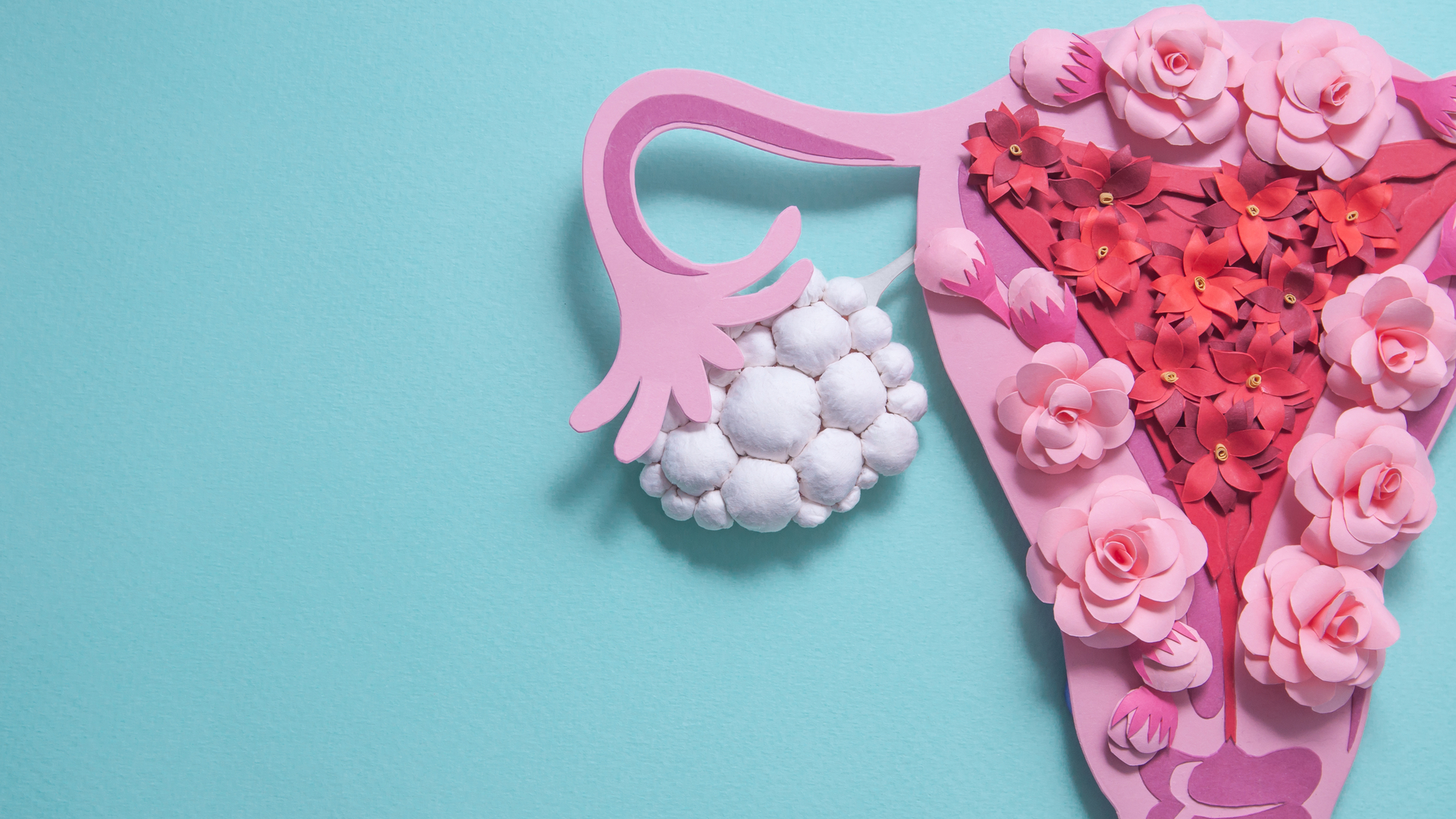
Location of the female pelvic floor

What are the functions of the pelvic floor?
The pelvic floor muscles are closely connected to the abdominal and back muscles. Together, they work flexibly in coordination to fulfil numerous functions:
- They support and hold the internal abdominal and pelvic organs in place.
- They cushion pressure caused by actions such as coughing, sneezing or lifting.
- The spine is stabilised.
- The sphincter muscles of the bladder and bowel are controlled to ensure they function properly.
- During pregnancy, the uterus and the embryo are supported and carried.
- During childbirth, the pelvic floor helps guide the baby through the birth canal.
- In women, the pelvic floor regulates the width of the vagina; in men, it supports erections, and a strong pelvic floor can also increase sexual arousal.
How can you feel your pelvic floor?
The pelvic floor is located inside the body and is therefore not visible, but it can be felt through specific exercises. Here are two methods for becoming aware of the pelvic floor muscles:
- Stopping the flow of urine: Imagine you need to stop the flow of urine whilst urinating. Tense the muscles that perform this action. These muscles form part of the pelvic floor.
- Feeling the perineum: Lie on your back, feel for the perineum and try to pull it inwards towards your body. This also tightens the pelvic floor. Women can feel the contracted pelvic floor muscles between the vagina and the anus, and men between the scrotum and the anus.
How does the pelvic floor change during pregnancy and childbirth?
During pregnancy, changes occur in the pelvic floor caused by the effects of pregnancy hormones, weight gain, the shape of the pelvis or the size of the baby. Muscles, ligaments and tissues become more relaxed, and pelvic floor prolapse may also occur, which can lead to incontinence.
During childbirth, the pelvic floor is stretched considerably, with the greatest strain occurring during the pushing stage. This can sometimes lead to overstretching or other damage, such as tears to the perineum, vagina, labia or pelvic floor muscles. This damage may manifest as bleeding, pain, incontinence or prolapse of the bladder, uterus or rectum.
What are the consequences of weak pelvic floor muscles?
Weak pelvic floor muscles affect several areas of life. Typical consequences include:
- Urinary incontinence (leakage of urine when coughing, sneezing or exercising)
- A feeling that the bladder or bowel has not been completely emptied
- Pain when urinating
- Pain in the pelvic area
- Pain in the testicles and groin
- Faecal incontinence (problems with bowel control)
- Pain during sex
What causes a weak pelvic floor?
There are various causes of a weak pelvic floor. These include:
- Pregnancy and childbirth: The strain caused by the baby’s growing weight and the physical exertion during labour can weaken the pelvic floor muscles and ligaments.
- Advancing age: As we get older, the connective tissue generally becomes less firm.
- Years of overexertion: Activities such as lifting heavy loads or strenuous sports can affect the muscles and connective tissue of the pelvic floor.
- Genetic predisposition: A predisposition to weak connective tissue is often genetic.
- Constipation: Frequent straining during bowel movements puts strain on the pelvic floor.
- Severe obesity: Being severely overweight puts greater strain on the pelvic floor than being of normal weight.
- Poor posture: Sitting for long periods and a lack of exercise can damage the pelvic floor.
- Chronic cough: A persistent cough increases pressure on the pelvic floor and can weaken the muscles.
- Surgical procedures: Operations in the pelvis and on the prostate can weaken the pelvic floor.
When should you contact a doctor if you have pelvic floor weakness?
If you suffer from incontinence, feel that you cannot completely empty your bladder or bowels, or experience pain in the pelvic area, when urinating or during sex, you should consult a doctor. Gynaecologists and urologists are the right people to consult in such cases.
When should you exercise your pelvic floor?
It is always a good idea to exercise your pelvic floor, as strong muscles in this area offer many health benefits. Pelvic floor exercises are particularly important if you have:
- Bladder and bowel incontinence
- Being overweight
- poor posture
- before and after childbirth
- Uterine prolapse
- from the onset of the menopause, when connective tissue weakens
- in men following prostate surgery
- in men with erectile dysfunction
What are the health benefits of pelvic floor exercises?
Pelvic floor exercises are important both for healthy people without symptoms, for general strengthening, postural control and stabilisation (prevention), and as a form of therapy for existing symptoms or problems such as urinary incontinence. Pelvic floor exercises offer many health benefits and are beneficial for men and women of all ages.
How can you strengthen your pelvic floor?
In principle, the first step is to become aware of your pelvic floor and then to consciously contract and relax it regularly. Many of the recommended exercises can be done whilst sitting or standing, without others noticing.
5 effective exercises to strengthen the pelvic floor
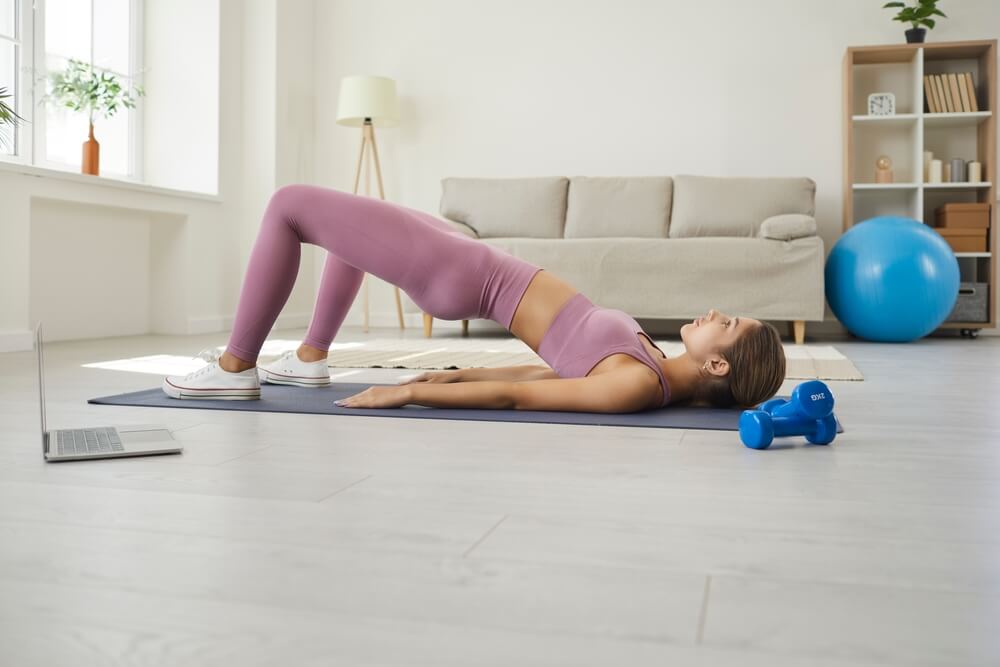
Lift exercise whilst lying on your back
- Lie on your back and place a large exercise ball or a folded blanket under your pelvis. Rest your lower legs on a stool or exercise ball.
- Lift the front part of your pelvis slightly (five to ten centimetres) by imagining you are pulling your tailbone towards the ceiling. As you do this, arch your pelvis slightly, whilst keeping your upper back flat on the floor.
- Consciously tense your entire pelvic floor. In your mind’s eye, pull your tailbone forwards towards your pubic bone and draw all your pelvic floor muscles deep into your body as you breathe out. Release the tension again as you breathe in.
Cat-cow stretch
- Get down on all fours. To do this, kneel down and rest your hands on the floor, hip-width apart. Start with your back straight.
- Take a deep breath in. Breathe out again, arching your back upwards and lowering your head between your arms to form a cat’s back.
- Then breathe in again and let your back straighten out.
Tunnel exercise
- Kneel on a rolled-up blanket and rest your upper body on your forearms.
- Point your toes, tighten your abdomen and pelvic floor muscles firmly, and lift your knees slightly (about ten centimetres). As you do so, breathe out slowly and for as long as possible.
- Once your knees are slightly raised, rock them up and down ever so slightly. Keep your pelvic floor muscles engaged throughout and let your breath flow naturally.
- After 8 to 15 seconds, lower your knees and relax briefly.
Chair march
- Sit on a chair and move right up to the front edge of the seat.
- Press your heels firmly against the floor and maintain the tension.
- Then press the tips of your toes against the floor.
- Repeat the exercises alternately.
Marble Grasp
- Sit on a chair without leaning back. Feel your sit bones, and as you breathe out, bring the two bones in the middle as close together as possible.
- Imagine that you are grasping a large marble with your sit bones and pulling it into your body. Then pull your navel inwards and tense your abdominal muscles.
- Hold the tension, then imagine the marble slowly sliding out of your body.
What other ways are there to train your pelvic floor?
As well as traditional pelvic floor exercises, various aids can help to strengthen the pelvic floor muscles:
- Exercise ball or cushion: These promote good posture, make it easier to feel your pelvic floor and are well suited to many exercises.
- Hula hoops: Training with weighted hoops, in particular, helps to strengthen the pelvic floor. The circular movements effectively exercise the pelvic floor muscles.
- Biofeedback (for women): This involves inserting spherical weights into the vagina. Tensing the pelvic floor prevents the balls from falling out. The weights provide biofeedback to a smartphone to indicate whether the correct muscles are being tensed. This method can be particularly helpful for targeted and correct training.
- Pelvic floor exercise apps: There are various apps designed specifically for pelvic floor exercises. These apps offer guidance and support through programmes, reminders and progress tracking.
3 tips for everyday life to strengthen your pelvic floor
- Standing correctly: When standing, make sure you do not fully straighten your knees. Tighten your abdominal and pelvic floor muscles to avoid an excessive swayback. The more your stomach hangs downwards or the further your lower abdomen protrudes, the greater the strain on your pelvic floor. A strong pelvic floor and an upright pelvis help to maintain the ideal alignment of the spine.
- Correct sitting: When sitting, make sure to maintain an upright posture to relieve pressure on the pelvic floor. Avoid a rounded sitting posture, where the weight of the internal organs bears down on the soft tissues of the pelvic floor. Instead, sit upright on your sit bones. It is better to sit upright on your sit bones. In this sitting position, the spine is upright and the weight of the internal organs is distributed more evenly across the pubic bone and the bony parts of the pelvis.
- Conscious movement when lifting and carrying: When lifting, carrying, climbing stairs, sneezing, coughing or laughing, be mindful of the tension in your pelvic floor; the same applies when pushing or pulling objects. Contract the muscles firmly and for a long time. The subsequent relaxation phase should be twice as long as the contraction each time.
By incorporating these tips into your daily routine, you can effectively strengthen and support your pelvic floor muscles.


Höfler, H: A Strong Pelvic Floor. Preventing Ailments, Aiding Postnatal Recovery, Improving Posture, and Enhancing Sexual Pleasure. Riva Verlag, Munich, 2022.
https://www.gesundheit.gv.at/leben/eltern/nach-der-geburt/beckenboden-uebungen.html, accessed April 2024
https://www.familienplanung.de/schwangerschaft/beckenboden/schwangerschaft-und-geburt/, accessed April 2024
https://flexikon.doccheck.com/de/Beckenboden, accessed April 2024
https://www.gesundheitsinformation.de/wie-funktioniert-ein-beckenbodentraining.html, accessed April 2024