Summary
Gut-brain axis
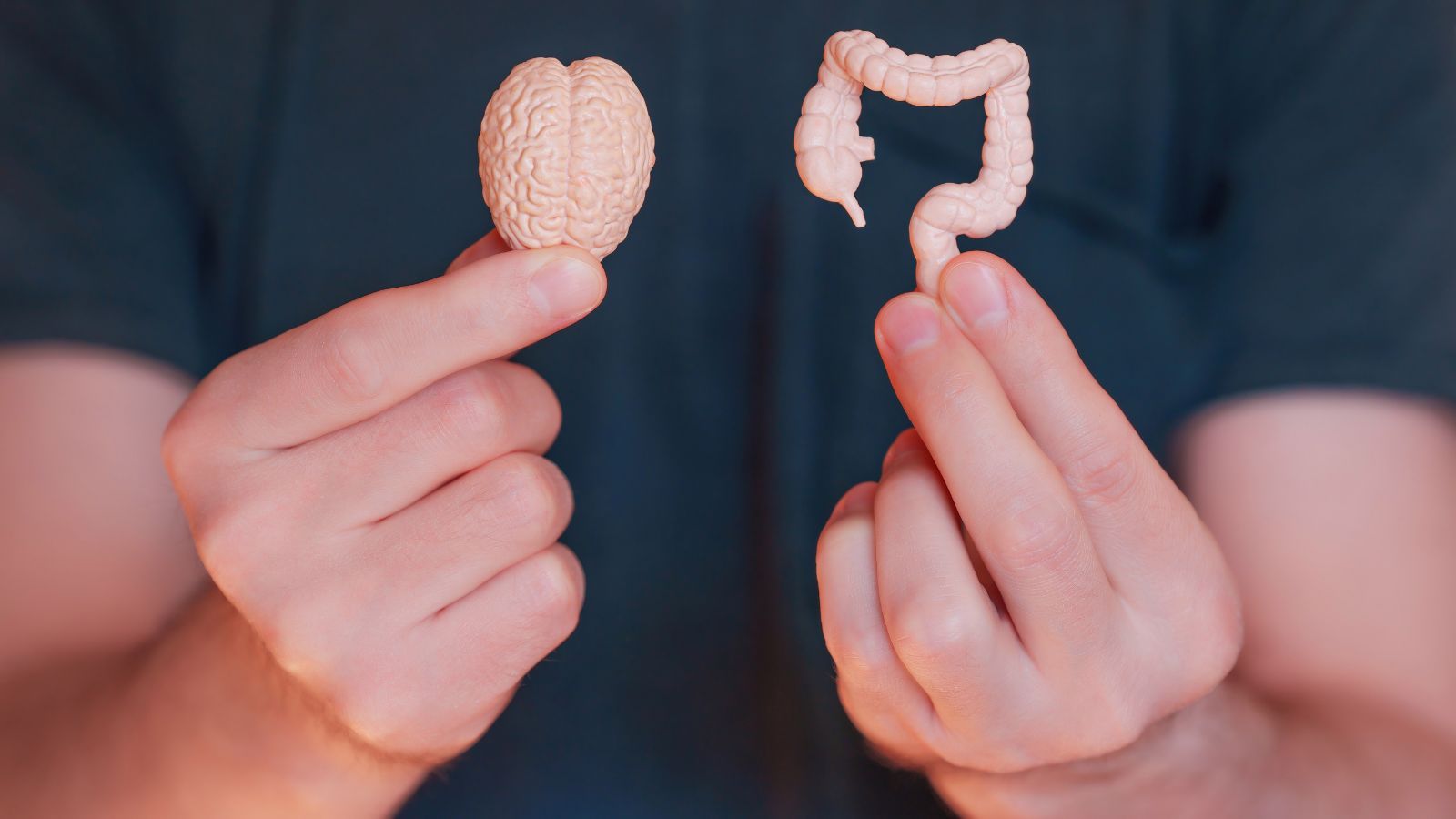
Gut-brain axis: a direct line of communication between the brain and the gastrointestinal tract, involving constant two-way communication
Connection: via nerves (the vagus nerve), the immune system, gut hormones and signalling molecules such as short-chain fatty acids and neurotransmitters.
Vagus nerve: the 10th of the 12 cranial nerves; runs from the brainstem along both sides of the carotid artery, through the upper body and the gastrointestinal tract; the main regulator of the parasympathetic nervous system (rest and digestion), transmitting signals from the body to the brain and vice versa.
Disruptions to the gut-brain axis caused by: chronic stress, poor diet, antibiotics, inflammation
Positive influences: including a healthy diet, as well as probiotics and fermented foods
The gut as the ‘second brain’: What is the gut brain?
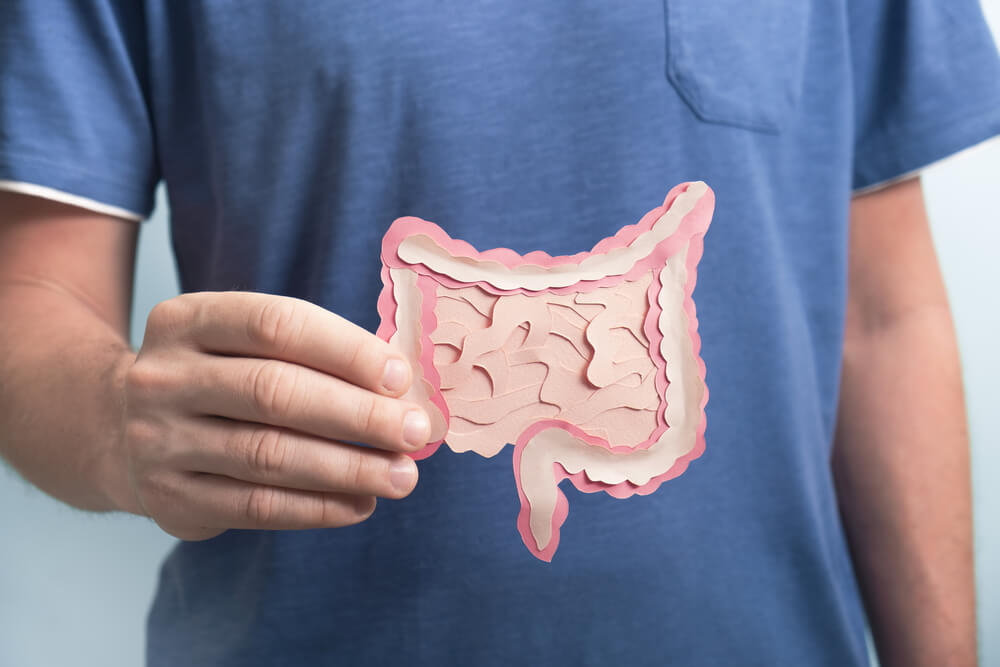
The so-called ‘gut brain’ is known in scientific circles as the enteric nervous system (ENS). It is a dense network of millions of nerve cells in the gut wall, which controls many digestive processes largely independently and communicates closely with the brain via the gut-brain axis.
The enteric nervous system shares a number of similarities with the brain and, amongst other things, utilises many of the same neurotransmitters and receptors. It is therefore no coincidence that the gut is referred to as the ‘second brain’. The gut and the brain influence one another via the gut-brain axis. Stress can affect digestion, whilst signals from the gut, in turn, can influence processes in the brain.
What is the gut-brain axis and how are the gut and brain connected?
Scientific studies show that there are diverse interactions between the brain, the gut and the gut microbiome. The gut-brain axis refers to the communication system between the brain and the gastrointestinal tract. The two are constantly exchanging information with one another, in both directions.
Several communication pathways play a role in this:
- Nerves: One important connection is the vagus nerve. It runs like a long cable directly from the brainstem into the abdominal cavity. In addition, the gut has its own extensive nerve network – the enteric nervous system – which independently controls many digestive processes.
- Neurotransmitters: The gut and the brain use many of the same neurotransmitters, including serotonin, dopamine, GABA and acetylcholine. A large proportion of the body’s serotonin is produced in the gut, where it influences, amongst other things, bowel movements. Although serotonin cannot pass directly from the gut to the brain, it can indirectly affect the brain via signalling pathways of the gut-brain axis, such as the enteric nervous system and the vagus nerve. The gut microbiome can also influence the production and metabolism of such neurotransmitters.
- Hormones: During times of stress, the brain releases hormones that slow down digestion and can, amongst other things, affect the function of the intestinal barrier. Conversely, immune cells from the gut can influence mood in the brain via inflammatory mediators.
What role does the vagus nerve play in the gut-brain axis?
The vagus nerve is the tenth of a total of twelve cranial nerves and plays a special role in the body. It originates in the brainstem, passes through the neck and continues through the chest and abdomen. Its numerous branches reach various organs, including the heart, lungs and gastrointestinal tract.
As the main nerve of the parasympathetic nervous system, it is involved in, amongst other things, relaxation, digestion and the regulation of various organ functions, and thus also plays a role in the body’s stress response.
In addition, the vagus nerve transmits signals from the body to the brain and vice versa. Around 80 per cent of its nerve fibres are afferent, meaning they transmit information from the body to the brain. Around 20 per cent are efferent and carry signals from the brain back to the organs. The vagus nerve is therefore an important information pathway in the gut-brain axis.
How does the gut-brain axis influence mental health?
Researchers are increasingly investigating the role played by the gut and the gut microbiome in mental health. Studies show, for example, that people with depression or anxiety disorders often exhibit changes in the composition of their gut microbiome. Such differences have also been observed in various neurodegenerative diseases.
It is important to note, however, that the observed correlations do not automatically mean that an altered gut flora causes mental health conditions. To date, it is often not possible to clearly distinguish between cause and effect, and many underlying mechanisms are still the subject of research.
Depression
Scientific analyses of stool samples show that people with depression often have an altered composition of gut flora compared with healthy control groups. Several studies found fewer bacteria with anti-inflammatory properties, whilst certain potentially pro-inflammatory bacteria were more prevalent. Chronic inflammatory processes are also linked to depression. Furthermore, around 90 per cent of the serotonin produced in the body is generated in the gut. If the gut becomes unbalanced, this can disrupt the production of this ‘happiness hormone’.
Anxiety disorders
Changes in the gut microbiome have also been observed in anxiety disorders. Some studies show, for example, a lower prevalence of certain bacteria that produce short-chain fatty acids, as well as an increase in potentially pro-inflammatory species. However, the results are less consistent than those for depression.
Research is also being conducted into the role of GABA (gamma-aminobutyric acid). GABA is the most important inhibitory neurotransmitter in the brain and helps to regulate the activity of nerve cells. Some gut bacteria can also produce GABA. However, it is not yet sufficiently clear whether, and to what extent, this influences anxiety disorders in humans.
Stress
Chronic stress, in particular, is often described as the main enemy of the gut microbiome. When the brain signals stress, there is an increased release of cortisol and adrenaline, and blood flow to the gut decreases.
Similarly, the protective layer of the intestinal mucosa thins, beneficial bacteria die off and pro-inflammatory microbes multiply. This can cause the gut wall to become ‘leaky’ (leaky gut), leading to micro-inflammation, which in turn affects the brain and can cause mood swings or brain fog.
What role does diet play in the gut-brain axis?
Diet is one of the most important factors influencing the composition and function of the gut microbiome. It is less about specifically introducing individual ‘good’ bacteria and more about creating favourable conditions for a diverse gut microbiome and a healthy gut barrier.
A diet high in highly processed foods, sugar and an unfavourable fat composition is associated with changes in the gut microbiome, inflammatory processes and an impaired gut barrier.
Such links are particularly well documented for Western-style diets. In contrast, fibre-rich foods promote the formation of short-chain fatty acids such as butyrate. Among other things, these support the gut barrier and regulate immune processes. Their effects on signalling pathways between the gut and the brain are also being investigated.
The following are particularly helpful for a gut-friendly diet:
- Eating a varied diet rich in fibre: vegetables, fruit, pulses, wholegrains, nuts and seeds provide various types of fibre that serve as food for gut bacteria. Some of these have a prebiotic effect and specifically promote certain beneficial bacteria.
- Fermented foods: Foods such as yoghurt, kefir or sauerkraut may contain live microorganisms and other substances produced during fermentation. They can complement a gut-friendly diet.
- Minimally processed foods: A diet consisting mainly of minimally processed foods is also considered to be beneficial for gut health.

Probiotics
Probiotics are live microorganisms – usually specific bacteria or yeasts – which, when consumed in sufficient quantities, can have health benefits.
They can influence the composition and function of the gut microbiome. However, whether they can permanently ‘restore’ gut flora that has been altered by stress, diet or other factors depends heavily on the specific strain and the individual’s circumstances.
Various Lactobacillus and Bifidobacterium strains are among the probiotic bacteria most frequently studied. Research is also being conducted into their potential effects on the gut-brain axis and mental health issues. Studies suggest that certain probiotics may alleviate symptoms of depression and anxiety. However, the results are not consistent and cannot be generalised to all probiotics. Key factors include the strain used, the dosage and the specific area of application.
Fermented foods
Fermented foods such as yoghurt, kefir, sauerkraut or kimchi can complement a gut-friendly diet. One study, for example, showed that a diet rich in fermented foods can increase the diversity of the gut microbiome and reduce certain markers of inflammation.
In addition, certain lactic acid bacteria in fermented foods can produce neurotransmitters such as GABA or precursors of serotonin in the gut. Furthermore, fermentation and subsequent digestion in the large intestine produce short-chain fatty acids such as acetate and butyrate. These strengthen the gut barrier and thus prevent ‘leaky gut’.
Studies have shown, for example, that a 10-week diet rich in fermented foods measurably increases microbiome diversity and reduces inflammatory markers. People who eat two to three portions of fermented foods (such as kefir, kombucha or sauerkraut) and plenty of fibre every day also report significantly lower perceived stress levels.
You can find a delicious recipe for pineapple sauerkraut with ginger and turmeric here.

What supports a healthy gut-brain axis?
It’s not just diet that plays a role. Stress and exercise also influence the processes involved in communication between the gut and the brain.
- Reducing stress: Chronic stress can impair digestion and gut function. Slow breathing, meditation and other relaxation techniques can activate the parasympathetic nervous system and reduce the stress response. Slow breathing is also associated with increased vagal activity.
- Regular exercise: Exercise has a positive effect on stress and mood and can also alter the gut microbiome. However, the effects vary depending on the type of exercise, its intensity and the individual; in humans, they are less clear-cut than is often portrayed.
Recent studies
Numerous studies suggest that the microbiome-gut-brain axis may play a key role in regulating mood, sleep quality, memory function and neurological processes. A great deal of research is currently being carried out into specific probiotics in relation to mental health, as they have been shown to alleviate mild depression and anxiety disorders, improve sleep quality and reduce stress and cortisol levels.
A second pillar of this research concerns the use of fermented foods and a high-fibre diet, which produce beneficial short-chain fatty acids. Furthermore, recent studies show that chronic stress alters the composition of the microbiome and that a healthy gut-brain axis can support stress tolerance.
However, scientists also caution against making exaggerated claims, as many of the findings stem from animal experiments or correlational studies, and there are still gaps in our understanding regarding the exact mechanisms of action, optimal dosage and long-term effects. The gut-brain axis is therefore a supportive system, but it does not replace established medical treatment for severe neurological or psychiatric conditions.
FAQ
Yes, stress is considered one of the most significant factors influencing the gut-brain axis. When under stress, the brain releases hormones such as cortisol and activates the nervous system. This alters bowel movements, reduces blood flow and weakens the protective barrier of the intestinal wall (‘leaky gut’). Conversely, an imbalance in the gut flora sends faulty signals via the vagus nerve and inflammatory substances to the brain, which can further exacerbate symptoms of stress, restlessness or anxiety.
The gut and the microbiome are directly connected to the brain via the vagus nerve, and the gut produces, amongst other things, important neurotransmitters such as serotonin and dopamine, which have a positive effect on our mood. A depleted or disrupted gut flora, on the other hand, promotes low-grade inflammation in the body, which is linked in the brain to low mood, tiredness or increased susceptibility to stress.
Some studies suggest that certain probiotics may alleviate symptoms of depression or anxiety. However, the results are not consistent and depend, amongst other things, on the bacterial strain used, the dosage and the participants in the study. Probiotics cannot therefore currently be generally recommended for the treatment of depression or anxiety disorders, nor do they replace established therapies.
A varied, fibre-rich diet supports a diverse gut microbiome. Good sources include, for example, vegetables, fruit, pulses, whole grains, nuts and seeds. Fermented foods such as yoghurt, kefir or sauerkraut can also complement a gut-friendly diet.
Furthermore, regular exercise, sufficient sleep and stress-reduction techniques can support gut health and general well-being. However, there is no single measure that can specifically ‘calm’ or optimise the gut-brain axis.
Yes. Stress hormones such as cortisol and adrenaline reduce beneficial bacterial strains. Stress also reduces blood flow to the gut and weakens the protective lining. This allows inflammatory substances to enter the bloodstream. Digestion is also accelerated or slowed down, and this alters the environment in the gut, making it easier for unwanted bacteria to multiply. Overall, this creates a vicious circle, as the stressed gut sends alarm signals back to the brain, which in turn makes us even more susceptible to stress.
Yes. People with depression often have an altered gut microbiota, characterised by reduced bacterial diversity and fewer anti-inflammatory strains. When the gut microbiota becomes unbalanced, the production of mood-lifting serotonin and calming GABA decreases, leading to insidious inflammation that can dampen mood and trigger a lack of motivation. In research, microbiome management is therefore now regarded as a key component in the prevention and adjunctive treatment of depression.


Herold G et al: Internal Medicine. Self-published, 2023.
Refisch A et al: The importance of the human microbiome for mental health. Nervenarzt. 17 October 2023;94(
11
https://pmc.ncbi.nlm.nih.gov/articles/PMC10620288/
, accessed July 2026
Mörkl S et al: The influence of psychobiotics on the gut-brain axis in depression. J NEUROL NEUROCHIR PSYCHIATR 2024; 25 (1)
https://www.kup.at/kup/pdf/15508.pdf
, accessed July 2026
Wastyk H: Gut microbiota-targeted diets modulate human immune status. Cell. 5 August 2021;184(16)
https://pubmed.ncbi.nlm.nih.gov/34256014/
, accessed July 2026
https://www.gelbe-liste.de/psychiatrie/darm-hirn-achse-depression-ernaehrung-mikrobiota, accessed July 2026
https://www.rosenfluh.ch/media/ernaehrungsmedizin/2024/01/Entwicklung-neuer-Therapieansaetze-Mikrobiom-und-Depressionen.pdf, accessed July 2026
https://www.dge.de/blog/2026/das-mikrobiom-update-fuer-die-ernaehrungsberatung/, accessed July 2026
https://natuerlich.thieme.de/blog/detail/gehirn-psyche-und-mikrobiom-3634, accessed July 2026