
Summary
Heart health in children
Definition: From an early age, the heart and circulatory system are optimally developed, efficient and free from avoidable strain
Paediatric cardiology assessment for babies: extreme difficulty feeding, shortness of breath, noticeable sweating whilst feeding, bluish discolouration of the lips and skin
Paediatric cardiology assessment for older children: sudden drop in performance, rapid exhaustion or shortness of breath during normal physical activity, fainting spells, persistent, unexplained palpitations; prolonged weakness following infections, chest pain, shortness of breath; loud heart murmur detected during a routine examination, persistently high blood pressure
Investigations: medical history and physical examination, cardiac ultrasound, ECG, pulse oximetry, Holter monitoring, exercise ECG, long-term blood pressure monitoring, cardiac MRI, cardiac catheterisation, TEE
Prevention: Plenty of exercise, a heart-healthy diet, sufficient sleep, limited media consumption, taking advantage of screening tests
What does heart health in children mean?
Heart health in children encompasses the age-appropriate development and function of the heart and circulatory system, as well as the prevention and early detection of diseases. This involves healthy growth, during which the heart also develops normally and is able to supply the body with sufficient oxygen whilst the child is growing, playing and running about.
Furthermore, the timely detection of conditions such as congenital heart defects or, for example, myocarditis following an infection plays an important role. Last but not least, it is also about preventing cardiovascular diseases later in life. A balanced diet and plenty of exercise can help to reduce risk factors for later problems such as high blood pressure, obesity or atherosclerosis, even during childhood.
Paediatric cardiology: When is an assessment advisable?
A paediatric cardiology assessment is advisable if the paediatrician suspects a heart condition or if your child is experiencing unusual symptoms or has abnormal test results.
Pay particular attention to the following warning signs:
- In infants: marked difficulty feeding or rapid exhaustion whilst feeding, shortness of breath, excessive sweating whilst feeding, or a bluish discolouration of the lips or skin (cyanosis)
- In older children: a sudden drop in performance, unusually rapid exhaustion or shortness of breath during physical activity, fainting spells (syncope) or recurrent, persistent or unexplained palpitations
- Following infections: if a child remains unusually exhausted after an infection or develops symptoms such as chest pain, shortness of breath or palpitations
- Abnormal medical findings during routine check-ups: for example, a noticeable heart murmur or repeatedly high blood pressure
If such symptoms occur, you should have them assessed by a paediatrician. A decision on whether an examination by a paediatric cardiologist is necessary can then be made.

What examinations are available in paediatric cardiology?
Various tests are available in paediatric cardiology. Which ones are necessary depends on the symptoms, the child’s age and the suspected heart problem. Many tests are painless and do not involve X-rays. Furthermore, paediatric cardiologists are well trained to take plenty of time and use playful methods to ensure that children do not feel afraid.
The most important tests are:
Basic (routine) examinations
- Medical history and physical examination: The doctor will ask detailed questions about symptoms (e.g. getting tired quickly whilst drinking or running about) and listen to the heart with a stethoscope. They will pay particular attention to heart murmurs, the heart rhythm and the breathing rate. This also includes checking the pulses (particularly in the groin).
- Heart ultrasound (echocardiography): Ultrasound allows the heart to be observed in real time as it beats. The heart chambers, heart valves and major blood vessels can be seen in great detail. This enables congenital heart defects to be detected painlessly and without the child having to exert themselves.
- Electrocardiogram (ECG): Electrodes placed on the skin measure the heart’s electrical activity. This allows the heart rate and heart rhythm, amongst other things, to be assessed.
- Oxygen saturation (pulse oximetry): A small sensor on the finger – or, in the case of young children, on the foot – measures the oxygen saturation of the blood.
Tests for specific symptoms, such as suspected arrhythmias
If a child complains of a racing heart or experiences episodes of dizziness, the following tests are used:
- Long-term ECG: The child is given a small, portable device to take home, which continuously records the heart rhythm over 24 hours (sometimes even over several days) whilst the child plays and sleeps as normal.
- Stress ECG (ergometry): Older children must pedal vigorously on a special exercise bike (bicycle ergometer) or treadmill whilst the ECG is running. This tests how the heart responds to physical exertion and whether any rhythm disturbances or circulation problems occur under stress.
Specialised or imaging procedures
These methods are only used if the basic tests do not provide clear answers or if surgery needs to be planned:
- Long-term blood pressure monitoring: Similar to a long-term ECG, the child wears a blood pressure cuff for 24 hours, which inflates automatically at regular intervals.
- Cardiac MRI: Magnetic resonance imaging provides detailed images of the heart’s structure and function and does not involve X-rays. In younger children, sedation or anaesthesia may be necessary if they are unable to lie still sufficiently during the examination.
- Cardiac catheterisation: This is a minimally invasive procedure carried out under general anaesthesia. A thin catheter is guided through a blood vessel to the heart. This allows, for example, pressure levels to be measured and certain heart defects to be examined in more detail. Some heart defects can also be treated during a cardiac catheterisation.
- Transoesophageal echocardiography (TEE): If the view from outside through the chest is insufficient, an ultrasound probe can be inserted via the oesophagus. As the oesophagus lies directly behind the heart, this provides a perfect view. This procedure is also usually carried out under sedation or anaesthesia in children.
The paediatric cardiologist will decide which tests are appropriate for your child based on their symptoms and previous findings.
Newborn screening: What is tested?
The Austrian Newborn Screening Programme is a free and very comprehensive screening programme aimed at detecting rare congenital conditions before the baby shows any symptoms. This allows treatment to be started immediately, thereby preventing severe organ damage or developmental delays.
For the test, a few drops of blood from the baby’s heel, taken between the 36th and 72nd hour of life, are sufficient; these are placed on a special filter paper card and analysed centrally at the laboratory of the Medical University of Vienna.
The test screens for over 30 rare metabolic disorders, hormonal defects (e.g. thyroid), cystic fibrosis, and severe immune and muscle disorders. The screening for fatty acid oxidation disorders is linked to heart health: If left untreated, these metabolic disorders can eventually lead to heart muscle weakness (cardiomyopathy). By detecting the metabolic disorder via a blood test, one therefore indirectly protects the heart from damage as well.

What heart-related tests are carried out on newborns?
The heart is not examined directly as part of standard newborn screening. However, after birth there are various tests carried out which also look for possible signs of a congenital heart defect.
Physical examination
Immediately after birth, vital signs such as heart rate, breathing and skin colour are assessed. During further examinations, the baby is physically examined and, amongst other things, the heart and lungs are auscultated. Abnormalities such as a heart murmur or a bluish discolouration of the skin may be signs of a heart defect.
Pulse oximetry
Pulse oximetry allows the oxygen saturation in the blood to be measured painlessly using a small sensor. An abnormally low oxygen saturation level may be a sign of certain congenital heart defects and may necessitate further investigations. For a more detailed assessment, an ultrasound scan of the heart may be carried out, for example.
Further investigations if abnormalities
are found
If the examination suggests a possible heart defect, further investigations such as a heart ultrasound, ECG or blood pressure measurement may be necessary.
Congenital heart defects: What signs might be noticeable in babies?
Nowadays, a congenital heart defect is often detected during pregnancy or immediately after birth. However, symptoms sometimes only become apparent during the first few weeks or months at home. Heart problems in babies usually manifest themselves through their behaviour whilst feeding, their breathing or their skin colour.
The most important signs parents should look out for are:
Difficulty feeding and exhaustion
- Frequent breaks whilst feeding: The baby suckles briefly at the breast or bottle, but then has to stop, exhausted, to catch their breath.
- Heavy sweating: A cold film of sweat forms, particularly on the head and forehead, whilst feeding or crying.
- Low intake: The baby is unable to finish their feeds and keeps falling asleep quickly due to exhaustion.
Abnormalities in breathing
- Persistently rapid breathing: Healthy breathing in infants is often irregular, but more than 40 to 60 breaths per minute whilst at rest is a warning sign.
- Skin retraction: When breathing in, the skin between the ribs, above the collarbone or beneath the rib cage visibly pulls inwards.
- Flaring nostrils: The nostrils move noticeably with each breath.
Changes in skin colour
- Cyanosis: Bluish lips often indicate a lack of oxygen. A slight bluish tinge on the hands and feet is often normal shortly after birth. A bluish tinge around the mouth, on the lips or on the tongue – particularly when drinking or crying – suggests a genuine lack of oxygen, however.
- Noticeable paleness: The baby appears persistently pale or greyish.
Problems with weight gain (failure to thrive)
Because the baby burns an enormous amount of energy due to the strain on the heart, but at the same time is feeding poorly, it does not gain enough weight. The weight curve then visibly flattens out during routine check-ups.
Babies with certain heart defects can tire quickly whilst feeding and therefore fail to consume enough food. Insufficient or absent weight gain can therefore also be an indication of this. The weight curve then visibly flattens during routine check-ups.
What warning signs can occur in older children and adolescents?
In older children and adolescents, symptoms usually become apparent when the body has to work harder during physical exertion (such as during sport or rough-and-tumble play). Furthermore, some heart defects only become significant when the heart can no longer keep pace with the body’s growth.
The main warning signs in older children and teenagers are:
Rapid exhaustion and a marked drop in performance
If children suddenly find they can no longer keep up with their peers, this is a clear sign. For example, if a child stops playing games or taking part in sport because they are exhausted, or if their body takes a noticeably long time to recover after physical exertion, these are warning signs that should be taken seriously.
Breathing difficulties and chest pain
Symptoms such as shortness of breath or chest tightness should always be taken seriously in children and young people. Keep an eye out to see if your child becomes heavily out of breath even during light exertion – such as climbing stairs or walking briskly – or if they complain of a feeling of tightness, stabbing pain or pressure in the chest area, particularly during or immediately after sport. This requires a cardiological assessment.
Dizziness and fainting spells (syncope)
A sudden drop in blood pressure or an irregular heart rhythm can temporarily deprive the brain of sufficient oxygen. Particular caution is advised during physical exertion.
Heart palpitations
If your child experiences a racing heart ‘out of the blue’ or an uncomfortable sensation in the chest, as if the heart were to skip a beat or have an ‘extra beat’, you must take this seriously and have it investigated.
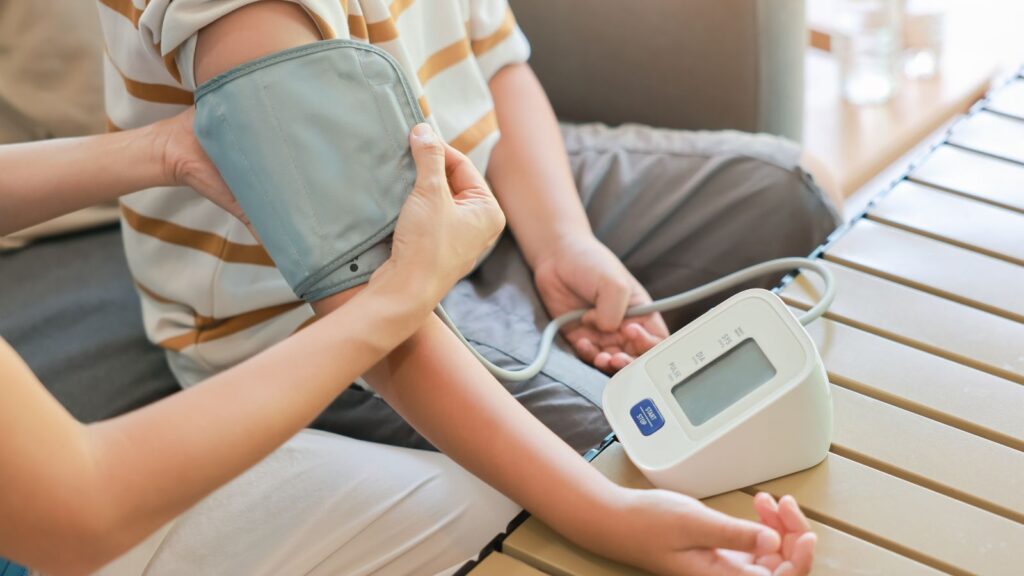
High blood pressure in children
High blood pressure in children can occur as early as childhood and adolescence and may go unnoticed for a long time. It is important to note that, unlike for adults, age-specific reference ranges apply to children. In younger children, blood pressure is assessed on the basis of factors including age, gender and height.
In children, too, a distinction is generally made between two forms of hypertension:
- Primary hypertension: There is no other medical condition that is the direct cause. Being overweight, a lack of exercise, an unhealthy diet and genetic factors can increase the risk. This form occurs mainly in older children and adolescents.
- Secondary hypertension: High blood pressure is the result of another medical condition, such as kidney disease, a hormonal disorder or a cardiovascular condition. This form is more common in younger children.
High blood pressure often causes no obvious symptoms in children. However, if blood pressure is significantly elevated, symptoms such as headaches, dizziness, tiredness or difficulty concentrating may occur. This is why it is important to monitor blood pressure to detect elevated levels at an early stage.
Treatment depends on the cause and severity of the high blood pressure, as well as any underlying conditions. In cases of primary hypertension, regular exercise, a balanced diet and, if the child is overweight, weight loss play an important role. Depending on the cause and severity, medication may also be necessary.
Cholesterol in children
It is not only adults who suffer from high cholesterol levels; children are increasingly affected too. This is problematic because persistently high cholesterol levels (hypercholesterolaemia) can lead to unnoticed fat build-up in the walls of the blood vessels (atherosclerosis) even during childhood. This increases the risk of heart attacks and strokes in early adulthood.
Being overweight, a lack of exercise and an unhealthy diet all play a significant role. However, high cholesterol levels can also be genetic. In familial hypercholesterolaemia, LDL cholesterol levels are significantly elevated from childhood onwards due to an inherited metabolic disorder.
A cholesterol test may be particularly useful if:
- there is a family history of heart attacks or strokes at a young age
- parents or close relatives are known to have significantly elevated cholesterol levels
- the child is overweight or has other risk factors such as high blood pressure
A balanced diet and regular exercise play an important role in managing high cholesterol levels. However, in cases of familial hypercholesterolaemia, lifestyle changes alone are often insufficient. Depending on the child’s age and the level of their cholesterol, medication may also be necessary.
Prevention: What is important for heart health?
Even from a young age, parents can do a great deal to promote their child’s long-term heart health. According to current medical guidelines on cardiovascular prevention, there are five key pillars:
- Plenty of exercise: Children and teenagers should, on average, engage in at least 60 minutes of moderate to vigorous physical activity per day. Three times a week, they should work up a proper sweat to strengthen their heart and muscles.
- A balanced diet: Plenty of fruit and vegetables, wholegrains, pulses and high-quality vegetable oils form a good basis. Foods high in sugar, fast food and soft drinks should be the exception, to prevent obesity and atherosclerosis.
- Adequate sleep: How much sleep a child needs depends on their age. Regular bedtimes and sufficient sleep are important for physical recovery and can also support cardiovascular health.
- Limiting screen time: Too much screen time encourages a lack of physical activity and unhealthy snacking.
- Make use of routine check-ups: Regular check-ups with the paediatrician are important for the early detection of risk factors such as high blood pressure or congenital metabolic disorders.

Parent checklist
Parents can do a lot in their day-to-day lives to promote their child’s heart health and spot any warning signs early on.
A healthy daily routine
- Physical activity: Does my child get enough exercise every day and is he or she regularly physically active?
- Diet: Does my child eat a varied diet with plenty of vegetables, fruit and wholemeal products?
- Drinks: Are water and unsweetened drinks their main thirst-quenchers?
- Sitting and screen time: Are long periods of sitting regularly broken up by physical activity?
- Smoke-free environment: Is my child growing up in as smoke-free an environment as possible?
Keeping an eye out for warning signs
- Drinking in infants: Does my baby tire unusually quickly whilst drinking, or do they sweat noticeably heavily whilst doing so?
- Skin colour: Do their lips or fingernails turn bluish when they’re crying, drinking or playing sport?
- Stamina: Does my child become exhausted or out of breath unusually quickly whilst playing or doing sport?
- Chest pain and palpitations: Do they experience repeated episodes of chest pain, palpitations or irregular heartbeats?
- Dizziness and fainting: Do episodes of fainting or repeated dizziness occur, particularly during physical exertion?
Preventative care and health
- Routine check-ups: Do we attend the recommended routine check-ups?
- After infections: Is my child able to recover sufficiently after an infection before resuming intensive sport?
- Family history: Is there a history of heart disease, very high cholesterol levels, or heart attacks or strokes at a young age in our family?
Preventative check-ups
Regular check-ups (U-check-ups for children and check-ups for young people) are very important for children’s heart health, as they enable paediatricians to identify risks even before symptoms appear.
- During these check-ups, the following areas, amongst others, can be assessed:
- Heart and circulation: The heart is auscultated, with particular attention paid to any abnormal heart sounds.
- Blood pressure: Regular blood pressure measurements can help detect high blood pressure in children at an early stage.
- Weight and growth: Height and weight are recorded regularly. This enables any abnormalities in physical development to be identified.
- Pulse: Depending on the child’s age and the nature of the examination, the pulse and heart rate are assessed.
- Further tests in cases of increased risk: If there are certain risk factors or a family history of medical conditions, additional tests may be advisable, such as a blood lipid profile.
Please also inform your paediatrician about any cardiovascular conditions in the family, particularly if heart attacks or strokes have occurred at a young age or if very high cholesterol levels are known to exist.
FAQ
The heart rate per minute also depends on age and gender. In women, the pulse is usually slightly faster than in men, whilst in children it is generally faster. Normal resting heart rates are:
- Newborn babies: 120 to 140
- Toddlers: 100 to 120
- Older children and adolescents: around 80 to 100
- Adults: 60 to 80
Pulse oximetry in newborns is a simple, painless rapid test for the early detection of serious congenital heart defects. To carry out the test, a small light sensor is wrapped around the baby’s foot during the first few hours of life. This measures the oxygen level in the blood in a matter of seconds.
This enables certain critical heart defects to be investigated more thoroughly (by ultrasound) in good time, before the child suddenly becomes seriously ill at home.
Yes, iron is extremely important for the heart, as it is the key component of haemoglobin (the red blood pigment) and myoglobin (the oxygen store in the muscles). It ensures that oxygen is transported from the lungs to the organs and directly into the heart muscle.
In children, severe iron deficiency leads to fatigue, pale skin, difficulty concentrating and reduced physical stamina. But be careful: too much iron is also harmful. Supplementation with high-dose preparations should only ever be given to children after consultation with and a blood test by a paediatrician.
A heart ultrasound is carried out if there is a suspicion of a heart abnormality. A child will particularly need one in the following situations:
- Abnormal findings: The paediatrician hears a new, unexplained heart murmur, measures persistently high blood pressure, or the pulse oximetry reading after birth was abnormal.
- Acute warning signs: The child complains of unexplained palpitations or chest pain, or faints whilst playing sport.
- Suspected myocarditis: In cases of persistent fatigue, shortness of breath or a sudden drop in performance weeks after a severe infection.
- Developmental concerns: Infants who feed extremely poorly, sweat profusely whilst feeding or fail to gain weight.
- Follow-up monitoring: For known congenital heart defects, to monitor growth regularly.
Heart murmurs in babies simply mean that, when listening with a stethoscope, the doctor hears an additional sound caused by the flow of blood. In the vast majority of cases, they are completely harmless and occur simply because the blood flows more quickly in a baby’s small body or because the blood vessels are still very elastic. It often disappears of its own accord. This is in contrast to an organic heart murmur, which indicates a change in the heart. In such cases, it is important to have a cardiac ultrasound carried out by a paediatric cardiologist.
Yes, children can also have high blood pressure. Unlike in adults, however, there are no fixed reference values for children; instead, blood pressure is assessed according to age, gender and height.
In children, too, a distinction is made between two forms of hypertension:
- Primary hypertension: this is usually caused by being overweight, a lack of exercise, an unhealthy diet or a genetic predisposition.
- Secondary hypertension: in this case, high blood pressure is the result of another condition, usually affecting the kidneys, the endocrine system or the heart.
Yes, this is actually done as standard. The main method used is an ultrasound scan carried out by a gynaecologist or a specialist in antenatal diagnostics. This means that, in the vast majority of cases, serious, critical heart defects can now be detected in advance.


Haas N et al: Paediatric Cardiology: Clinical Management and Practice of Heart Disease in Children, Adolescents and Young Adults, Thieme 2018.
S2k Guideline: Prevention of Cardiovascular Disease in Children and Adolescents
https://register.awmf.org/assets/guidelines/023-049l_S2k_Praevention-kardiovaskulaerer-Erkrankungen-im-Kindes-und-Jugendalter__2023-12.pdf, accessed June 2026
https://www.dgkj.de/eltern/spezialist/-innen-portraits/kinderkardiologie, accessed June 2026
https://herzstiftung.de/leben-mit-angeborenem-herzfehler/angeborene-herzfehler, accessed June 2026
https://herzstiftung.de/ihre-herzgesundheit/anzeichen-fuer-herzprobleme-erkennen/welcher-puls-ist-normal, accessed June 2026
https://www.gesundheit.gv.at/leben/eltern/geburt/neugeborenenuntersuchung-neugeborenenscreening.html, accessed June 2026
https://www.kinderaerzte-im-netz.de/mediathek/blutdruckrechner/, accessed June 2026