Summary
Home remedies for bronchitis
What is bronchitis?: Bronchitis is an inflammation of the bronchi, i.e. the airways in the lungs. It is usually caused by a viral infection, such as the common cold. Typical symptoms include a cough (often dry at first, later with phlegm), a feeling of tightness in the chest and sometimes a slight fever.
Which home remedies help with bronchitis? Drinking plenty of fluids, warm teas, steam inhalation, honey (for children aged 1 year and over), warm chest compresses and humidifying the air in the room can soothe the urge to cough and loosen stuck-up phlegm. Home remedies mainly provide symptomatic relief, but are no substitute for medical advice if warning signs are present.
Which home remedies help children? For children, it is particularly important to ensure they drink plenty of fluids, have humidified air and receive gentle heat treatments. Inhalation is possible, but only if it is age-appropriate and safe. Honey should not be given to children under one year of age.
When should you seek medical advice for bronchitis? Medical advice should be sought in the event of shortness of breath, a high or persistent fever, bloody sputum, severe chest pain and a marked deterioration in the child’s condition.
What is bronchitis and what usually causes it?
Bronchitis is an inflammation of the mucous membranes lining the bronchi. This leads to increased mucus production, makes the airways more sensitive and causes a cough. The condition typically progresses in two phases: initially, a dry, irritating cough predominates; later, mucus often forms (productive cough).
It is important to distinguish between acute bronchitis (usually following an infection, temporary) and chronic bronchitis (a cough lasting for months, often caused by smoking or COPD).
Most common cause: viruses
Acute bronchitis is caused by viruses in most cases, often accompanied by a runny nose, hoarseness, a sore throat or mild aching limbs. It usually occurs as part of a flu-like infection, but can also be caused by other viruses such as RSV or SARS-CoV-2. The cough can last from several days to weeks, even after the other cold symptoms have subsided.
Antibiotics are not effective against viral bronchitis. They are only considered if the condition is bacterial bronchitis or a superinfection (a secondary infection). You can read more about acute bronchitis here.
Less common: bacteria or pneumonia
Bacterial causes are significantly less common. In around 5–10% of cases, a secondary bacterial infection may develop following acute bronchitis. Primary bacterial bronchitis is rare and usually occurs alongside other conditions.
It is important to distinguish this from pneumonia: this tends to present with a high fever, a marked feeling of being unwell, shortness of breath, pain when breathing, or persistent severe symptoms. If pneumonia is suspected, medical advice should be sought.
In rare cases, bronchitis can develop into pneumonia. If you experience any warning signs, you should therefore consult a doctor without delay.
These home remedies help with bronchitis
Many people turn to tried-and-tested home remedies when they have bronchitis. The main aim of these remedies is to moisturise the mucous membranes, thin the mucus and soothe the urge to cough.
Important: Home remedies are no substitute for a medical assessment. If you experience warning signs such as shortness of breath, a high fever or chest pain, you should always see a doctor. However, home remedies can support and complement conventional medical treatment.
Drink plenty of fluids: to loosen phlegm and ease the cough
Drinking plenty of fluids helps to thin out thick mucus. As a rough guide, aim for around 1.5–2 litres a day (e.g. water, tea, broth). If you have a fever or are sweating heavily, you may need more, provided there are no medical reasons against it.
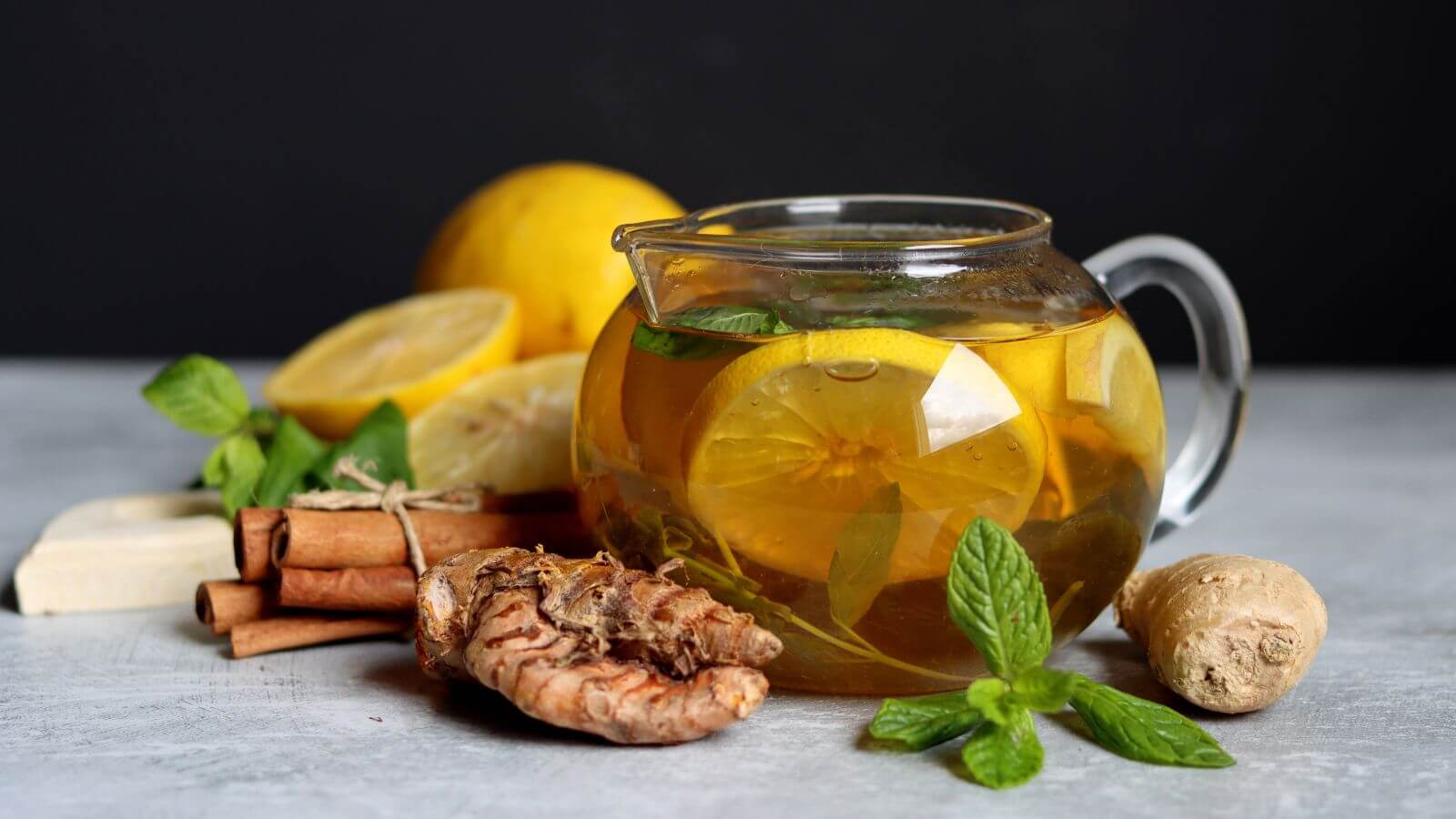
Tea for bronchitis: thyme, ribwort plantain & co.
Warm teas are a classic home remedy for a cough. They moisturise the airways and are often found to be soothing. Certain medicinal plants, such as thyme or ribwort plantain, contain plant compounds that can help to soothe the urge to cough and make it easier to cough up phlegm.
The following medicinal plants are commonly used for bronchitis:
- Thyme
- Ribwort plantain
- Lungwort
- Marshmallow
- Sage
- Linden blossom
- Fennel
- Elder
- Ginger
Tea recipe: Thyme and lungwort tea blend
At the chemist’s, you can ask them to put together a mixture of 30 grams each of lungwort, primrose blossoms, speedwell and ribwort plantain.
Preparation:
Pour half a litre of boiling water over two tablespoons of the mixture. Leave to infuse for about 15 minutes, then strain.
Drink the tea in small sips throughout the day. If desired, the tea can be sweetened with a little honey.

Inhalation: moist heat for the bronchial tubes
Inhalation is a tried-and-tested home remedy that can provide relief from a cough. Breathing in warm steam moisturises the mucous membranes and helps loosen stubborn phlegm. Additives such as salt or certain herbs can enhance the effect.
How to carry out inhalation at home
- Bring 2–3 litres of water to the boil and pour it into a large bowl.
- Add 2 tablespoons of salt and/or suitable herbs.
- Leave the mixture to infuse for 10 minutes and allow it to cool for a few minutes until the steam is comfortably warm.
- Only once the mixture has cooled down slightly should you lean your head over the bowl, cover it with a towel and breathe in and out calmly and deeply.
Make sure you keep a safe distance from the hot water to avoid scalding yourself. The recommended duration is around 10–20 minutes.
Tip: Thyme or camomile are ideal herbs for inhalation.
Note: Inhalations can be carried out once to three times a day. Due to the risk of scalding, inhaling from an open bowl is not suitable for young children.
Menthol (also known as peppermint or mint oil) and camphor must not be used on infants and children under two years of age, as there is a risk of respiratory spasms. Not every essential oil is suitable for inhalation. If in doubt, seek advice from a doctor or at a pharmacy.
Chest compresses provide relief from a severe cough
Warm chest compresses made with potato, quark or mustard are also a traditional home remedy for a severe cough associated with bronchitis.
The warmth relaxes the airways, stimulates blood circulation and helps to loosen and clear mucus.
How to make a potato compress
Potato compresses work primarily through the soothing, steady and sustained warmth they provide. This promotes blood circulation, relaxes the bronchi and helps to loosen trapped mucus.
Instructions:
- Place soft-boiled potatoes (approx. 400 g) in the centre of a clean cotton cloth and carefully mash them with a fork.
- Fold the cloth and leave to cool until the compress is comfortably warm.
- Place it on the chest and secure it with another cloth.
- Cover with a blanket to retain the heat.
- Leave it on for about 30 minutes or until the compress has cooled down.
Tip: Sprinkling a teaspoon of dried thyme over the mashed potatoes can enhance the treatment.
How to make a quark compress
A warm quark compress has a soothing, anti-inflammatory and expectorant effect on a cough. The moist heat can stimulate blood circulation and help to relax the airways.
Instructions:
- Take the quark (250 grams) out of the fridge and bring it to body temperature. You can gently warm the quark in a bain-marie. The fat content of the quark is irrelevant here.
- Spread the quark about a finger’s thickness in the centre of a clean cotton cloth and fold the cloth over.
- Secure the wrap with a towel and leave it on for about 30 minutes.
Warning: Do not use if you have a contact allergy to milk protein!
How to prepare a mustard wrap
Instructions:
- Spread 1–2 tbsp of mustard powder in the centre of a cotton cloth and fold the cloth over.
- Dip the cloth in water at around 50 °C and wring it out thoroughly.
- Place the warm, damp cotton cloth on your chest
- Cover with a dry towel and a blanket or scarf to retain the heat.
- Leave on for a maximum of 5 minutes for children and 10 minutes for adults. The skin should be slightly reddened. Check regularly during application – remove immediately if there is a strong burning sensation or discomfort.
- After removal, rinse the skin with lukewarm water and gently pat dry. A mild skin care oil (e.g. thyme oil, St John’s wort oil or lavender oil) can then be applied.
Please note: For children, the mustard plaster should be applied more sparingly. If there is a severe burning sensation or pain, stop using it immediately.
Onion syrup: Grandma’s home remedy for bronchitis
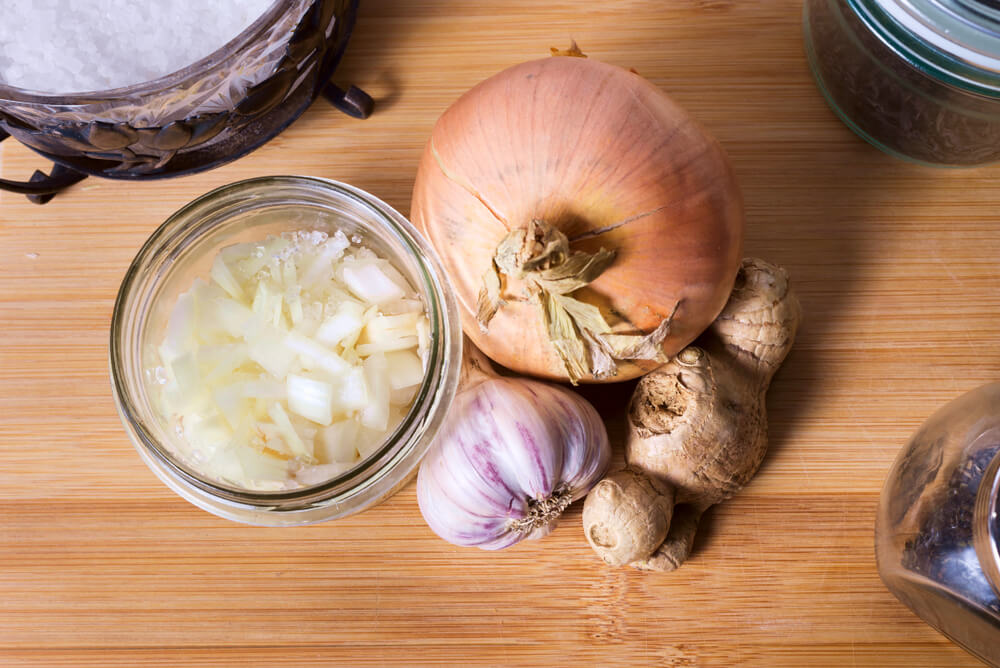
Onion syrup is a tried-and-tested home remedy that provides natural relief from bronchitis. The essential oils and sulphur compounds contained in onions have anti-inflammatory and antibacterial properties. The syrup also soothes the urge to cough and helps to loosen stuck mucus, making it easier to cough up.
How to make onion syrup/onion juice:
Ingredients:
- 1 onion
- 2–4 tablespoons of honey or sugar
- optional: 1 teaspoon of dried thyme
Method:
- Prepare the onion: Dice the onion into small cubes and place in a clean screw-top jar (e.g. a jam jar).
- Add sweetener: Cover the diced onion with 2–4 tablespoons of honey or sugar.
- Mix and leave to infuse: Seal the jar and leave the mixture to infuse for several hours, ideally overnight, until a syrup forms. Shake the jar occasionally to help the sugar dissolve.
- Strain: Strain the resulting syrup through a fine sieve and pour into a clean container.
How to use: Take a teaspoonful several times throughout the day. The mild flavour makes the syrup suitable for children aged one year and over. The onion syrup will keep for several weeks in the fridge if tightly sealed.
Important: Babies under one year of age must not consume honey, as it carries a risk of botulism, a form of bacterial poisoning. In this case, the syrup can be made with sugar instead.
Tip: A teaspoon of dried or fresh thyme can further enhance the flavour of the onion syrup.
Chicken soup: A tried-and-tested classic
Chicken soup is one of the oldest home remedies for colds, and for good reason. Grandmothers have sworn by its effectiveness for generations. It provides warmth, fluids and easily digestible nutrients. Studies, including those carried out by the University of Nebraska, suggest that chicken soup can have a mild effect on inflammatory processes in the body.
Slow cooking releases, amongst other things, protein building blocks such as cysteine from the chicken. Cysteine is structurally similar to the active ingredient acetylcysteine (ACC), which is known as a mucolytic medicine.
This could help chicken soup to thin mucus. However, the main benefit lies in the combination of warmth, fluid and ease of digestion.
Warm broths can soothe the mucous membranes, make it easier to cough up phlegm and stabilise circulation. At the same time, the soup provides electrolytes, protein and minerals.
Tip: A good chicken soup takes time. Let the soup simmer gently so that the valuable nutrients from the meat and vegetables are released into the stock. To give your immune system an extra boost, you can:
- cook a piece of ginger with the soup, as it has anti-inflammatory properties.
- add chopped garlic just before the end to benefit from its antibacterial properties.
Basic recipe for a hearty chicken soup
Ingredients:
- 1 chicken or 1 kg chicken drumsticks (ideally organic)
- 1 bunch of soup vegetables (carrot, celery, leek, parsley root)
- 1 onion
- 3 garlic cloves
- 1 bay leaf
- 3 allspice berries
- 3 cloves
- 5 juniper berries
- 1 tsp dried lovage
- 1 tsp dried thyme
- 1 tsp peppercorns
- 1 tbsp salt
- 1 thumb-sized piece of ginger
Method:
- Wash the chicken inside and out and place it in a large saucepan.
- Peel the vegetables and cut them into rough chunks.
- Quarter the onion and fry briefly in a little oil together with the vegetables.
- Place the chicken in the saucepan and pour in about 3–4 litres of water.
- Add the spices, herbs and ginger, and bring everything slowly to the boil.
- Now leave the stock to simmer gently for 2–3 hours (do not let it boil vigorously).
- Skim off the foam as it rises regularly.
- Once cooked, remove the chicken, strain the soup and season to taste with salt.
- Remove the meat from the bone and return it to the soup.
- The vegetables can be served alongside the soup or removed, as desired.
Tip: The slower the soup simmers, the clearer and more flavourful the stock will be. If you like, you can add fresh parsley or chives just before serving.

Black radish juice: a traditional home remedy for coughs
Black radish contains mustard oils, which are said to have expectorant and mildly soothing properties. The root also provides potassium, calcium and vitamin C.
When combined with honey and sugar, it produces a syrup that can help relieve a productive cough. Although scientific evidence of its effectiveness is limited, its use has long been a traditional practice.
How do you make black radish cough syrup?
Ingredients:
- 1 large black radish (round)
- Sweetener: honey, rock sugar or brown cane sugar
Method:
- Prepare the radish: Wash the radish thoroughly and cut off the top ‘lid’. Use a spoon to scoop out about a third of the flesh. Then pierce a small hole in the base (e.g. with a wooden skewer) so that the syrup can drain out later.
- Add sweetener: Fill the inside of the radish with sugar or honey, then replace the top.
- Leave to infuse: Place the filled radish on top of a glass. Within a few hours, a syrup will form and drip through the hole into the glass. The longer the juice is left to infuse, the more cough syrup will be produced.
The syrup can be taken by the teaspoonful throughout the day.
Important: Honey must not be given to children under one year of age. Radish may occasionally cause discomfort in those with a sensitive stomach.
Home remedies for babies and children with bronchitis
In children, acute bronchitis usually develops as part of a viral infection. The main aim of treatment is to relieve the cough, make breathing easier and take the strain off the child’s little body. Gentle measures are the priority here.
Here are some tried-and-tested home remedies that often prove helpful for children:
- Drink plenty of fluids: Lukewarm tea, water or clear broth keep the mucous membranes moist and help to thin thick mucus. For infants, frequent breastfeeding or bottle-feeding is particularly important.
- Humidify the air: A humidity level of around 40–60% can reduce the urge to cough. Regularly airing the room also ensures fresh air that isn’t too dry.
- Gentle warmth: A warm (not hot) chest compress made with potatoes or quark can feel soothing and help you relax. It is important to check the skin regularly.
- Honey (from 1 year of age): Half to one teaspoon of honey, either on its own or in lukewarm tea, can soothe a dry cough. Honey must not be given to children under one year of age (risk of infant botulism).
- Onion syrup: As already described, onion syrup can alleviate the urge to cough and help bring up phlegm. For children under one year of age, it should be prepared without honey, using only sugar.
- Cough syrup made from black radish: Black radish contains mustard oils, which have expectorant and mildly soothing properties. When combined with honey and sugar, this produces a syrup that can help with a productive cough. The same rule applies here: honey should only be given from the age of one year onwards.
Important
- Do not use essential oils containing menthol, camphor or peppermint on children under two years of age – they can cause respiratory irritation or breathing difficulties.
- Open steam inhalations with hot water are not suitable for young children due to the risk of scalding.
- If your child has a fever, is breathing rapidly or with difficulty, refuses to drink, appears unusually tired, or if their condition worsens, you should seek medical advice.
When to see a doctor for bronchitis
Acute bronchitis is usually harmless and clears up on its own. However, there are warning signs that indicate the need for a medical assessment.
Adults should seek medical advice for bronchitis if …
- the symptoms do not improve after a few days
- you experience shortness of breath, severe chest pain, wheezing or a feeling of tightness in the chest
- you have a high fever or it persists for a long time
- there is bloody sputum
- they have relevant pre-existing conditions (e.g. COPD, asthma, heart disease)
Particular caution is advised in the case of babies, young children, pregnant women and older people. In these cases, medical advice should be sought at an early stage if symptoms persist or are unclear.
FAQ
The acute symptoms usually improve within one to two weeks. However, the cough may persist for longer and sometimes last up to three weeks. If the cough lasts longer than three weeks or gets worse, you should see a doctor.
Not necessarily. Mucus can also turn yellowish or greenish in the case of viral infections. What is more important is the patient’s general condition, the presence of a fever and shortness of breath, and the overall course of the illness.
Antibiotics are not effective for acute bronchitis caused by viruses. They are only considered if there is a bacterial infection, a so-called superinfection (secondary infection) or other complications. A medical examination will determine whether antibiotic treatment is necessary.
Acute bronchitis is not usually dangerous and generally clears up without any lasting effects. However, if you experience a high fever, bloody sputum, shortness of breath or a marked worsening of your symptoms, you should seek medical advice immediately.
Yes, if it is caused by a virus – which is the case in most instances – it is contagious. The pathogens are mainly transmitted via droplets produced when coughing or sneezing. Good hand hygiene, social distancing and regular ventilation help to reduce the risk of infection.
In most cases, acute bronchitis clears up without complications. In rare cases, however, pneumonia may develop. The risk is higher in people with chronic conditions or a weakened immune system. Warning signs include a high fever, severe shortness of breath, chest pain or a marked deterioration in general health.


https://www.lungenaerzte-im-netz.de/krankheiten/bronchitis-akut/ursachen-risikofaktoren/, accessed: February 2026
https://www.tgam.at/wordpress/wp-content/tgam_husten_patienteninfo_kurz_2017-1.pdf, accessed: February 2026
https://www.cegla.de/wissen/bronchitis-hausmittel/, accessed: February 2026
https://www.daab.de/atemwege/copd, accessed: February 2026
https://www.healthline.com/health/home-remedies-for-bronchitis, accessed: February 2026
https://www.mein-schoener-garten.de/lifestyle/gesund-leben/hustensaft-schwarzer-rettich-77215
, accessed: February 2026
https://www.uniklinik-freiburg.de/fileadmin/mediapool/08_institute/rechtsmedizin/pdf/Erkaeltung2.pdf
, Accessed: February 2026
https://starkelunge.de/fuer-patienten/senfwickel/
, Accessed: February 2026
https://www.kinderaerzte-im-netz.de/aerzte/mullheim/praxis-u18/patienten-service/husten/brustwickel.html
, Accessed: February 2026
https://www.apothekerkammer.at/fileadmin/001_Bilder_Relaunch/Public_Area/Media_Enquiries_and_Communication/Downloads/Home_Remedies_Brochures/OEGK_22_Home_Remedies-Children_WEB.pdf
, accessed: February 2026