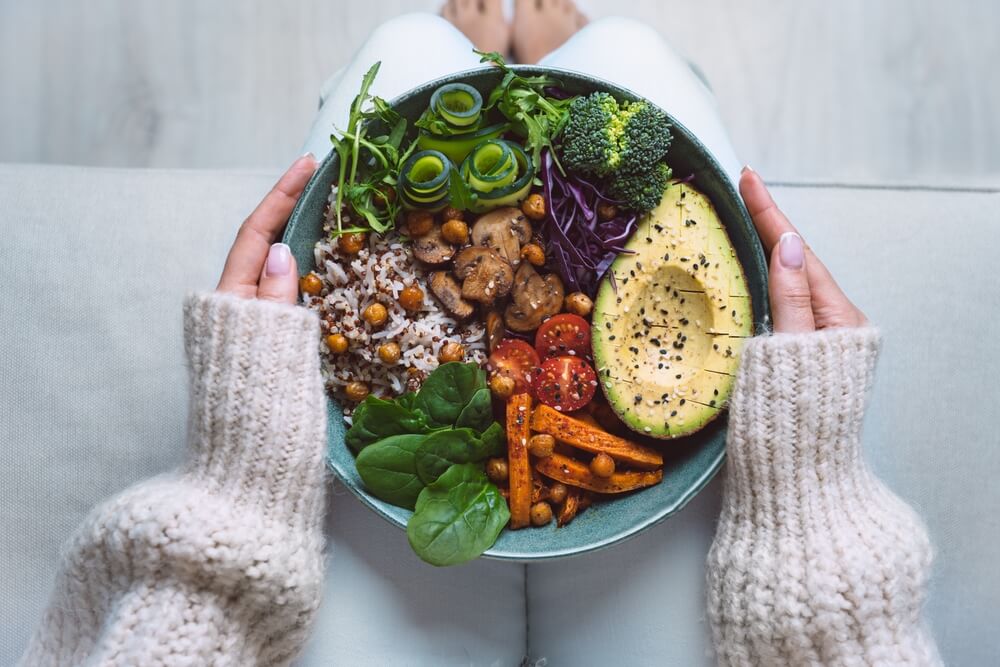
What is a healthy diet?
A healthy diet provides the body with all the necessary nutrients and supports the immune system. It is characterised by a variety of fresh, nutrient-rich foods and a balanced ratio of macronutrients (carbohydrates, fats and proteins) and micronutrients (vitamins and minerals).
In Austria, the food pyramid offers an easy-to-understand guide to a balanced diet. The pyramid divides the recommended daily intake of the various food groups into different levels:
- Drinks: Drinks form the base of the pyramid. The recommendation is 1.5 to 2 litres of water, unsweetened teas or heavily diluted fruit juices per day. Sweetened drinks should be avoided as far as possible.
- Fruit and vegetables: The second level comprises fruit and vegetables. These foods are rich in vitamins, minerals and fibre. The recommendation is to eat five portions a day, ideally in a ratio of three portions of vegetables to two portions of fruit.
- Cereal products and potatoes: Wholemeal products, potatoes and rice make up the third level and should be eaten several times a day. Wholemeal products are a valuable source of carbohydrates, fibre, vitamins and minerals, and help to maintain stable blood sugar levels.
- Dairy products: The fourth group comprises milk and dairy products, which are rich in calcium and protein and thus contribute to bone health. Two to three portions a day are recommended.
- Pulses: Since July 2024, pulses have formed a separate pillar. The recommendation here is three portions per week.
- Meat, fish: These foods provide high-quality protein and important nutrients such as iron, omega-3 fatty acids and vitamin B12. The recommendation is one portion of meat + one portion of fish + either one portion of meat or fish per week.
- Eggs: The recommendation is three portions per week.
- Fats and oils: Healthy fats and oils such as olive oil and rapeseed oil are on the sixth level. These provide unsaturated fatty acids that support the cardiovascular system. Fats should be used sparingly and thoughtfully.
- Sweets and snacks: At the top of the pyramid are sweets, snacks and fatty foods, which should only be consumed rarely and in small quantities.
How are diet and longevity linked?
Diet and longevity are closely linked, as the choice and quality of the food we eat have a direct impact on our health and lifespan. An impressive example of this is the Blue Zones – regions of the world where a particularly high number of people live to be over a hundred years old. Here, the diet is based on fresh, unprocessed and nutrient-rich foods, with vegetables, fruit, whole grains, pulses and healthy fats playing a central role.
These findings are supported by a study from the Harvard T.H. Chan School of Public Health, which investigated how different dietary patterns influence life expectancy. The study compared the Mediterranean diet, a plant-based diet, and the ‘Healthy Eating Index’ and ‘Alternate Healthy Eating Index’ dietary patterns. The results clearly show that people who eat a nutrient-rich and mindful diet are less likely to die prematurely.
The dietary patterns examined shared key common features:
- Unprocessed foods as the basis
- Minimal alcohol consumption
- Low sugar content
- A low proportion of animal products
- A predominantly plant-based diet with a high proportion of vegetables, pulses and high-quality unsaturated fats from nuts, virgin oils and seeds
Conscious food choices and the quality of food play a central role in leading a healthy and long life.
The role of antioxidants in the ageing process
What are antioxidants?
Antioxidants are natural substances that protect cells from harmful free radicals, which can be caused by stress, environmental toxins and an unhealthy diet. This is why they are also known as radical scavengers. Free radicals can lead to changes in the body’s cells. This is also referred to as oxidative stress. As a result, cells can age more quickly or lose their function. Experts suspect a link here with the development of conditions such as cardiovascular disease, diabetes or Alzheimer’s.
Among the best-known antioxidants are vitamins A, C and E, as well as minerals such as selenium, zinc and iron, and phytochemicals such as flavonoids, carotenoids and resveratrol.
Antioxidants are found in:
- fruit and vegetables
- Wholemeal products
- Pulses
- high-quality vegetable oils
- nuts
A diet rich in natural antioxidants promotes good health and helps maintain the body’s balance. Nutrition experts therefore recommend regularly incorporating antioxidant-rich foods into your diet: green leafy vegetables such as spinach, vegetables such as carrots and broccoli, and fresh fruit such as apples and grapes. A cup of green tea is also an excellent source of antioxidants and can be an ideal addition to your daily meals.
The benefits of omega-3 fatty acids
What are omega-3 fatty acids?
Omega-3 fatty acids are essential, polyunsaturated fats that the body cannot produce itself and which must therefore be obtained from food.
Which omega-3 fatty acids are important?
- DHA (docosahexaenoic acid)
- EPA (eicosapentaenoic acid)
- ALA (alpha-linolenic acid)
The Canadian-American physician Peter Attia, a leading expert in the field of longevity, emphasises the importance of omega-3 fatty acids in the diet. He particularly highlights the combination of EPA and DHA for improving heart health.
What are the benefits of omega-3 fatty acids?
The benefits include:
- Cardiovascular health: Omega-3 fatty acids can improve blood flow, lower triglyceride levels and have anti-inflammatory effects. These properties help to reduce the risk of cardiovascular disease.
- Cognitive function: Omega-3 fatty acids support brain function and may reduce the risk of neurodegenerative diseases.
- Anti-inflammatory effects: Omega-3 fatty acids have anti-inflammatory properties that may be helpful in the prevention and treatment of inflammatory conditions.
Sources of omega-3 fatty acids:
Good dietary sources of omega-3 fatty acids include:
- Oily fish such as salmon, mackerel and sardines
- Plant-based sources such as linseeds, chia seeds and walnuts
- Vegetable oils such as rapeseed oil and linseed oil
It is important to ensure a balanced diet with an adequate intake of omega-3 fatty acids in order to benefit from their health benefits.
Sugar accelerates the ageing process
Excessive sugar consumption can accelerate the ageing process and impair quality of life. A study by the University of California, San Francisco, showed that even small amounts of added sugar cause the biological clock to tick faster. The researchers found that people who consumed sugar daily had a higher biological age than those with lower sugar intake.
These findings are in line with the recommendations of the World Health Organisation (WHO), which advises reducing the consumption of free sugars to less than ten per cent of daily energy intake in order to lower the risk of obesity, diabetes and tooth decay. Excessive sugar consumption is also linked to a range of diseases, including obesity, type 2 diabetes, cardiovascular disease, depression and sleep disorders. High sugar intake can lead to increased inflammation and weaken the immune system.
The aforementioned study at the University of San Francisco concluded that cutting out ten grams of added sugar per day can turn the biological clock back by 2.4 months. To actively support longevity, it is worth making a conscious effort to reduce sugar intake and incorporate a varied, nutrient-rich diet into your daily routine. It is particularly important to watch out for hidden sugar, which is often found in processed foods such as ketchup, ready meals and fizzy drinks.
How water combats ageing
Water is essential for many vital processes in the body, including metabolism, digestion and the transport of nutrients. Adequate hydration supports organ function and helps maintain cognitive and physical performance. Maintaining a balanced water balance is particularly important in old age to ensure a high quality of life.
What are the consequences of insufficient fluid intake?
The Austrian food pyramid recommends at least 1.5 litres of water per day in the form of plain water, mineral water, unsweetened teas, and unsweetened fruit and vegetable juices. Researchers at the National Heart, Lung, and Blood Institute (NHLBI) suspect that insufficient fluid intake accelerates the body’s ageing process, whilst drinking enough water can have an ‘anti-ageing effect’. To investigate this, they studied 15,000 people aged between 45 and 66. The results showed that adequate fluid intake can slow down the ageing process.
Inadequate water intake can lead to dehydration, which has a negative impact on memory, concentration and physical performance. Furthermore, dehydration is linked to accelerated skin ageing and an increased risk of infection. To prevent these effects, it is important to drink enough water every day to support the body as effectively as possible.
Healthy eating patterns: from intermittent fasting to the Mediterranean diet
Intermittent fasting
What is intermittent fasting?
Intermittent fasting is a dietary approach in which food intake is restricted to specific time windows. The most common method is the 16:8 fast, where you fast for 16 hours and eat within an 8-hour window. Research suggests that this method stimulates autophagy – the process of cell cleansing – and thereby promotes cell renewal. This can help to eliminate damaged cell structures and thus slow down the ageing process.
What are the benefits of fasting?
A key aspect of intermittent fasting is the promotion of autophagy. During this natural process, the body cleanses itself of damaged cells and cellular components. This contributes to cell renewal and supports the immune system. Studies show that intermittent fasting can increase life expectancy by helping to prevent age-related diseases. Read more about intermittent fasting here.
Blue Zones: The diet of centenarians
What are the Blue Zones?
The ‘Blue Zones’ are regions around the world where people live to a particularly advanced age whilst remaining healthy well into old age. These areas were identified by the American author and longevity researcher Dan Buettner, who discovered that the inhabitants of these zones share certain lifestyle habits that contribute to their longevity. The Blue Zones include:
- Okinawa (Japan)
- Sardinia (Italy)
- Ikaria (Greece)
- Loma Linda (California, USA)
- Nicoya Peninsula (Costa Rica)
People in these regions have a high life expectancy and low rates of chronic disease. Blue Zones research shows that diet, exercise, social connections and a positive outlook can reduce the risk of age-related diseases and contribute to longevity.
What are the basic principles of the Blue Zones diet?
The diet in the Blue Zones is based on the principles of ‘natural’ and ‘unprocessed’. In particular, pulses, whole grains and healthy fats from olive oil are cornerstones of the diet in these areas. Red meat is consumed only rarely; instead, plant-based protein sources such as beans and lentils feature frequently on the menu. This way of eating promotes good health and is often combined in practice with a healthy social environment and daily exercise. The Blue Zones diet in detail:
- Plenty of fresh fruit and vegetables: People in the Blue Zones eat a wide variety of fresh, local and seasonal fruit and vegetables every day. These foods provide essential vitamins, minerals and antioxidants that strengthen the immune system and reduce inflammation in the body.
- Pulses as a source of protein: Beans, lentils, chickpeas and other pulses are key components of the diet and represent an important source of protein. They are rich in fibre, promote healthy digestion, lower cholesterol levels and keep you feeling full for longer.
- Healthy fats: Olive oil is an important part of the diet, particularly in Sardinia and Ikaria. It contains unsaturated fatty acids and polyphenols that protect the cardiovascular system. Nuts and seeds, which are rich in healthy fats, are also part of the daily diet in moderate amounts.
- Very little meat and animal products: Meat is eaten only rarely and is often regarded as a side dish rather than the main component of a meal. Animal products such as milk and cheese are consumed in small quantities and are mainly found in fermented forms, such as yoghurt.
- Minimal sugar intake and few processed foods: In the Blue Zones, sugar is used sparingly, and processed foods are rare. Instead, people rely on natural sweeteners such as honey and eat wholesome, unprocessed foods that keep blood sugar levels stable and reduce the risk of chronic diseases.
In summary, the diet in the Blue Zones consists primarily of fresh and unprocessed foods. It is predominantly plant-based and is only occasionally supplemented with small amounts of high-quality dairy, fish and meat products.
In contrast to the Western diet, the inhabitants of the Blue Zones avoid high-calorie, sugary and highly processed foods containing additives and trans fats. This reduces the risk of typical lifestyle-related diseases and increases the life expectancy of the inhabitants.
The Mediterranean diet
What is the Mediterranean diet?
The Mediterranean diet is a tried-and-tested and well-researched dietary approach that promotes longevity. It is based on fresh, seasonal foods, plenty of fruit and vegetables, whole grains and healthy fats such as olive oil. This way of eating has been shown to be good for heart health and reduces the risk of chronic conditions such as high blood pressure and diabetes.
It is recognised as one of the healthiest diets. In the Blue Zones, people – particularly on the Greek island of Ikaria and in Sardinia – follow the principles of the Mediterranean diet. A pan-European study by the University of Athens shows that people who consistently follow the Mediterranean diet have a higher life expectancy and are less likely to suffer from age-related diseases. In particular, the high intake of antioxidants, fibre and unsaturated fatty acids helps to reduce inflammation in the body and promote cell health.
Practical tips for incorporating the Mediterranean diet
If you’d like to incorporate the Mediterranean diet into your daily life, you can follow these tips:
- More vegetables and pulses: Fill the majority of your plate with fresh vegetables and pulses such as chickpeas and lentils.
- Olive oil as your main source of fat: Use olive oil instead of butter or margarine for cooking.
- Moderate fish consumption: Include oily fish such as salmon or mackerel, which are rich in omega-3 fatty acids, in your diet on a regular basis.
- Avoid sugar and processed foods: Opt for fresh, unprocessed ingredients and avoid sugar and highly processed products.
Living a healthy life through a balanced diet is an effective step towards longevity. Making a conscious choice to eat nutrient-rich foods can not only have a positive impact on our lifespan, but also enhance our everyday well-being. Although genetic factors play a role, research shows that a balanced diet is one of the most powerful ways to promote quality of life in the long term and to create the best conditions for a long and healthy life.