Summary
Meningococcal vaccination
Definition: Inactivated vaccine against the main subtypes of meningococci
Dosage: 1 to 3 doses, depending on age and vaccine
Recommended for: all children, adolescents and young adults; people at increased risk of the disease; people at increased risk of exposure; pilgrims and travellers to endemic areas
Contraindications: Hypersensitivity to the active substances or other components of the vaccine, as well as severe febrile illnesses
Cost: none, or depending on the vaccine
What are meningococci?
Meningococci are bacteria that colonise the human nasopharyngeal cavity. Their scientific name is Neisseria meningitidis, and there are various dangerous types of meningococci (A, B, C, W135, Y).
What are the potential consequences of a meningococcal infection?
Around 10 to 15 per cent of the population carry meningococcal bacteria without becoming ill. However, certain strains of these bacteria can cause serious illnesses with severe complications if they enter the bloodstream via the mucous membranes. Among the most common and serious conditions are purulent meningitis and blood poisoning (sepsis). These illnesses often develop very rapidly. Symptoms of meningitis include a sudden high fever, nausea, vomiting, severe headaches and a stiff neck. Changes in consciousness and pinpoint haemorrhages on the skin may also occur. The mortality rate for meningococcal disease is around 10 per cent. In 20 per cent of those affected, the disease leads to serious long-term consequences such as scarring, loss of limbs, paralysis, numbness or developmental disorders.
How is meningococcal disease transmitted?
Meningococci are transmitted via droplet infection. This occurs when sneezing, coughing, kissing or sharing objects such as glasses, particularly in settings where there is close contact between people.
Who is particularly at risk?
Infants, young children and adolescents are particularly at risk of developing a meningococcal-associated illness, but in principle anyone of any age can be affected.
Is there a duty to report meningococcal disease?
In Austria, meningococcal diseases are notifiable. People who fall ill must be immediately isolated in hospital to prevent further spread.
Where are meningococci found?
Meningococci are found worldwide. The serotypes in groups A, B, C, W135 and Y are particularly dangerous. In Austria, group B is the most common, but groups C and Y also play a role.
What is the meningococcal vaccination?
The meningococcal vaccine is an active vaccination against meningococcal infections. It consists of inactivated vaccines containing typical components of the meningococcal bacteria. As a vaccine, it does not cause the disease, but stimulates the body to produce specific antibodies. Depending on the vaccine, protection against specific meningococcal strains varies between 75 and 100 per cent.
What meningococcal vaccines are available?
There are various vaccines effective against different strains of meningococci. These strains are A, B, C, W135 and Y. The vaccines themselves are divided into three groups:
- Meningococcal B vaccine
- Meningococcal C vaccine
- Meningococcal A, C, W135 and Y vaccine
The vaccination schedule for the meningococcal vaccine depends on the vaccine used and the age of the person being vaccinated.
Who should be vaccinated against meningococcal disease?
The Austrian immunisation schedule recommends vaccination against meningococcal groups B, A, C, W135 and Y for all children, adolescents and young adults. In addition, meningococcal vaccinations are recommended in the following cases:
- People at increased risk of developing the disease due to congenital or acquired immunodeficiencies, or before or during certain treatments (e.g. eculizumab therapy, treatments with T-cell and B-cell immunosuppressants or biologics).
- People at increased risk of exposure (such as those in close contact with people with meningococcal disease, specific laboratory staff, and emergency or ambulance services)
Vaccination against meningococcal ACWY is recommended for pilgrims and travellers to countries with endemic or hyperendemic meningococcal disease who have close contact with the local population.
What should be borne in mind regarding meningococcal vaccination for children?
Meningococcal B vaccination
This vaccination is recommended for all children and adolescents (from the end of the second month of life), but is not part of the free vaccination programme. Catch-up vaccinations are recommended up to the age of 25. There are two vaccines against group B meningococci – Bexsero and Trumenba – each with different vaccination schedules. Trumenba and Bexsero are not interchangeable during the primary vaccination course or for booster doses. Subsequent vaccinations should be carried out using the same vaccine.
Meningococcal A, C, W135 and Y vaccination
This vaccination is recommended for young children from 13 months of age, but is not part of the free vaccination programme. Catch-up vaccinations are recommended up to the age of 10. Although a vaccine targeting only serogroup C is available, an ACWY vaccine is recommended for children with risk factors.
For school-age children, following vaccination in infancy and early childhood, the vaccination is included in the free vaccination programme from the age of 10 up to the age of 13 and should ideally be administered during this period, as this is when the second peak in cases begins. Catch-up vaccinations against meningococcal ACWY should be administered up to the age of 25. Further vaccinations following the single dose administered at school age are currently recommended only where there is a specific medical indication.
When is the meningococcal vaccination recommended for adults?
Meningococcal B vaccination
Vaccination against meningococcal B is recommended for adults if certain indications apply, as already explained in the section ‘Who should be vaccinated against meningococcal disease?’. For people at increased risk of the disease or with a persistent indication, a booster dose is also recommended every five years.
Meningococcal A, C, W135 and Y vaccination
The quadrivalent vaccine against meningococcal serogroups A, C, W135 and Y is recommended for adults who belong to certain risk groups or are planning to travel to areas where there is an increased risk of meningococcal infections.
What vaccine reactions and side effects are possible?
The meningococcal vaccine is usually well tolerated. However, as it stimulates the body’s own immune response, temporary reactions to the vaccine may occur. These usually subside after a short time.
The following vaccine reactions or side effects are possible:
- severe local reaction at the injection site
- Headache
- Fatigue
- Muscle and joint pain
- Diarrhoea
- Chills
- Swollen lymph nodes (rare)
- Allergic reactions affecting the skin or respiratory tract (very rare)
In babies and children, the following side effects may also occur:
- temporary feeding difficulties
- unusual crying or wailing
- Vomiting
- Irritability
- skin rash
- Fever, which in very young children may occasionally lead to a (harmless) febrile convulsion
When should the vaccine not be administered?
As with any vaccination, there is a contraindication if you:
- are suffering from an acute illness and have a temperature of over 38.5 degrees Celsius, or
- are allergic to the meningococcal vaccine or any of its components.
Where can you get vaccinated?
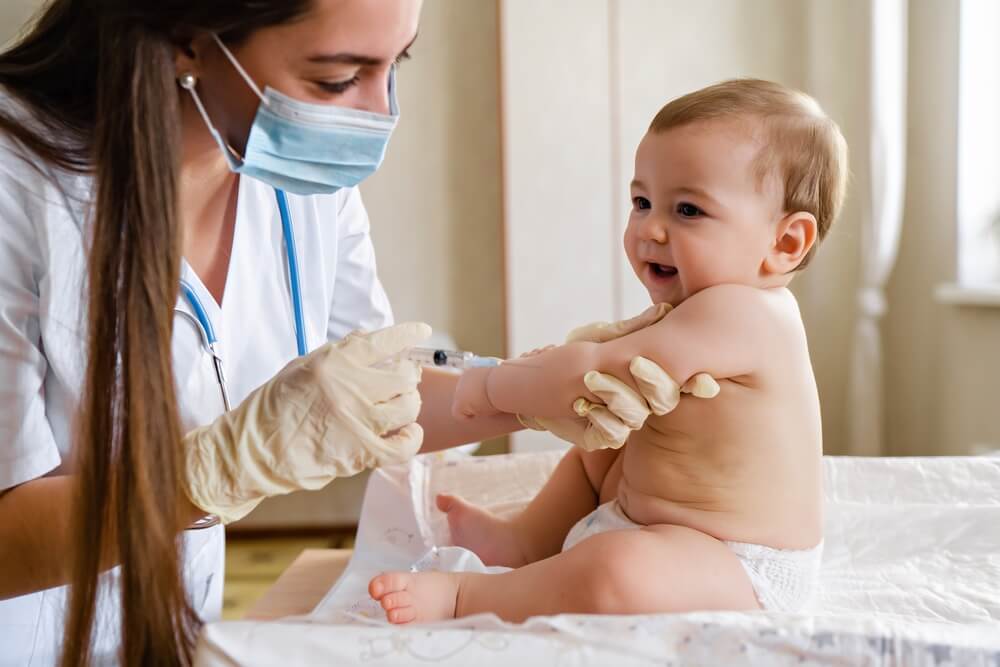
You can have the vaccination administered by a paediatrician or GP in private practice, or at public vaccination centres.
How much does the vaccination cost?
The A, C, W135, Y meningococcal vaccination is included in the free vaccination programme for children aged 10 to 13 years inclusive. All other meningococcal vaccinations must be paid for privately. The cost depends on the type of vaccination and regional variations.
FAQ
Vaccination experts recommend the meningococcal vaccine for travel to the (extended) African ‘meningitis belt’ stretching from Senegal to Ethiopia. Vaccination is also advised when travelling to countries currently experiencing epidemic outbreaks. This applies particularly if you come into contact with the local population. Furthermore, vaccination is compulsory for pilgrimages to Saudi Arabia and certain countries within the ‘meningitis belt’, and proof of vaccination must be provided.
The duration of protection provided by meningococcal vaccines depends on the type of vaccine.
The meningococcal C and ACWY vaccines provide long-lasting protection, which lasts for at least five years in most people. Protection from the meningococcal B vaccine wanes more quickly. Depending on the specific vaccine and vaccination schedule, a booster may be necessary after a few years.
A meningococcal vaccination stimulates the body’s own immune system to produce antibodies. This may lead to temporary, unpleasant side effects following vaccination, but not to meningococcal disease.
The meningococcal vaccine uses an inactivated vaccine, which contains no infectious material capable of replicating and cannot cause the infectious disease. The meningococcal vaccine can therefore also be administered during pregnancy.


Gesenhues S and A: A Practical Guide to General Practice. 9th edition, Urban & Fischer 2020.
Federal Ministry of Social Affairs, Health, Care and Consumer Protection: Austrian Immunisation Schedule 2023 (Version 1.1 of 23 December 2022)
https://www.sozialministerium.at/Themen/Gesundheit/Impfen/Impfplan-Österreich.html, accessed February 2024
https://www.rki.de/DE/Content/Infekt/EpidBull/Merkblaetter/Ratgeber_Meningokokken.html#doc2374538bodyText13, accessed February 2024
https://www.sozialministerium.at/Themen/Gesundheit/Uebertragbare-Krankheiten/Infektionskrankheiten-A-Z/Meningokokken.html, accessed February 2024
https://www.impfen-info.de/impfempfehlungen/fuer-kinder-0-12-jahre/meningokokken/, accessed February 2024
https://www.gesundheit.gv.at/leben/gesundheitsvorsorge/impfungen/ueberblick/meningokokken.html, accessed February 2024
https://www.infektionsschutz.de/erregersteckbriefe/meningokokken/, accessed February 2024
Zöllkau J et al: Vaccination during pregnancy. Gynaecology + Obstetrics. 2022; 27(2): 46–53.
https://www.ncbi.nlm.nih.gov/pmc/articles/PMC8983084/#, accessed February 2024
6-in-1 vaccination