Summary
Fact Box: Skin rash
Skin rash (exanthema): visible changes to the skin, such as redness or other noticeable skin reactions
Types: A skin rash may occur in just one specific area, spread across several areas of the skin, or affect the whole body. There are various types, such as patchy, wheal-like or nodular rashes.
Causes: Skin conditions such as atopic dermatitis, psoriasis or hives are often the underlying cause. Allergies, infectious diseases such as chickenpox, shingles, measles or rubella, parasites such as those causing scabies, autoimmune diseases such as systemic lupus erythematosus, certain medicines, as well as psychological strain and stress can also trigger a rash.
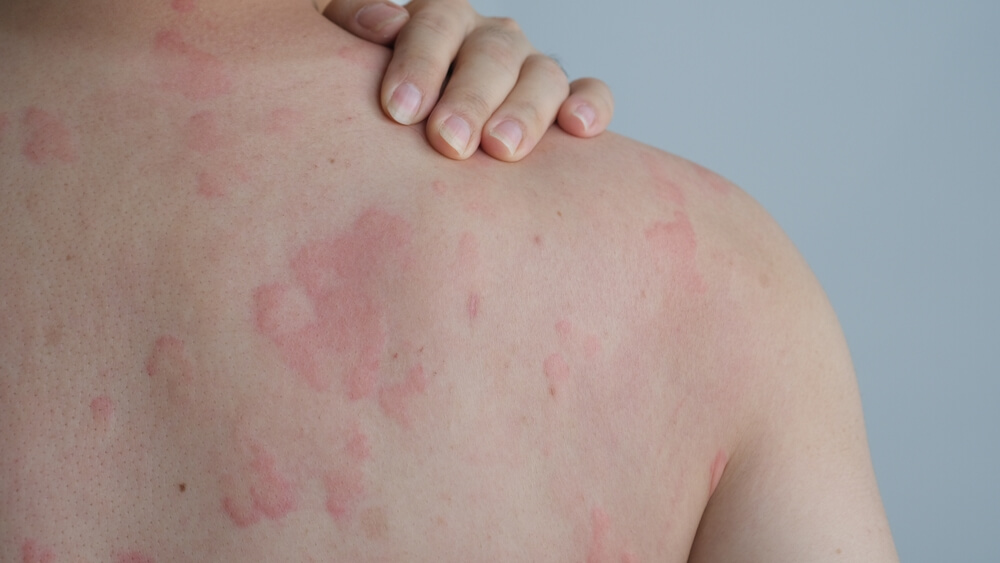
Appearance: These may include redness, small spots, patches, nodules, pustules, papules or vesicles. The colour ranges from pale pink to bright red, and is sometimes copper-coloured or brownish. The rash may appear as isolated lesions, merge to cover larger areas, or form distinctive patterns such as net-like or band-like structures.
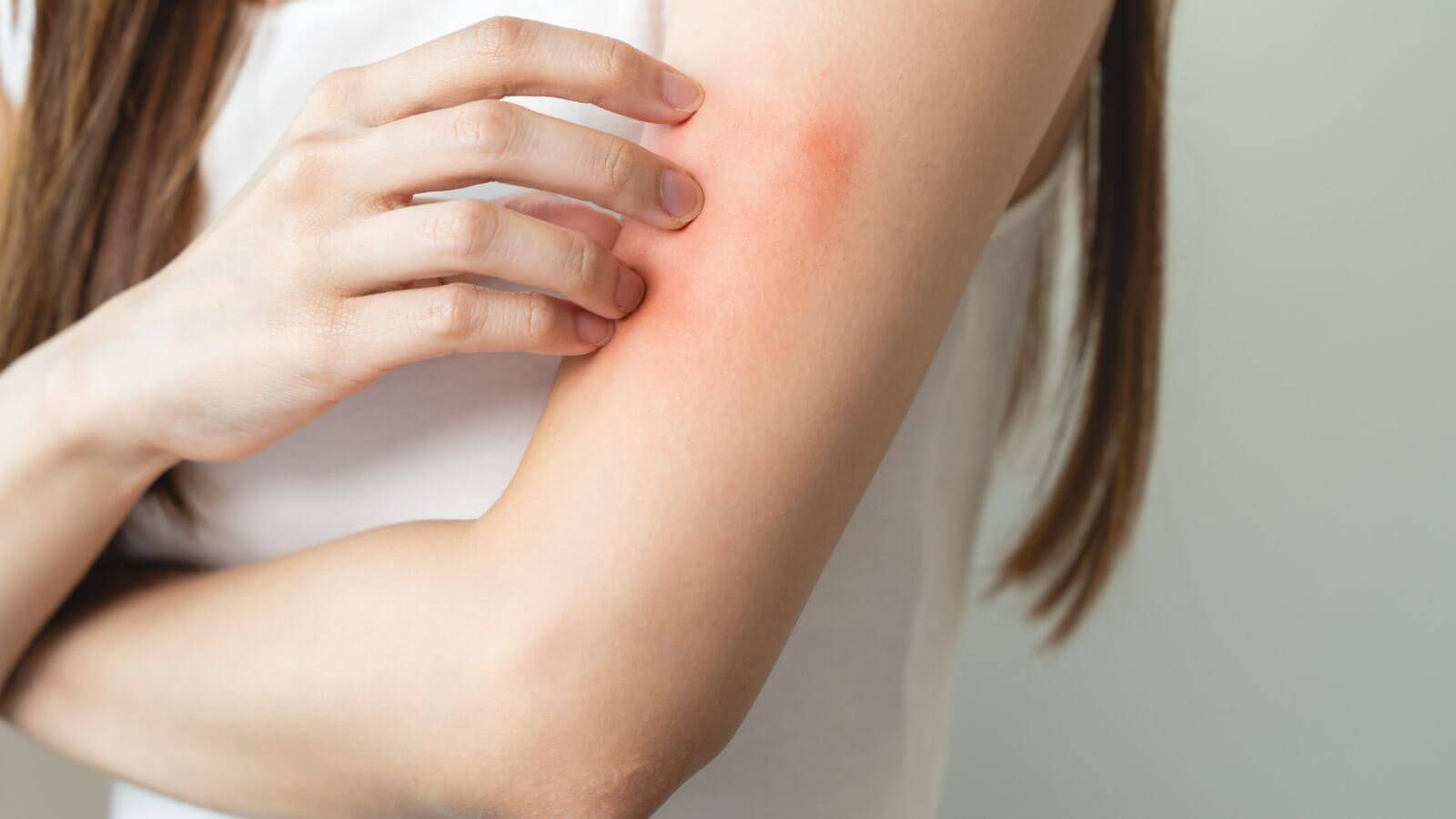
Possible accompanying symptoms: Accompanying symptoms depend on the cause. Itching, a burning sensation, stinging or pain often occur on the skin. In addition, symptoms such as headaches and aching limbs, fever, general malaise, a sore throat, nausea or vomiting may occur.
Diagnosis: Medical history, thorough examination, swab test, blood test, allergy test
Treatment:
Depending on the cause and other factors, treatment may include, amongst other things, specialised skincare products, ointments, creams and tinctures containing specific active ingredients, bath additives, antifungal agents and antibiotics.
What is a rash?
Skin rashes are visible changes to the skin that occur in response to internal or external factors. A skin rash, also known as an exanthema, can manifest in various ways, for example:
- as redness
- as patches or spots
- as blisters
A rash can occur anywhere on the body. It can affect the whole body, be confined to a specific area, or spread in various ways. The duration of a rash also varies. Whilst some rashes disappear on their own after a short time, others persist for days or weeks. Skin rashes affect people of all ages. They are a common reason for visiting a dermatologist, whether in infants, children or adults.
What types of rash are there?
Rashes are classified according to their spread, appearance and cause.
Classification by extent:
- localised: the rash is confined to a specific area of skin
- disseminated: the rash is spread across a region of the body
- generalised: the rash affects the whole body
Based on the appearance of the individual skin lesions, known as efflorescences, the following forms, amongst others, are distinguished:
- macular (patch-like) rashes
- urticarial (hive-like) rashes
- papular (nodular) rashes and other forms
Classification by cause:
- allergic
- toxic
- infectious
- Drug-induced
- Skin rashes resulting from autoimmune reactions
What causes a rash?
There are many different causes of a rash. As well as skin conditions, diseases of internal organs, infections or allergies can also trigger a rash.
Which skin conditions can cause a rash?
Neurodermatitis (atopic eczema)
Neurodermatitis is a chronic inflammatory skin condition that can affect both children and adults. The presentation of neurodermatitis can vary greatly. Typical symptoms include:
- dry and easily irritated skin
- reddened and inflamed patches of skin
- severe, often agonising itching
- extensive thickening or coarsening of the skin (lichenification)
- papules (small nodules)
These skin changes can affect various parts of the body. The inner sides of the arms and legs, the neck and the face are particularly commonly affected. The exact causes are not fully understood, but various factors contribute to the onset of the condition. Factors that can trigger a flare-up of atopic dermatitis include:
- Environmental allergens
- certain ingredients in food or food allergens such as cow’s milk, wheat and soya
- irritants on the skin, such as woollen and synthetic fabrics, cleaning products or fragrances
- Climatic factors such as extreme cold, muggy conditions and dry air
- Environmental toxins
- psychological strain, stress and much more
You can read more about atopic dermatitis here.
Psoriasis
Psoriasis is a chronic skin condition. It occurs in flare-ups and is one of the most common inflammatory skin diseases. There are various forms of the condition, the most common being psoriasis vulgaris. Typical symptoms include red, scaly and itchy skin lesions. A particularly characteristic feature of the condition is sharply defined, reddened areas of skin covered with silvery-white scales. These so-called plaques are usually accompanied by itching and occur particularly frequently on the extensor surfaces of the limbs, such as the knees and elbows, the sacrum, the scalp, the palms of the hands and the soles of the feet. Several factors appear to play a role in the development of the condition. These include a genetic predisposition and certain environmental factors. The exact causes are not fully understood. Possible triggers include, for example:
- Scratching or mechanical irritation of the skin (pressure)
- Injuries
- Infections
- hormonal changes
- psychological strain, stress and many other factors
The condition can have a very significant impact on the quality of life of those affected. Read more about psoriasis here 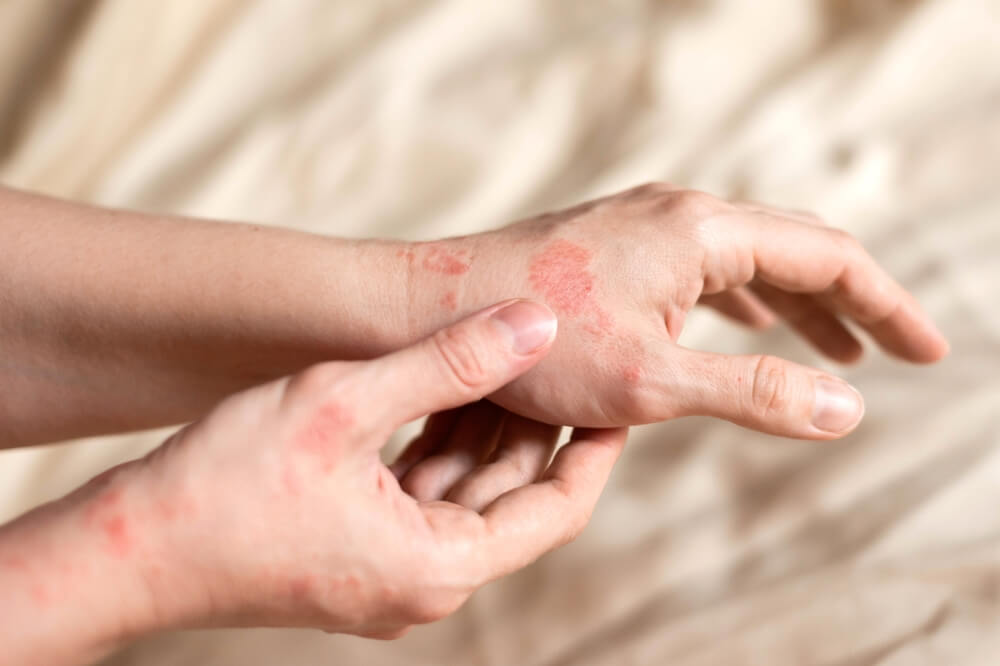
Urticaria (hives)
Urticaria involves skin reactions in the form of wheals. This results in red, raised skin lesions that resemble the skin reactions caused by contact with stinging nettles. This is why urticaria is also known as hives. It affects the upper layer of the skin. If swelling also occurs in deeper layers of the skin, this is referred to as angioedema. The development of urticaria is linked to the release of various neurotransmitters, particularly histamine. A distinction is made between acute and chronic urticaria depending on duration:
-
acute urticaria: If the symptoms last for less than six weeks, this is referred to as acute urticaria. Possible triggers of the hives include:
- allergic reactions, for example following wasp or bee stings, or a food allergy
- medicines
- external stimuli, such as cold, and many other trigger factors
-
Chronic urticaria: If the urticaria lasts for more than six weeks, it is classified as a chronic form.
You can read more about hives here.
Pityriasis rosea
Pityriasis rosea is an acute skin condition characterised by a typical rash. This can spread from the trunk to the upper arms, thighs and the nape of the neck. The rash may persist for weeks and then usually clears up on its own.
Rosacea (acne rosacea, copper rose)
Rosacea is a chronic inflammatory skin condition. It is characterised primarily by persistent skin redness (erythema) and visibly dilated small blood vessels on the skin’s surface, known as telangiectasias. Furthermore, papules and pustules may appear on the face in episodes. Depending on the severity of the condition, those affected initially suffer from persistent redness with visibly dilated capillaries on the face; papules and pustules may develop later on. Various factors such as sunlight, alcohol consumption, strongly spiced foods or other irritants can trigger a flare-up. 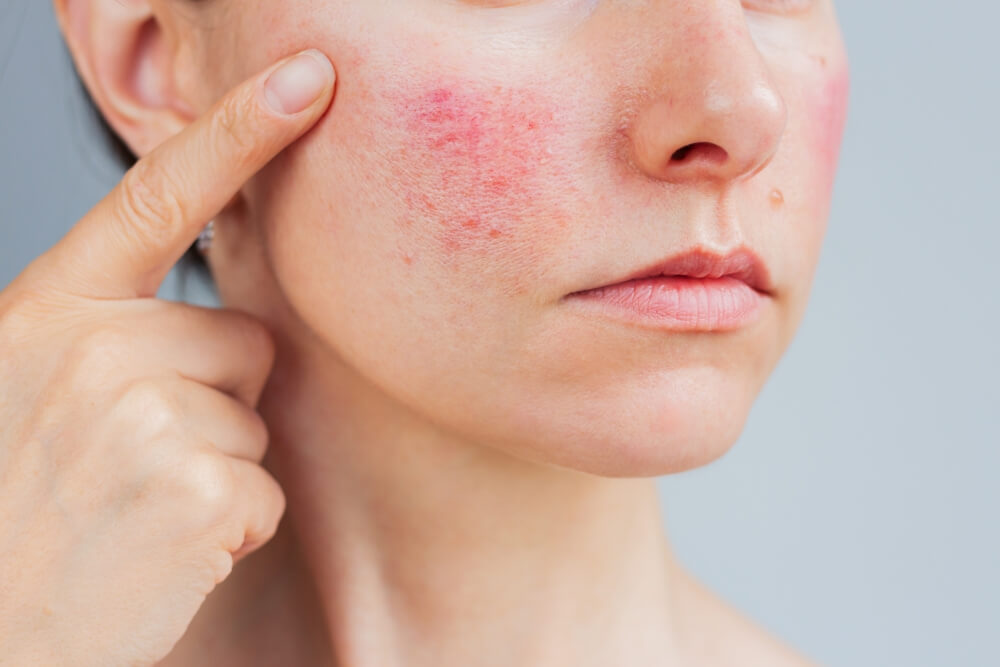
Other skin conditions
Various forms of acne, seborrhoeic dermatitis, lichen ruber planus and other dermatological conditions can also be accompanied by a rash.
Which allergies can trigger a rash?
An allergy is an excessive reaction by the immune system to substances that are essentially harmless. After repeated exposure, a defensive reaction may occur, manifesting as an allergic reaction. Typical allergens include, for example:
- Pollen
- Animal hair
- Dust mites/house dust
- certain foods
- UV radiation
- chemical substances such as nickel, insect venoms or artificial fragrances
An allergy can cause various symptoms. These include:
- watery, red and itchy eyes
- a runny or blocked nose
- sneezing
- breathing difficulties
- shortness of breath
- Difficulty swallowing
- Diarrhoea
- Nausea
Allergic reactions often manifest on the skin as itching, redness, eczema, skin inflammation or temporary rashes.
Which conditions can cause a rash?
Chickenpox (varicella)
Chickenpox is a highly contagious infectious disease caused by the varicella-zoster virus. It is transmitted via droplet or contact infection. Symptoms include an itchy red rash, headache, aching limbs and fever. Typical skin changes associated with chickenpox are small, round red spots that develop into fluid-filled blisters and pustules. These gradually dry out and form scabs. The rash usually begins on the trunk and spreads to the head, face and limbs. In addition to the skin, the oral mucosa may also be affected. As new skin lesions appear at the same time as others are healing, a characteristic pattern of spots, blisters, papules and scabs develops, which is referred to as a ‘starry sky’. 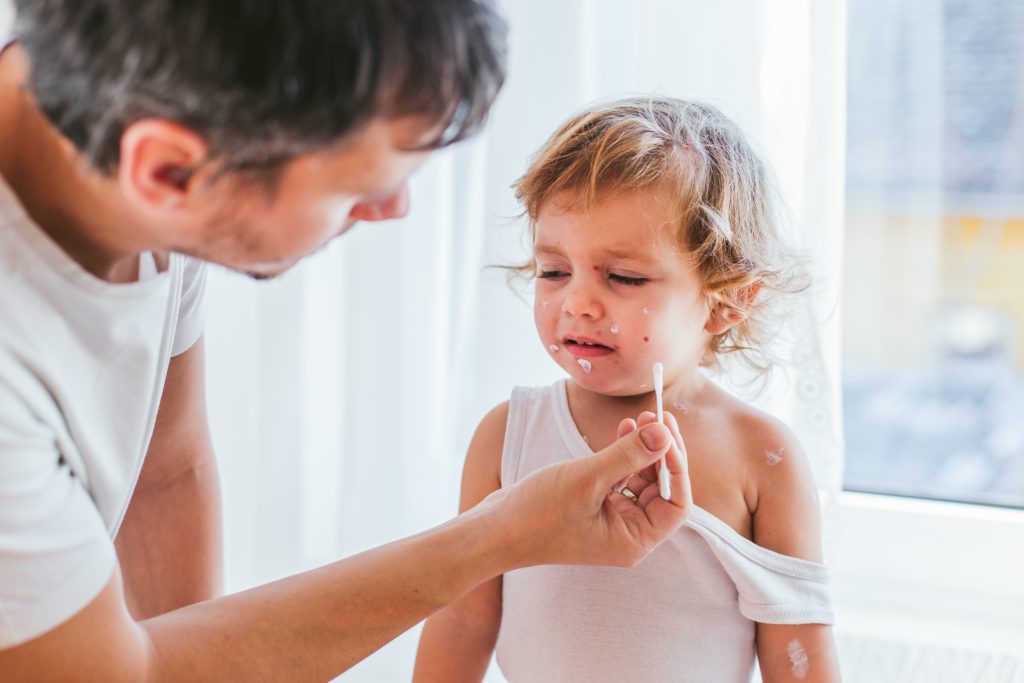
Shingles (Herpes Zoster)
As well as chickenpox, shingles is also caused by the varicella-zoster virus. Shingles is a secondary infection. Upon initial exposure, the virus causes chickenpox. Once the infection has subsided, the virus remains dormant in the body and can be reactivated years later, manifesting as shingles. This occurs more frequently in older people or in those with a weakened immune system. A typical symptom of shingles is a usually painful rash with blisters on a reddened base. It runs in a band-like pattern from the torso towards the sternum, encircling the body, but can also occur in other areas.
Measles
Measles is a highly contagious infectious disease that commonly occurs in childhood and is caused by the measles virus. Transmission occurs via respiratory droplets and direct contact. The illness usually begins with a fever, conjunctivitis, a runny nose and a cough. Another typical feature is a rash on the mucous membranes of the mouth – known as Koplik’s spots (white, chalk-like spots). A few days after the first symptoms appear, the characteristic nodular, maculopapular rash of measles develops. Individual skin lesions merge to form larger patches. The rash begins behind the ears and on the face, spreads to other parts of the body and persists for several days.
Rubella
Rubella is also a viral infection associated with a characteristic rash. It is transmitted via droplet infection. The characteristic symptom is a nodular-maculopapular rash with light red to slightly brownish spots. The rash usually begins on the face and spreads to the neck, the limbs and the whole body. It disappears again after up to three days.
Scarlet fever
Scarlet fever is a classic childhood illness that is also associated with a characteristic rash. It is caused by a streptococcal infection. The bacteria are transmitted via droplet infection. The rash consists of densely clustered, pinhead-sized, intensely red lesions and spreads over the whole body. Usually, a small triangle between the mouth and chin remains free of the rash, as do the palms of the hands and the soles of the feet. In addition, characteristic changes occur on the tongue: initially a whitish coating, later the so-called ‘raspberry tongue’ – the tongue is red, swollen and the papillae protrude. The first signs of the illness include fever, nausea, vomiting and a sore throat. 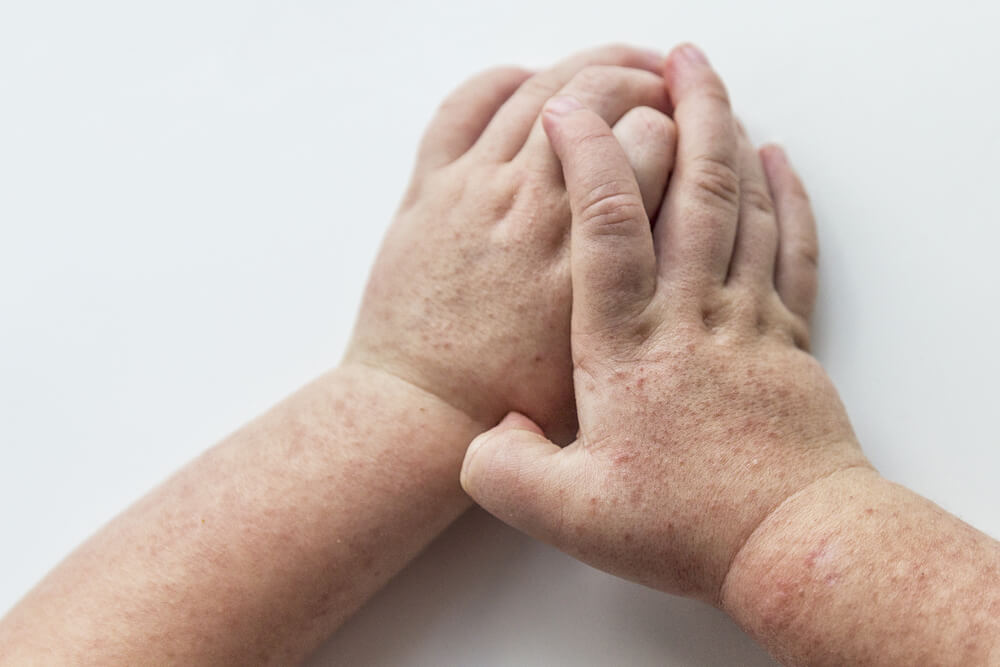
Scabies
Scabies is a contagious skin condition caused by parasitic scabies mites. It can be transmitted through direct skin-to-skin contact between two people, or, less commonly, via textiles. Typical symptoms of common scabies include eczema-like skin changes such as redness, scaling, papules and pustules, as well as a burning sensation or severe itching. The symptoms tend to occur in specific areas of the body, for example between the fingers and toes, on the elbows, in the front armpit creases, around the nipples, the navel, the waistline, the anal region, on the shaft of the penis and in the groin area.
Syphilis (Lues)
Syphilis is a sexually transmitted infection. It is caused by infection with the bacterium Treponema pallidum and progresses through several stages. In the second stage of the disease, a rash consisting of small spots, some of which may ooze, frequently appears on the trunk and the extremities.
Other conditions
Other conditions can also be accompanied by a rash. These include, amongst others, fungal skin infections, Lyme disease, typhus, hepatitis, systemic lupus erythematosus, and various other infectious and systemic diseases. As well as medical conditions and allergies, other factors can also trigger a rash. Other possible causes of rashes include taking certain medicines, herbal remedies, as well as psychological strain and stress.
Can a rash also have psychological causes?
There is a close connection between the skin and the mind. This is also reflected in common sayings such as ‘not feeling comfortable in one’s own skin’, ‘that doesn’t bother me’, ‘that gets under my skin’ or ‘that’s enough to drive me out of my skin’. The skin is the largest organ in the human body and is directly visible to the outside world. It can express emotions, but it can also influence them. Many people blush when they feel embarrassed or uncomfortable, get goosebumps when anxious, or turn pale when feeling nauseous or unwell. Stress can also manifest itself in the form of rashes or other skin symptoms. Conversely, changes affecting the skin – such as those seen in atopic dermatitis or psoriasis – can increase psychological strain and psychological distress. The mind can therefore influence a skin condition, just as a skin condition can affect psychological well-being.
What symptoms are associated with a rash?
The exact symptoms of a rash depend on the cause. A rash may be confined to a specific area of skin, spread across a larger area of the body, or affect the whole body. Its appearance can also vary greatly. A rash can manifest in various forms, including
- redness
- small spots or patches
- nodules, pustules, papules
- blisters
The pattern of spread can also vary. The rash may appear on individual parts of the body, occur in clusters, merge together, form a net-like pattern or run in a band-like pattern. The colour ranges from pale pink or light red to bright red, copper-coloured or brownish. The rash is often accompanied by other skin symptoms such as itching, a burning sensation, oozing, swelling or other skin changes. Depending on the cause, a rash may occur alongside other symptoms. These include, for example:
- fever, headache and aching limbs
- Nausea
- Vomiting
- general malaise
The list of possible causes of a rash and the accompanying symptoms provided here is intended to give a general overview. Individual symptoms may also be signs of other conditions. If in doubt, you should always seek medical advice.
How is a skin rash diagnosed?
Many rashes clear up on their own. You should see a doctor if the rash:
- is very severe
- develops in episodes
- changes
- spreads
- does not clear up on its own
Even in cases of severe pain, intense itching, weeping, hives or swelling, and additional symptoms such as fever, vomiting or shortness of breath, it is important to have the rash assessed by a doctor. Skin rashes in babies and children should always be assessed by a doctor. The relevant specialists are GPs (general practitioners), dermatologists and paediatricians.
How is the diagnosis made?
To make a diagnosis, the doctor will ask detailed questions about the symptoms. Among other things, they will ask about possible triggers, accompanying symptoms such as itching or pain, the duration of the rash, changes over time, additional symptoms, any medication being taken, known allergies, intolerances and vaccination status. This information can help to narrow down the possible causes. The rash is then examined in detail. Particular attention is paid to the areas of the body affected, the exact appearance of the rash and how it has spread. In many cases, the cause can be determined simply from the consultation and the physical examination. In some cases, further tests – such as a skin swab, blood tests, allergy tests or a tissue biopsy – are carried out to confirm the diagnosis and rule out other possible causes.
How is a rash treated?
The treatment of a rash depends on the cause, the severity of the rash, any accompanying symptoms and other individual factors. Just as the causes of a rash vary, so too do the treatment options. Skincare products, as well as ointments, creams and lotions containing specific active ingredients, are frequently used. These include, for example, ointments and creams containing antihistamines to relieve itching. Special bath additives and dressings can also help alleviate the symptoms. Depending on the cause, antifungal agents, antibiotics or other medicines for internal use may also be prescribed. The treatment of atopic dermatitis, for example, is based on a multi-stage treatment plan. A major part of this involves restoring the skin barrier using appropriate skincare products. Furthermore, identifying and avoiding individual trigger factors, along with local therapy using anti-inflammatory substances such as corticosteroids and calcineurin inhibitors, plays an important role. In severe cases, light therapy or oral medication may also be required. For chickenpox, too, the focus is on careful skin care, special dressings and anti-itch agents for topical application to the skin, such as lotions, gels or powders. In cases of acute hives, treatment with antihistamines in tablet form may be advisable, amongst other options. 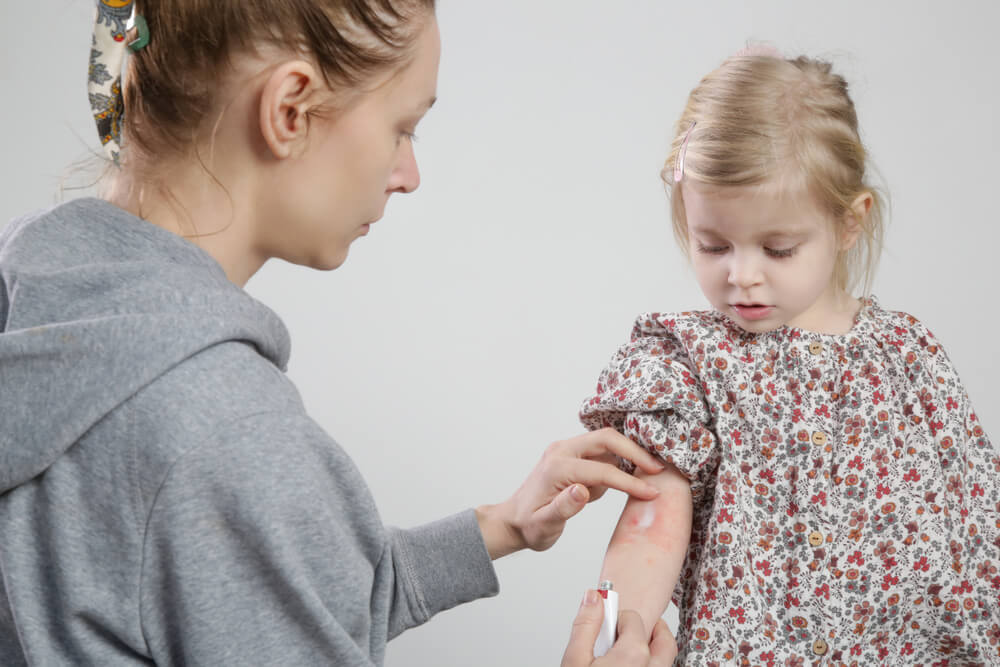
What should you do if you have a rash?
- Ensure you use gentle and suitable skincare products and, ideally, seek advice from a dermatologist or at a pharmacy.
- Avoid contact with known triggers of allergies or skin reactions, such as nickel or certain fabrics.
- Try not to scratch if your skin itches. For some conditions, it can be helpful to keep your fingernails short to avoid damaging your skin.
- Be sensible about your exposure to sunlight and do not overexpose your skin to the sun. In combination with certain medicines, sun creams or cosmetics, sunlight can trigger rashes.
- Avoid contact with harsh substances such as cleaning products, washing-up liquid or laundry detergents. Where possible, wear gloves when using these products.
- Fresh air can have a positive effect on your general well-being.
- Protect your skin from extreme cold and from drying out.
- There are various home remedies that may help to soothe skin rashes. These include, for example, olive oil, chamomile or calendula. Test the home remedies on a small area of skin first and seek professional advice beforehand, for example at a pharmacy.
FAQ
A sudden rash can have many causes. The most common causes include:
- allergic reactions: e.g. to food, medicines, cosmetics or washing powder, insect bites
- infections caused by viruses, bacteria or fungi: e.g. measles or shingles
- skin conditions: e.g. atopic dermatitis or psoriasis
- stress and psychological strain
- extreme heat, cold or sweat
- Autoimmune disorders
Accompanying symptoms such as itching, fever or pain are crucial in helping to narrow down the cause.
For mild skin rashes, home remedies can provide relief:
- Cooling compresses with water or black tea have a soothing and anti-inflammatory effect.
- Aloe vera gel moisturises the skin and can relieve itching.
- Chamomile or oatmeal baths soothe irritated skin, but should be used with caution by people with allergies.
- Chamomile or calendula ointments have anti-inflammatory properties and relieve itching
- Zinc ointment can help support the skin’s barrier.
It is important to keep the affected area clean, avoid scratching and steer clear of irritating products. Test them first on a small patch of skin. However, home remedies are no substitute for medical treatment in the case of severe or persistent symptoms.
Whether a rash is contagious depends on its cause.
Contagious rashes:
rashes caused by infectious diseases such as chickenpox, measles, scarlet fever, mites or fungal infections.
Non-contagious rashes:
rashes caused by allergic reactions, atopic dermatitis, hives or stress-related rashes. Contact dermatitis caused by chemicals or plants is also not contagious.
As the cause is not always clear, you should avoid close physical contact if you suspect an infection and seek medical advice – particularly in the case of children or people with weakened immune systems.
It is advisable to see a doctor if the rash appears suddenly and severely, spreads rapidly or lasts for more than a few days.
Warning signs include:
- Fever
- Shortness of breath
- severe pain
- Swelling of the face or lips
- Blisters, oozing or bleeding.
Medical advice should also be sought at an early stage for infants, pregnant women or people with a weakened immune system. Caution is also advised if home remedies do not bring about any improvement or if the rash appears after taking medication. Early diagnosis can rule out serious causes.
Yes, a vaccination can cause a rash. However, skin reactions are among the rarer side effects; they are usually mild and pass quickly. Following standard vaccinations such as those for measles, mumps, rubella or chickenpox, a mild rash may occasionally occur, which usually lasts only one to three days.
Skin rashes are also considered a possible side effect of COVID-19 vaccinations. In a clinical trial involving 132 participants, various skin reactions were observed, including hive-like welts, eczema-like changes and redness. In people with pre-existing skin conditions, such as atopic dermatitis, skin reactions occurred in around 12 per cent of cases. Whether a rash is actually caused by a vaccination should be clarified by a doctor.


Hinger S.; Treatment of psoriasis vulgaris, Ärzte Krone 01-02/2020, MedMedia Verlag und Mediaservice
Blagojevic D.; Allergies in Dermatology – an update, Ärzte Krone 01-02/2020, MedMedia Verlag und Mediaservice
Volc-Platzer B.; Atopic dermatitis – an update, Ärzte Krone 01-02/2020, MedMedia Verlag und Mediaservice
Scherber L.; Skin and the Mind: Depression Manifested on the Skin, Österreichische Ärztezeitung 06/2019, Verlagshaus der Ärzte
Enzel U.; Keeping an eye on common childhood illnesses – characteristics, complications, vaccinations, doxmedical 03/2019, Rosenfluh Publications
Prillinger K., Trautinger F.; From facial redness to a bulbous nose: Rosacea – diverse forms and symptoms, Spectrum Dermatology 03/2019, MedMedia Verlag und Mediaservice
Reider N.; Different triggers, one result: Urticaria – acute and chronic, Spectrum Dermatology 02/2019, MedMedia Verlag und Mediaservice
Jonak C.; Looks like psoriasis, but isn’t – Facts in Rheumatology 01/2019, MedMedia Verlag und Mediaservice
Ramm-Fischer A.; Acute exanthema – reactive or is a medicine to blame? – Differential diagnosis of allergic drug reactions, CongressSelection 05/2016, Rosenfluh Publications
Geusau A.; Specific aspects of syphilis, Spectrum Dermatology 03/2015, MedMedia Verlag und Mediaservice
Scarlet fever, fact sheet, Thieme via medici, URL: https://viamedici.thieme.de/lernmodul/8677363/subject/pädiatrie/infektiologie/bakterielle+erkrankungen/scharlach
Measles, RKI Guide, Robert Koch Institute, URL: https://www.rki.de/DE/Content/Infekt/EpidBull/Merkblaetter/Ratgeber_Masern.html;jsessionid=165E824D228953BB4DAD8473784D9FDD.2_cid290, as at: accessed February 2026
Chickenpox (varicella), shingles (herpes zoster), RKI guide, Robert Koch Institute, URL: https://www.rki.de/DE/Content/Infekt/EpidBull/Merkblaetter/Ratgeber_Varizellen.html, accessed February 2026
Scabies, RKI Guide, Robert Koch Institute, URL: https://www.rki.de/DE/Content/Infekt/EpidBull/Merkblaetter/Ratgeber_Skabies.html, accessed February 2026
Austrian Chamber of Pharmacists. https://www.apothekerkammer.at/infothek/informationen-aus-meinem-bundesland/kaernten/aktuelle-themen/gesundheitstipps/hautausschlaege, accessed February 2026
Apotheken Umschau. https://www.apotheken-umschau.de/krankheiten-symptome/symptome/was-steckt-hinter-einem-hautausschlag-740669.html Accessed February 2026
Infektionsschutz.de. https://www.infektionsschutz.de/infektionen/krankheitsbilder/hautinfektionen/ Accessed February 2026
gesundheit.gv.at. Adverse reactions following vaccinations. https://www.gesundheit.gv.at/leben/gesundheitsvorsorge/impfungen/impfreaktion.html Accessed February 2026
impfen.de https://www.impfen.de/wissenswelt/nebenwirkungen/ Accessed February 2026
Li, Y., Fan, L., Mao, Q., Luan, X., Wang, Z., Zeng, N., Cheng, Y., Li, Y., Xia, Q., Lu, Z., Lu, Q., Min, W., & Luo, D. (2022). Clinical observation and analysis of skin reactions caused by COVID-19 vaccination. Dermatologic Therapy, 35(10), e15746. https://doi.org/10.1111/dth.15746 Accessed February 2026