Summary
Home remedies and medicines for a fever
What is a fever? A fever is the body’s defence mechanism, characterised by an elevated body temperature. This helps to fight off pathogens.
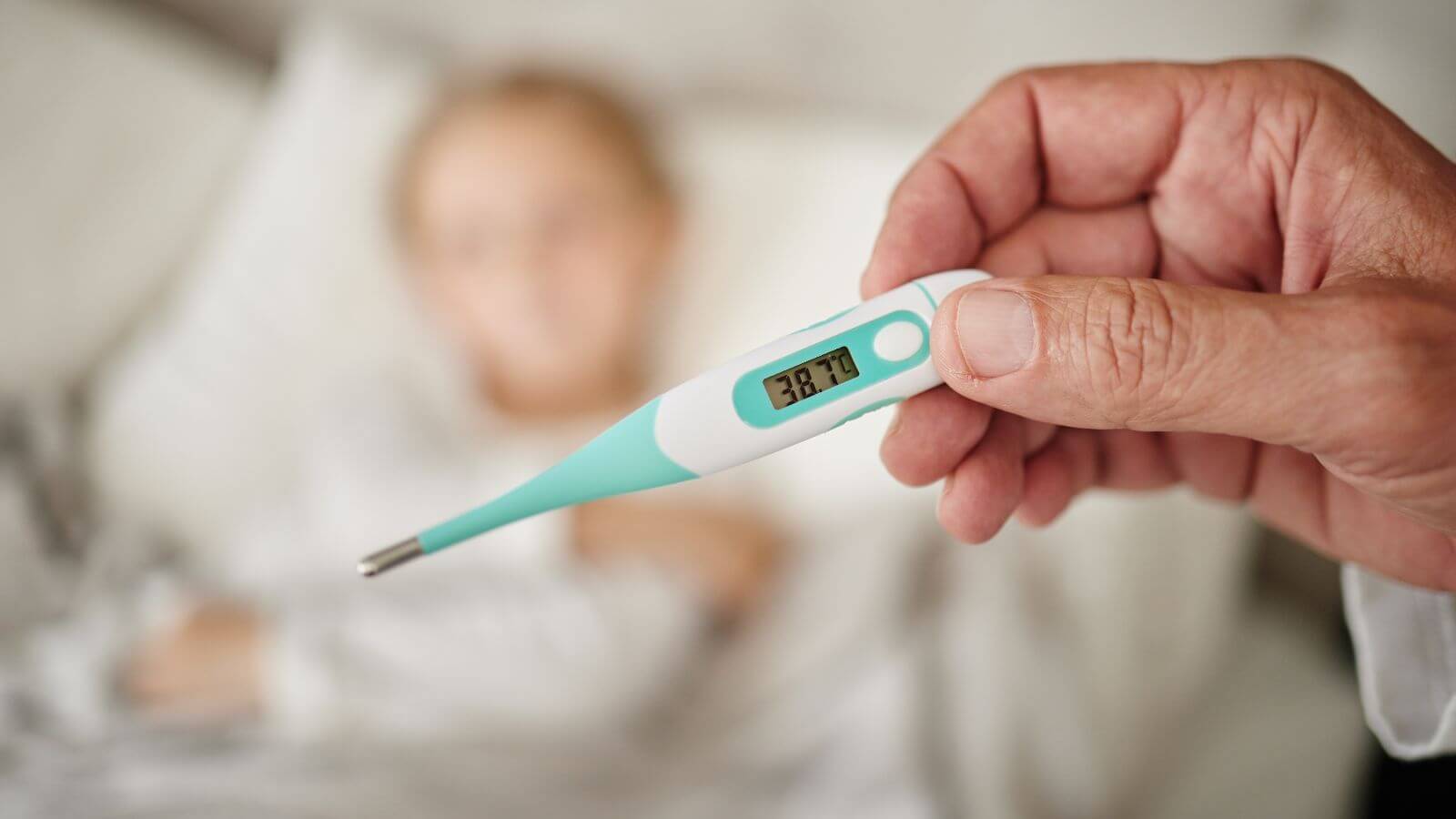
At what temperature is it considered a fever? Adults: from 38°C; children: 38.5°C; babies under three months: 38°C
Why shouldn’t you bring a fever down straight away? A fever supports the immune system. If it is brought down too early, the body’s defences may be weakened.
When should you see a doctor if you have a fever? Adults and children: if the fever rises to 39–40°C; if the fever persists for more than three days and cannot be brought down even with medication; or if other symptoms such as vomiting or diarrhoea occur. Furthermore, a doctor should be consulted for children with febrile convulsions and for babies under three months of age if their body temperature reaches 38°C or higher.
Which fever-reducing medicines are suitable for children? Children aged three months and over: paracetamol or ibuprofen. Other active ingredients should only be used after consulting a doctor.
How should you take a child’s temperature? The most accurate method is a rectal temperature reading, but measurements taken in the ear, under the arm or in the mouth also provide reliable results.
What helps with a fever? An overview of the most important measures
A fever can be unsettling for many people. Your temperature rises, you feel weak, and the question quickly arises: should I bring the fever down, and if so, how? It’s important to know that a fever is a natural response by the body, not an illness. It supports the immune system and should therefore not be brought down straight away.
If you have a fever, there are specific ways you can support your body. Often, simple measures are enough to significantly improve how you feel:
- Drink plenty of fluids: The body loses a lot of fluid through sweating. Water, tea or diluted fruit juices help to maintain a stable fluid balance.
- Rest and sleep: Your body is working flat out. Taking it easy supports your immune system.
- A comfortable room temperature: Avoid getting too hot, but also avoid getting too cold.
- Light clothing: This helps the body regulate its temperature more effectively.
- Targeted fever reduction where necessary: Medicines or home remedies may be helpful if symptoms are severe.
When should you bring a fever down?
There is no specific temperature at which a fever should be brought down. As a general rule:
- A fever is defined as 38°C or above in adults and babies under three months, and 38.5°C or above in children over three months
- A high fever is defined as 39°C or above in adults and children
- If a high fever in children (39 °C or above) persists for more than three days, you should seek medical advice.
- A body temperature of 41°C or above poses an acute risk to life and a doctor should be consulted immediately
Regardless of the temperature, a fever should be brought down if you feel very unwell, are having trouble sleeping or are experiencing circulatory problems.
In children, severe distress caused by a fever manifests itself differently: they often become apathetic, very restless or disoriented. If, in this case, the fever exceeds 39°C (measured rectally), measures to reduce the fever should be taken. If the child’s condition does not improve, medical advice should be sought
Febrile convulsions occur mainly in infants and young children when the fever rises rapidly. However, these cannot be prevented by fever-reducing medication.
Read more about fever here.
When should you see a doctor about febrile convulsions?
Even though febrile convulsions usually pass quickly and generally have no long-term health consequences, they should always be assessed by a doctor.
It is important to remain calm if a febrile seizure occurs, to ensure that the child has enough space and nothing in their mouth, and not to try to stop the seizure. Also, keep an eye on the duration of the seizure and contact a paediatrician.
Furthermore:
- If a febrile seizure lasts longer than ten minutes, call the emergency services immediately.
- If your child is prone to repeated and prolonged febrile seizures, your paediatrician may prescribe emergency medication.
How can a fever be brought down?
Fever-reducing medicines
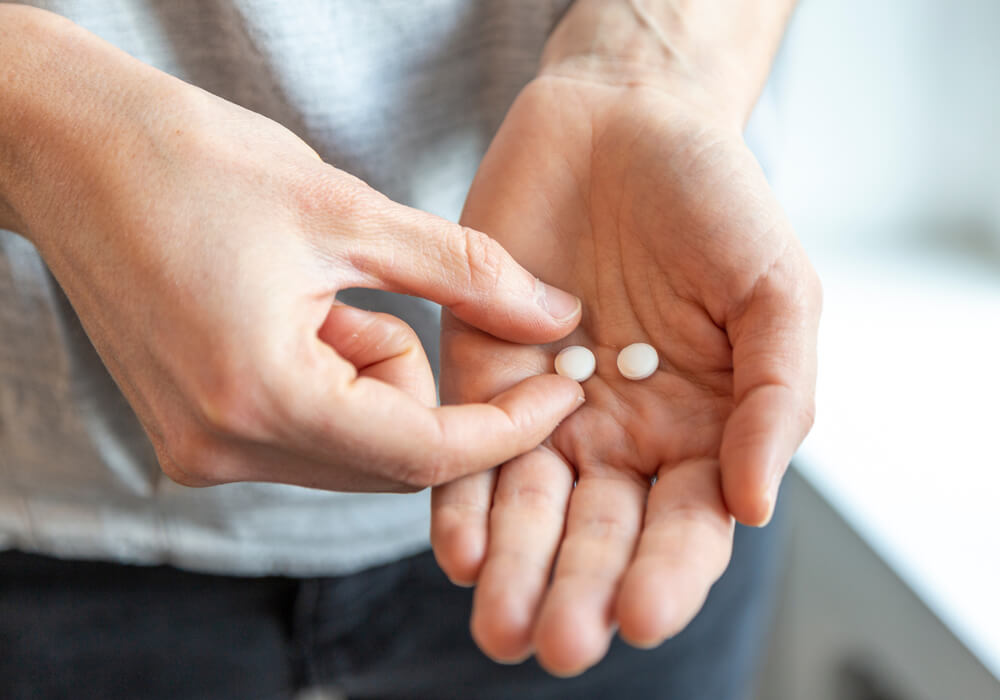
Medicines containing the active ingredients paracetamol or ibuprofen are primarily used to reduce a fever. In adults, acetylsalicylic acid (ASA) may also be used. These medicines inhibit the production of the body’s own messenger substances that trigger a fever.
Always take or administer the medicine:
- in the correct dose for the child’s age and body weight
- at the prescribed intervals
- exactly as stated in the patient information leaflet
Bear in mind that the medicine does not cure the illness, but merely alleviates the symptoms and improves your well-being. Information on use and possible side effects can be found in the package leaflet. If you are unsure, ask your doctor or seek advice from your chemist.
Fever-reducing medicines for children
Children aged three months and over should only be given standard fever-reducing medicines containing ibuprofen or paracetamol. These are available as suppositories, effervescent granules, syrup and tablets (for older children).
Aspirin or other medicines containing acetylsalicylic acid must only be given to children and young people on the advice of a doctor, as they can lead to Reye’s syndrome, a dangerous side effect. If the fever has not subsided after three days despite taking paracetamol or ibuprofen, medical advice should be sought.
Homeopathic remedies are also available to reduce fever. However, there is as yet no scientific evidence of their effectiveness.
Which home remedies reduce a fever?
Cold compresses
Cold compresses cool the body from the outside. They do not treat the cause of the fever, but can alleviate accompanying symptoms such as restlessness or disorientation.
Important when using them:
- The body must be warm: hands and feet must not be cold.
- The child or adult must not feel cold.
- Consult a doctor beforehand to find out whether cold compresses are appropriate in your case.
- Also seek medical advice if the fever does not subside despite the correct use of calf compresses or vinegar poultices.
Vinegar compresses and vinegar pads
Vinegar compresses, or so-called ‘vinegar pads’, are also a common home remedy for reducing a fever.
- Dilute vinegar (e.g. apple cider vinegar) with lukewarm water
- then dip cloths into the vinegar water, wring them out lightly and wrap the cloths tightly around both calves, from the ankle to the back of the knee.
- Wrap a second layer of dry terry towels around your calves.
- Leave the compresses on until they have warmed up. This takes about 15 to 20 minutes.
- Once your calves have warmed up again, you can reapply the wraps.
Three applications are usually sufficient to bring the fever down. While the wraps are in place, check your body temperature regularly. It should not drop by more than 1 °C per application, as this could put too much strain on the circulation.
For vinegar compresses, cotton socks are soaked in vinegar water instead of cloths and then put on. Thick woollen socks can be worn over them.
Curd cheese compresses
Curd cheese compresses are not only suitable for treating inflammation and swelling, but can also reduce a fever. They are gentle on the skin and can therefore also be used on sensitive skin.
Spreadable low-fat quark is best suited. It is firmer and less runny than quark with a higher fat content.
- Warm the quark to room temperature
- Spread it to the thickness of a finger in the centre of a cloth
- Fold in the four sides of the cloth
- Wrap the quark compress around your calves using a second cloth.
The wrap can be left on the skin for about 30 minutes. Remove it as soon as it is no longer cold.
Teas for fever
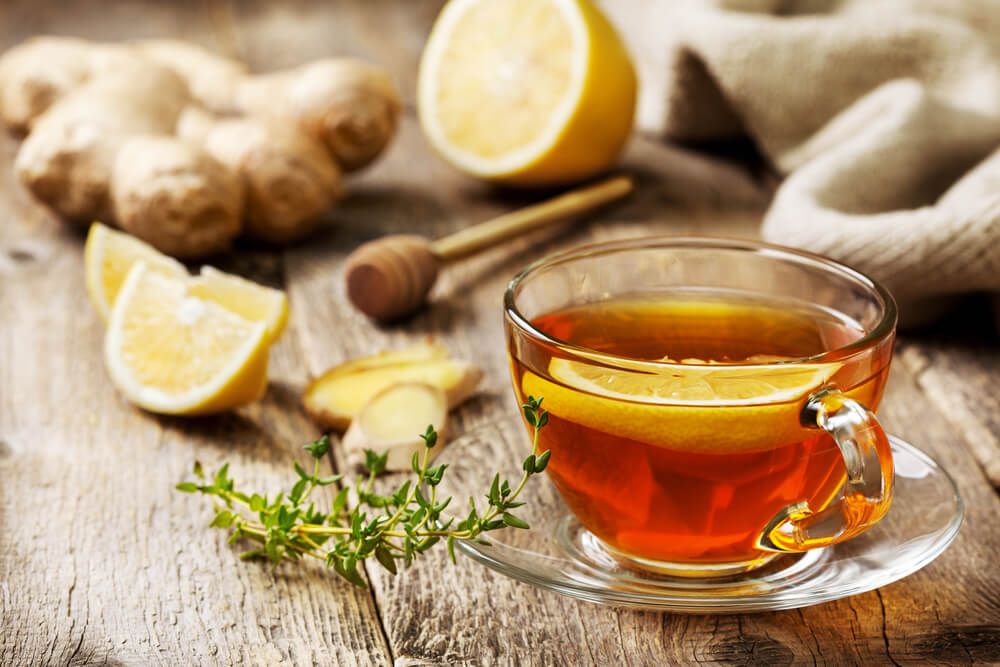
Certain medicinal plants are traditionally used to treat fever, as they have, amongst other things, a diaphoretic effect.
These include, for example, birch leaves, willow bark and elderflower or lime blossom. These teas are available from pharmacies as tea bags or herbal blends. Ask for advice there on how to prepare them correctly and discuss with your doctor beforehand whether these teas are suitable for you.
For children, teas made from elderflower and lime blossom are particularly recommended for reducing fever. Depending on the child’s age, one to three cups a day are suitable. The dosage should also be clarified in advance with a doctor or at the chemist’s, especially for younger children.
FAQ
A fever in itself is, initially, a useful defence mechanism of the body. It becomes dangerous, however, particularly when very high temperatures occur or the patient’s general condition deteriorates significantly.
Medical advice should be sought if:
- the fever rises very high (in adults from 39–40 °C, in children from 40 °C)
- it persists for several days and cannot be brought down with medication
- it rises above 41 °C
- it is accompanied by severe symptoms, such as circulatory problems, impaired consciousness, shortness of breath or severe pain
- older people, infants or people with chronic conditions are affected
However, the fever guidelines issued by the German Society for Paediatrics and Adolescent Medicine (DGKJ) emphasise that parents and carers should focus primarily on the child’s general condition, rather than solely on their measured body temperature. Particular warning signs in children include, for example, severe pain, altered consciousness or shortness of breath. In such cases, a doctor should be consulted.
There are several methods for taking a temperature, each with varying degrees of accuracy. The most accurate method is a rectal temperature reading, but taking a temperature in the ear (with practice and a suitable thermometer), under the arm or in the mouth also provides reliable results.
Babies and toddlers:
For an accurate result, temperature should be taken rectally.
For older children (aged five and over):
If the child allows it, the temperature can also be taken orally; from school age onwards, it can also be taken under the arm.
It is important that the measurement is carried out correctly. It should also always be taken at the same spot and at the same time of day.
Although febrile convulsions are usually harmless, children who are prone to them should be examined by their paediatrician. As a general rule, if a febrile seizure occurs, you should remain calm, ensure that the child has enough space and nothing in their mouth, and do not try to stop the seizure. Antipyretic medicines cannot prevent febrile seizures.
If a febrile seizure lasts longer than 10 minutes, an ambulance must be called immediately. You should also take your child to see a doctor if a high fever (40 °C or above in children) persists for more than three days.
Some helpful home remedies for bringing down a fever include, for example:
- Curd cheese compress
- Vinegar compresses / vinegar pads
Certain foods can also help,
- Fever-reducing teas (not to be used for children under 5 years of age) made from birch leaves, willow bark and elderflower or lime blossom
•
-
•
-
In children, home remedies for reducing fever should only be used with caution and discussed with the paediatrician beforehand.
Chills occur when the body temperature rises rapidly. The body then tries to reach the new target temperature. Heat is generated through uncontrolled muscle tremors. Those affected feel very cold, even though they already have a fever, and often feel very unwell. Chills are common with infections, such as the flu or bacterial illnesses. During a bout of chills, you should wrap up warm and rest. Measures to reduce a fever are usually only recommended once the chills have subsided.


National Collaborating Centre for Women’s and Children’s Health, National Institute for Health and Clinical Excellence (NICE). Feverish illness in children: assessment and initial management in children under 5 years of age. London: NICE. 2013.
By Blarer Zalokar U et al (ed.: Swiss Professional Organisation for Traditional Chinese Medicine): Practical Guide to Food and Chinese Medicine. 1st edition, Bacopa Verlag – Schiedlberg 2009
Gesundheitsinformation.de https://www.gesundheitsinformation.de/wie-wird-ein-kind-mit-fieber-behandelt.html Accessed February 2026
praktischarzt.de. Home remedies for fever. https://www.praktischarzt.de/ratgeber/hausmittel-gegen-fieber Accessed February 2026
Gesundheit.gv. Encyclopaedia. Fever https://www.gesundheit.gv.at/lexikon/F/lexikon-fieber.html Accessed February 2026
Gesundheit.gv. When should I take my child to the doctor? https://www.gesundheit.gv.at/krankheiten/kinderkrankheiten/fieber.html#wann-sollte-ich-mit-meinem-kind-zum-arzt Accessed February 2026
Paediatricians Online. https://www.kinderaerzte-im-netz.de/krankheiten/fieber/ Accessed February 2026
Kindergesundheit-info.de https://www.kindergesundheit-info.de/themen/krankes-kind/krankheitszeichen/fieber/ Accessed February 2026
AWMF online. S3 Guideline on Fever Management in Children and Adolescents https://register.awmf.org/assets/guidelines/027-074p1_S3_Fiebermanagement-Kinder-Jugendliche_2025-07.pdf Accessed February 2026
Apothekerkammer.at. Home remedies for children. https://www.apothekerkammer.at/fileadmin/001_Bilder_Relaunch/OEffentlicher_Bereich/Medienanfragen_und_Kommunikation/Downloads/Hausmittelbroschueren/OEGK_22_Hausmittel-Kinder_WEB.pdf Accessed February 2026