Summary
Smartphone addiction, mobile phone addiction, problematic smartphone use
Definition: Behavioural addiction; a compulsive urge to constantly check one’s mobile phone
Symptoms: loss of control, withdrawal symptoms, phantom pain, neglect of daily life, sleep disturbances, etc.
Causes: biological, psychological, manipulative
Consequences: Overloading of working memory, mental exhaustion, higher error rate, information no longer being transferred from short-term to long-term memory, weakening of the prefrontal cortex, changes in brain structure, deterioration of the ability to concentrate
Counter-strategies: Put your mobile in another room whilst working or eating, disable push notifications, establish ‘mobile-free zones’, no mobiles in the bedroom, have analogue alternatives to hand,…
What is smartphone addiction?
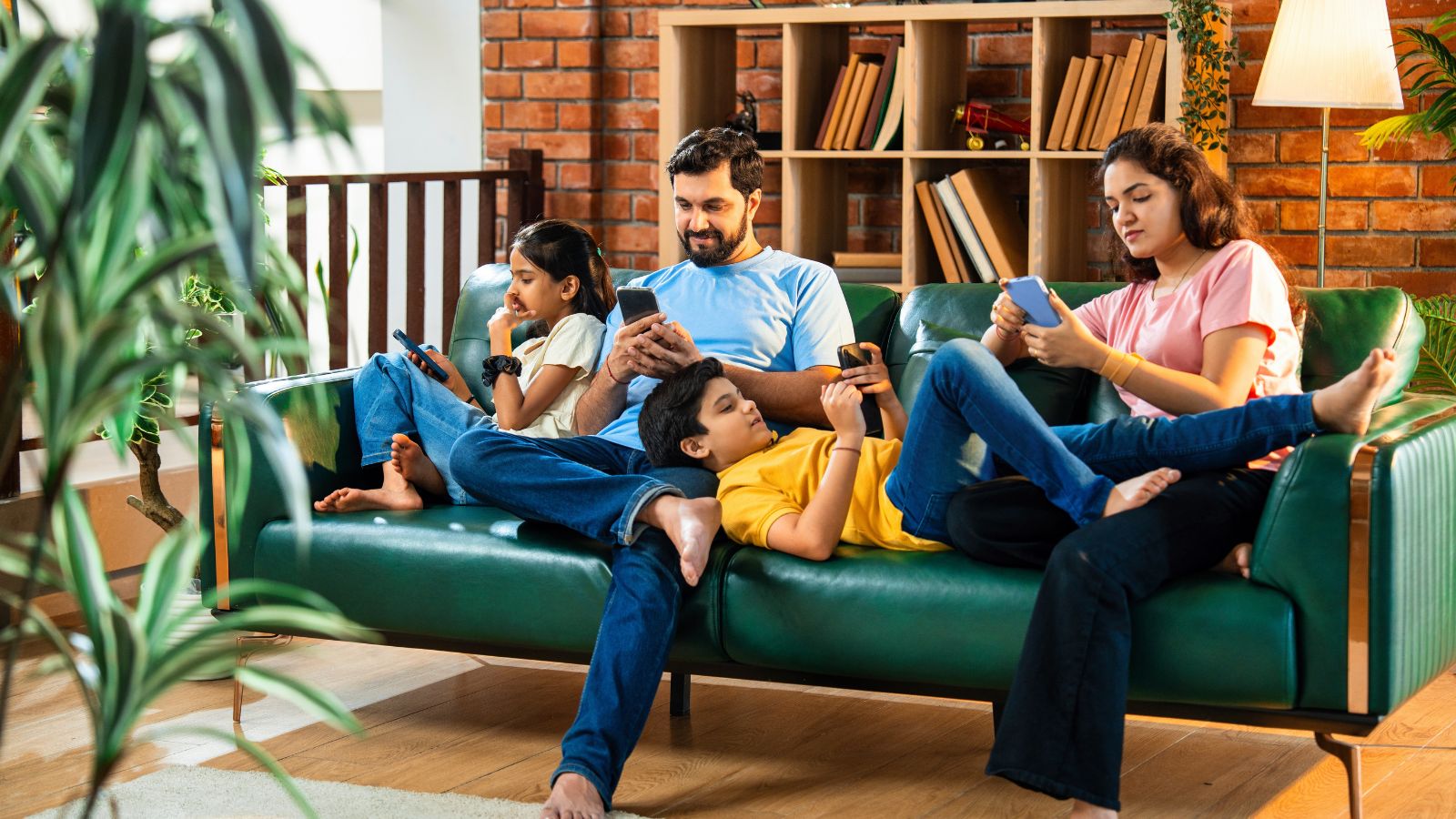
Smartphone addiction (also known as ‘mobile phone addiction’) refers to the compulsive urge to constantly check one’s mobile phone. A typical symptom is the strong urge to check one’s smartphone repeatedly – for example, for new messages, social media updates or other notifications.
Although it is not (yet) officially listed as a separate mental health condition in the ICD-11, smartphone addiction is often viewed as a behavioural addiction, similar to gambling addiction.
A term often mentioned in this context is nomophobia. It is derived from the English expression ‘no mobile phone phobia’. It refers to the fear of being without a mobile phone, of being unreachable or of not having access to important information.
Those affected may experience severe stress, anxiety or even panic-like feelings when:
- the battery is flat
- there is no mobile signal
- they have left their mobile phone at home
- their data allowance has run out
Smartphone addiction: typical signs
Problematic smartphone use usually involves a combination of several factors.
Typical signs may include:
- Loss of control: Those affected spend significantly more time on their smartphone than they had actually intended.
- Withdrawal-like symptoms: Nervousness, irritability or restlessness when the smartphone is not to hand.
- Phantom pain: The sensation that the mobile has vibrated in one’s pocket, even though no message has been received.
- Neglect of everyday life: Hobbies, work or real-life social interactions suffer as a result of screen time.
- Phubbing: Other people are ignored because one’s gaze keeps wandering back to the smartphone.
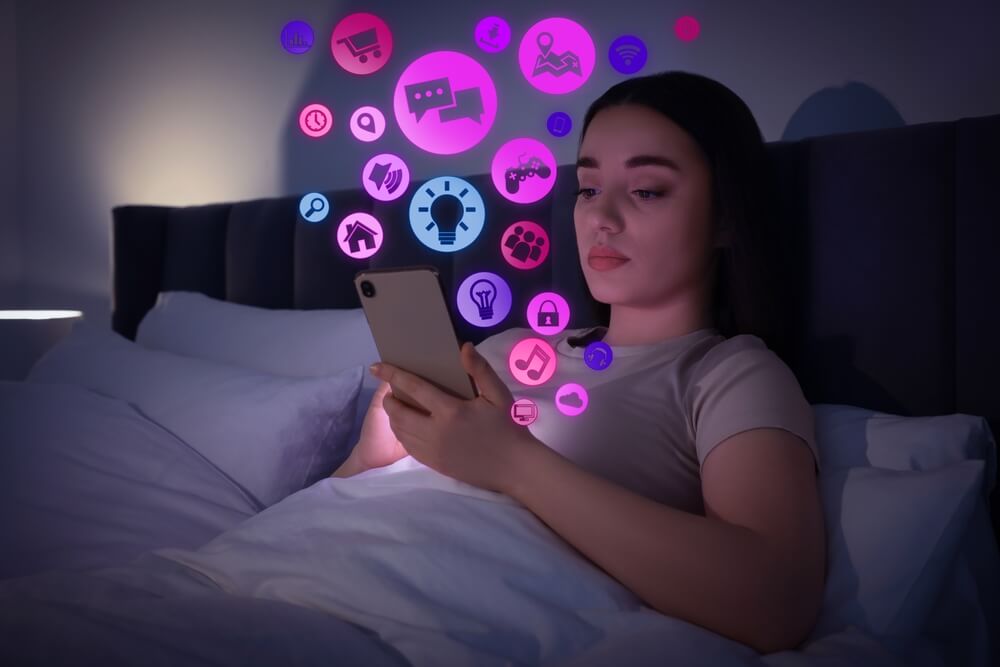
- Sleep disturbances: Using a mobile late into the night can impair the quality of sleep.
How widespread is mobile phone addiction?
There are varying figures on the prevalence of smartphone addiction. So-called nomophobia – the fear of being without a smartphone, of being unreachable or of not having access to important information – is a particularly frequently studied phenomenon.
A large meta-analysis evaluated 43 studies involving more than 36,000 participants from 18 countries. In these studies, 26 per cent of participants reported mild symptoms of nomophobia, 51 per cent reported moderate symptoms and 21 per cent reported severe symptoms. University students and young adults were particularly frequently affected.
It is important to note, however, that these figures reflect self-reported distress rather than confirmed clinical diagnoses. Furthermore, the results vary significantly depending on region, age group and the measurement tool used.
Who is particularly affected by this in Austria?
In Austria, people of all age groups use smartphones in their everyday lives. However, usage is particularly high among adolescents and young adults. Recent surveys (based, amongst others, on the Austrian Internet Monitor and youth studies) show:
- Adolescents and young adults use smartphones particularly intensively: over 98 per cent of 14- to 29-year-olds own a smartphone. Among the over-60s, the figure now stands at over 80 per cent.
- Many Austrians spend several hours a day on their smartphones: the average Austrian spends around 3.5 hours a day on their smartphone. Among Generation Z (born approximately 1997–2012), this figure is often over 5 hours.
- Life without a smartphone is difficult: around 15 to 20 per cent of Austrian young people show signs of a clinically significant addiction (excessive behaviour, withdrawal symptoms). Over 50 per cent say they can no longer imagine life without a smartphone.
- Signs of nomophobia are also widespread: in a survey, 61 per cent of Austrians said they get nervous when their smartphone battery drops below 10 per cent. Almost a third even reported becoming very nervous as a result.
- The smartphone as the last thing they do before going to sleep: More than half of Austrians check their smartphone as the last thing they do before going to sleep and the first thing they do after waking up.
Why can smartphones be addictive?
Smartphones can encourage problematic usage patterns because several factors work together:
- Biology: Notifications, ‘likes’ or new content trigger a small dopamine rush in the brain. Because these stimuli often occur unpredictably, many people feel the urge to keep checking their smartphones.
- Psychology: The fear of missing out is also known as FOMO. The abbreviation stands for ‘Fear of Missing Out’. It refers to the worry of missing important news, social events or new information. The need for validation can also contribute to people reaching for their smartphones more frequently. It also serves as a way to combat stress or boredom.
- User experience design: Features such as ‘infinite scroll’ – i.e. endless scrolling with no clear stopping point – or eye-catching push notifications are designed to capture users’ attention. This can make it harder to consciously stop using the device.
Dopamine and the reward system: why the smartphone is so tempting
Smartphones can repeatedly activate the brain’s reward system. The neurotransmitter dopamine plays a key role in this. Dopamine is not merely responsible for feelings of happiness, but primarily acts as a motivator that drives the search for reward. Apps exploit the principle of variable reinforcement: as you never know whether the next scroll will reveal a boring post or a viral hit, your brain is kept in a constant state of anticipation – much like with a slot machine.
Not every action is rewarded, but the possibility of a reward remains. This can create an urge to check your smartphone again and again – often automatically, before you’ve even consciously thought about it. Over time, this can develop into a habit.
The brain learns that a quick glance at the smartphone can provide distraction, entertainment or social validation. The more often this cycle is repeated, the harder it can become to consciously stop using it.
What do recent studies show?
Data from the latest studies reveal an interesting trend: many people in Austria now take a critical view of their smartphone use. According to a Deloitte survey, a large proportion of respondents would like to reduce the amount of time they spend on their smartphones each day. More than 60 per cent are already taking concrete steps, such as switching off the sound, putting their smartphone out of reach, disabling push notifications or introducing fixed screen-free periods.
Whilst awareness of the problem is growing and usage times in Austria are even set to fall slightly in some cases by 2026, the psychological strain (the fear of being without a device) remains a deeply rooted issue. Furthermore, the term ‘brain rot’ is cropping up with increasing frequency in public debate. It refers to a feeling of mental exhaustion following prolonged consumption of very simple, fast-paced or undemanding online content.
However, the term is not a medical diagnosis. It describes a state of mental exhaustion following hours of consuming low-effort content, during which the ability to concentrate on complex tasks drops dramatically. Other studies show that only around 20 per cent of the population are now considered ‘resilient’ to nomophobia. The majority show clear symptoms of stress as soon as their device is unavailable. It is not only young people who are particularly affected here, but increasingly parents as well.
Constant stimuli: why breaks are important for the brain
Smartphones constantly provide new stimuli: messages, push notifications, videos, ‘likes’ or brief updates. This repeatedly interrupts our attention. In the long run, it can become more difficult to stay focused on a task and concentrate for extended periods. Many people automatically reach for their smartphone during quiet moments – for example, whilst waiting, during a break or before falling asleep.
As a result, we miss out on periods when the brain can rest. Such breaks are important for processing experiences, letting your mind wander and allowing new ideas to emerge. This state of constant alertness keeps stress levels chronically high and leads to analogue activities without immediate feedback being perceived as increasingly tedious and unsatisfying.
Reading, conversations, learning or creative tasks often take longer to feel rewarding. This is precisely what can feel more tiring compared to the instant feedback from a smartphone. It becomes particularly problematic when those affected can hardly switch off at all and the smartphone remains constantly present even during rest periods.
What impact do smartphones have on concentration?
Smartphones fundamentally impair concentration by reprogramming the way our brain functions, shifting it from ‘deep focus’ to ‘constant readiness to react’. An important concept in this context is the so-called ‘brain drain’ effect.
It describes how the mere presence of a smartphone can tie up cognitive resources – even when the device is on silent. The brain has to suppress the urge to check it. As a result, less mental capacity may be available for demanding tasks. Frequent switching between tasks can also weaken concentration.
Anyone who is reading, working or studying and keeps glancing at their smartphone in between has to refocus every single time. After an interruption, it often takes a while to get back into a task properly. Short videos, quick messages and endless scrolling can also get you used to receiving new stimuli very rapidly.
By comparison, activities such as reading, studying or listening for extended periods can sometimes seem slower and more tiring. This does not mean that these skills are lost. However, they must be consciously nurtured in everyday life. Furthermore, the constant sense of anticipation (“Have I missed a message?”) keeps the body in a mild but chronic state of alert. However, elevated cortisol levels block the prefrontal cortex – the part of the brain responsible for logical thinking, planning and, indeed, concentration.

How does constant distraction affect the brain?
Constant distraction can put a strain on the brain. Attention, working memory and concentration are particularly affected. The brain has to constantly decide which stimulus is important and what it should respond to.
This can have several consequences:
- Working memory is placed under greater strain: it can only process a limited amount of information at any one time. Frequent interruptions make it harder to hold onto thoughts and to complete tasks with focus.
- Attention is depleted more quickly: when new stimuli are constantly appearing, the brain has to keep filtering and switching focus. This can lead to mental fatigue and increase the likelihood of making mistakes.
- Learning can become more difficult: for new information to be stored effectively, the brain needs repetition, attention and periods of rest. If these are constantly interrupted, it can be harder to retain information in the long term.
- Planning and impulse control can suffer: This leads to a weakening of the prefrontal cortex, which is responsible for planning, logical thinking and impulse control.
- Deep focus is practised less frequently: People who get used to constantly switching between stimuli often find it harder to enter into longer, calm periods of concentration. As a result, reading, studying or complex tasks can feel more taxing.
- Changes to brain structure: This is because the brain rewires itself to be particularly good at scanning rather than focusing. As a result, the ability to concentrate deeply atrophies like an unused muscle.
Self-test: Is my smartphone use a problem?
Ask yourself honestly:
- Is reaching for your smartphone one of the first things you do after waking up?
- Do you feel uneasy, restless or insecure when you leave the house without your smartphone?
- Have you already tried unsuccessfully to reduce your screen time permanently?
If you answer ‘yes’ to all three questions, this suggests problematic smartphone use. However, this self-test is no substitute for a medical or psychotherapeutic diagnosis. If your use is causing you distress or you feel you are losing control, it may be helpful to speak to a doctor or psychotherapist.
What can help: 5 strategies to combat constant distraction
To break out of the cycle of instant gratification and constant distraction, strategies that alter both your environment and your own behaviour can help.
- Out of sight, out of mind: Put your mobile phone in another room whilst working, studying or eating. Even the mere sight of your smartphone can capture your attention, as your brain has to suppress the urge to reach for it.
- Disable push notifications: Every ‘ping’ is a new stimulus. It breaks your concentration and draws your attention back to the device.
- Establish mobile-free zones: Define places and times when you consciously put your mobile away. This is particularly useful in the bedroom, whilst eating or during periods of focused work.
- 15-minute waiting period: If the urge to check your mobile becomes unbearable, set a timer for 15 minutes. The dopamine rush often subsides during this time.
- Have analogue alternatives to hand: Keep a non-digital activity close at hand to fill spare moments in a different way. This could be a book, a notebook, a crossword puzzle or a small mechanical puzzle.
Smartphone use among children and young people
Smartphone use among children and young people is particularly critical because their brains are still developing. As the prefrontal cortex – the part of the brain responsible for logical thinking and impulse control – does not reach full maturity until the mid-20s, young people find it biologically very difficult to resist the targeted dopamine pull of algorithms. Apps, games and social media are designed to capture attention: new messages, ‘likes’, short videos and constant notifications provide quick rewards.
This can mean that children and young people practise less how to cope with boredom, manage frustration or concentrate on one thing for any length of time. It becomes particularly problematic when screen time crowds out other important experiences. These include physical activity, free play, sleep, genuine social interactions and conversations in which children learn to perceive facial expressions, gestures and nuances.
In addition to the risk of a distorted self-perception caused by constant online comparison, the lack of sleep resulting from the blue light emitted by screens is a particular problem, as it severely impairs cognitive performance and mental stability.

How can I recognise smartphone addiction in children and young people?
The signs of problematic smartphone use in children and young people are often more subtle than in adults, but there are some warning signs to look out for:
- Loss of interest: Former hobbies, sports or meeting up with friends are neglected or seem ‘boring’ compared to the mobile phone.
- Constant withdrawal: The child spends a large part of their free time alone with their smartphone and is increasingly withdrawing from their family and friends.
- Drop in performance: Academic performance declines; homework is only done superficially, or concentration in class suffers.
- Irritability and aggression: When asked to put their mobile phone away or if the Wi-Fi goes down, the child reacts in an unusually emotional, angry or aggressive manner.
- High mood volatility: Their mood is noticeably dependent on what is happening online, such as messages, ‘likes’, comments or the progress of games.
- Secret use: The child uses their smartphone at night, hides the actual time spent on it or gives evasive answers when asked about it.
- Chronic tiredness: Scrolling, chatting or gaming at night disrupts their sleep pattern. The following day, they experience tiredness, irritability or difficulty concentrating.
- Neglect of everyday responsibilities: Meals, personal hygiene, exercise, homework or family rules are increasingly taking a back seat.
Use becomes particularly problematic when the child can no longer manage their smartphone use effectively, continues despite negative consequences, and other areas of their life suffer as a result in the long term. In such cases, it may be wise to initiate a conversation at an early stage and, if the situation is causing significant distress, to seek professional support.
How much screen time is appropriate?
Fixed limits are helpful, but should be appropriate to the child’s age and daily routine. It is not only the duration of screen time that matters, but also what children are doing on screen, when they are using it, and whether sleep, exercise, school, hobbies and social interactions are suffering as a result.
The following guidelines serve as a rough guide:
- Up to 3 years: ideally none at all
- 3 to 6 years: around 30 minutes a day, preferably supervised and with age-appropriate content.
- 6 to 12 years: for primary school-aged children, around 30 to 60 minutes of leisure screen time per day can serve as a guide. From around the age of 10, shared weekly allowances are often more sensible than rigid daily rules. It is important that sleep, school, exercise, hobbies and genuine social interactions do not suffer as a result.
- From 12 years old: mutual agreements are often more sensible than rigid rules based on minutes. These include time budgets, mobile-free periods and clear rules for school, bedtime and family time.
It is very important for parents to lead by example. If adults are constantly on their smartphones, rules for children quickly lose credibility. Media rules work better when they make sense to the whole family: no mobile phones at mealtimes, no devices in the bedroom and deliberate offline periods.
Tips for parents: How to foster a healthier approach to smartphone use
To ensure a healthy approach to smartphone use within the family, it helps to establish clear structures and avoid putting pressure on children.
- Take your role as a role model seriously: children learn a great deal by imitation. If parents are constantly looking at their mobiles themselves, rules quickly lose their credibility. Mobile-free periods are therefore best applied to the whole family.
- Clear rules rather than bans: Bans often make the smartphone even more appealing. It’s better to reach mutual agreements, such as set screen times, no mobile phones at mealtimes or no smartphones in the bedroom.
- Show interest rather than trying to control: Let your child show you what they’re doing online. If you develop an understanding of their digital world, your child will be more likely to come to you if they have problems (such as cyberbullying or the urge to use their phone excessively).
- Encourage analogue alternatives: Actively offer alternatives that stimulate the brain’s reward system in a ‘slow’ way. Sport, cooking together or outings without mobile phones can help with this.
- Create ‘offline’ breaks: Set specific times and places where all family members put their mobiles away. Suitable times include mealtimes, the first hour after waking up, study time or the time before bed.

Where can you find help?
If smartphone use becomes a burden, parents and those affected do not have to face it alone. Support is particularly helpful if arguments over mobile phones dominate everyday family life, if schoolwork, sleep or friendships are suffering, or if the child can barely control their use anymore.
Possible places to turn to include:
- Professional counselling centres for media addiction
- Parenting advice centres: For parents, this is often the first port of call for restructuring the family’s approach to media use.
- Specialist counselling centres for addiction issues: Many addiction counselling centres also provide advice on behavioural addictions, such as problematic gaming, social media or smartphone use.
- Psychotherapists or child and adolescent psychologists: These are useful if the child is also experiencing anxiety, depressive moods, social withdrawal, severe irritability or problems at school.
- Clinical help: In cases of severe addiction (where the child can no longer cope with school or everyday life), specialised clinics for child and adolescent psychiatry focusing on media addiction can help.
- Reputable online resources: Portals such as Saferinternet.at offer materials, guides and tips for parents, children and young people to help build media literacy.
FAQ
There is no universally applicable limit. What matters is not just how long someone spends on their smartphone, but also what it is used for and whether other areas of life are suffering as a result. Screen time becomes particularly problematic when sleep, school, work, exercise, hobbies or social relationships are consistently neglected.
For young people aged between 12 and 16, the EU initiative klicksafe recommends a maximum of 1 to 2 hours of leisure screen time per day, ideally no later than 9 pm. This refers to leisure screen time – for example, social media, videos, games or entertainment. Use for school purposes should be considered separately.
For adults, too, it is not so much the exact number of hours that matters as the impact on daily life. If the smartphone becomes an automatic response to every spare minute, if you are constantly checking to see if anything new has happened, or if you find it almost impossible to switch off, this may be a sign of problematic use.
We speak of a mobile phone addiction when the smartphone no longer serves as a tool but takes control of everyday life. The diagnosis is based on the criteria for behavioural addictions:
- Loss of control
- Prioritising the mobile phone
- Continuing use despite negative consequences
- Withdrawal symptoms
- Development of tolerance
It’s not about banishing your smartphone altogether, but about regaining control over your attention. One way to do this, for example, is to switch your mobile to black-and-white mode, turn off all non-essential notifications, choose a specific place in your home for your mobile, and keep it out of the bedroom.
Here are three emergency tips that might help: – Put your mobile in another room, as simply seeing the device reduces your concentration, even if it’s on silent. – Switch on greyscale mode in the accessibility settings. The brain immediately reacts less strongly to the screen because the visual reward stimulus (dopamine triggered by bright colours) is missing. – If you cannot leave the room, switch on aeroplane mode and place your mobile phone face down.
Dopamine is closely linked to the reward system and drives us to use our smartphones constantly. Every ‘like’ and every message triggers the release of this neurotransmitter, which in turn creates an intense craving for the next stimulus. In particular, the uncertainty about when the next reward will come keeps the brain in a sort of ‘slot machine mode’. Over time, the receptors become desensitised, meaning you have to use your mobile phone more and more frequently to achieve the same effect and avoid a drop in dopamine levels – and the associated restlessness.
Yes, smartphones can have a massive long-term impact on concentration, as they condition the brain to constant sensory overload and instant gratification. By constantly switching between apps and notifications, you become accustomed to fragmented attention, which causes your ability to engage in ‘deep work’ – that is, deep, undisturbed concentration – to atrophy. The brain simply loses the ability to tolerate boredom and to focus on a single, complex task for extended periods of time.
A dopamine detox involves consciously giving up activities such as social media, gaming, pornography or junk food for a period of time, in order to ‘reset’ the brain’s overstimulated reward system. The aim is to restore sensitivity to the dopamine receptors that have become desensitised by constant digital stimuli, so that even less intense but more productive activities can once again be enjoyed and concentration improves.


Al-Mamun F et al: The prevalence of nomophobia: A systematic review and meta-analysis. Psychiatry Res. July 2025:349:116521.
https://pubmed.ncbi.nlm.nih.gov/40334351/, accessed April 2026
Rodríguez-García A-M et al: Nomophobia: An Individual’s Growing Fear of Being without a Smartphone—A Systematic Literature Review. Int. J. Environ. Res. Public Health 2020, 17, 580. https://doi.org/10.3390/ijerph17020580, accessed April 2026
https://www.springermedizin.at/mobilfunk/factsheet—was-ist-handy-sucht–/50471286, accessed April 2026
Federal Ministry of Labour, Social Affairs, Health, Care and
Consumer Protection (BMASGPK) (ed.): Addicted to Digital Worlds, brochure 2025. https://broschuerenservice.sozialministerium.gv.at/Home/Download?publicationId=685, accessed April 2026
https://www.sozialministerium.gv.at/Themen/Gesundheit/Drogen-und-Sucht/Verhaltenssüchte/Mediensucht.html, accessed April 2026
https://www.gesundheit.gv.at/krankheiten/sucht/internetsucht.html, accessed April 2026
https://www.saferinternet.at/zielgruppen/eltern, accessed April 2026