
What are omega-3 fatty acids?
Omega-3 fatty acids are a type of essential polyunsaturated fatty acid. ‘Essential’ means that the body cannot produce them itself. They must therefore be obtained from food. They play an important role in human health, particularly for the brain, heart and eyes. Even in small quantities, omega-3 fatty acids are vital.
They improve blood flow, inhibit blood clotting, lower blood pressure and have anti-inflammatory effects. They also have a positive effect on triglyceride metabolism.
The best-known and most important types are:
- ALA (alpha-linolenic acid): can alleviate inflammatory reactions
- EPA (eicosapentaenoic acid): affects, amongst other things, blood pressure, the immune system and inflammatory responses
- DHA (docosahexaenoic acid): is particularly important for brain and visual functions
Why are omega-3s important?
Essential fatty acids fulfil many functions in the body. Essentially, they are the building blocks of our cells and ensure that cell membranes – and therefore our nerve cells too – function optimally. Omega-3 fatty acids are particularly important for brain development. During pregnancy, they are therefore essential for the baby’s healthy brain development.
There is also ongoing debate as to whether they may help to prevent neurodegenerative diseases such as Alzheimer’s. Furthermore, omega-3 fatty acids perform important regulatory functions in the body. They help regulate blood pressure, support kidney function and may protect against blood clots. Another key benefit is their anti-inflammatory effect and their role in strengthening the immune system. Studies also suggest positive effects on acne, atherosclerosis and heart health.
Which foods contain omega-3 fatty acids?
Omega-3 fatty acids are found in both animal and plant-based foods.
Animal-based foods (rich in EPA and DHA)
The long-chain omega-3 fatty acids eicosapentaenoic acid (EPA) and docosahexaenoic acid (DHA) can be readily utilised by the body. They are found primarily in oily cold-water fish.
These include, amongst others: salmon, herring, mackerel, sardines and tuna. Seafood, mussels and oysters also provide EPA and DHA.
The original source of these fatty acids is algae and microalgae. Fish obtain EPA and DHA from their diet, which is why algae oil is also a direct plant-based source.
Plant-based foods (rich in ALA)
Plant-based foods mainly contain alpha-linolenic acid (ALA). The body can only convert ALA into EPA and DHA to a limited extent.
Flaxseed oil, walnut oil and rapeseed oil, as well as flaxseeds, chia seeds, hemp seeds and walnuts, are particularly rich in ALA. Some leafy salads, such as lamb’s lettuce or rocket, and Brussels sprouts also contain smaller amounts.
Who needs omega-3 fatty acids most?
Omega-3 fatty acids are important for everyone, as they are essential building blocks of the body. However, ensuring an adequate intake is particularly beneficial for certain groups of people:
Pregnant and breastfeeding women
Omega-3 fatty acids are vital for a child’s brain and eye development. DHA, in particular, is a key component of the retina and the brain. During pregnancy and breastfeeding, the child needs DHA for the optimal growth of these organs.
Infants and children
Throughout the growth phase, omega-3 fatty acids play an important role in cognitive development and eyesight. An adequate intake supports the normal development of the nervous system and can have a positive effect on learning ability.
People with cardiovascular disease
Due to their beneficial effects on the cardiovascular system, omega-3 fatty acids are particularly important for people at increased risk. They can help regulate blood pressure and lower triglyceride levels in the blood. They also have anti-inflammatory properties and may help to counteract the build-up of deposits in the blood vessels (atherosclerosis), which increases the risk of heart attack and stroke.
Furthermore, omega-3 fatty acids help regulate blood clotting and may reduce the risk of thrombosis.
Older people
Omega-3 fatty acids play a role in maintaining cognitive function and may help to counteract age-related neurological disorders, such as Alzheimer’s disease. They are important for maintaining cell integrity in the brain.
People with chronic inflammatory conditions
As omega-3 fatty acids have been shown to help reduce inflammatory processes in the body, they may be beneficial for people with rheumatoid arthritis, chronic inflammatory bowel disease, psoriasis or acne.
What is the daily requirement for omega-3 fatty acids?
The recommendations of the European Food Safety Authority (EFSA) serve as a guideline. For healthy adults, the recommendation is to consume 250 mg of EPA and DHA daily.
There are also specific recommendations for certain target groups and health objectives:
- Pregnant and breastfeeding women: The German Nutrition Society (DGE) recommends an additional daily intake of at least 200 mg of DHA to support the child’s brain development.
- Infants (up to 12 months): To support normal visual development, the proportion of DHA in the total fatty acids in the diet should be at least 0.3 per cent.
What should you bear in mind when taking them?
Regardless of the source, the following applies: to ensure the best possible absorption, omega-3 fatty acids
should always be taken with a meal containing fat.
Can daily dietary intake meet these requirements?
Meeting the requirements for the important omega-3 fatty acids EPA and DHA through daily diet alone is often difficult without specific measures. Whilst it is usually easy to ensure an adequate intake of ALA, the plant-based form of omega-3 (for example, from linseed oil or walnuts), the body can only convert ALA into the active forms EPA and DHA to a limited extent.
A reliable intake of the recommended 250 mg of EPA and DHA per day is therefore generally only guaranteed by regularly eating one to two portions of oily fish per week or by taking specific dietary supplements.
How can you ensure an adequate supply of omega-3s on a vegan diet?
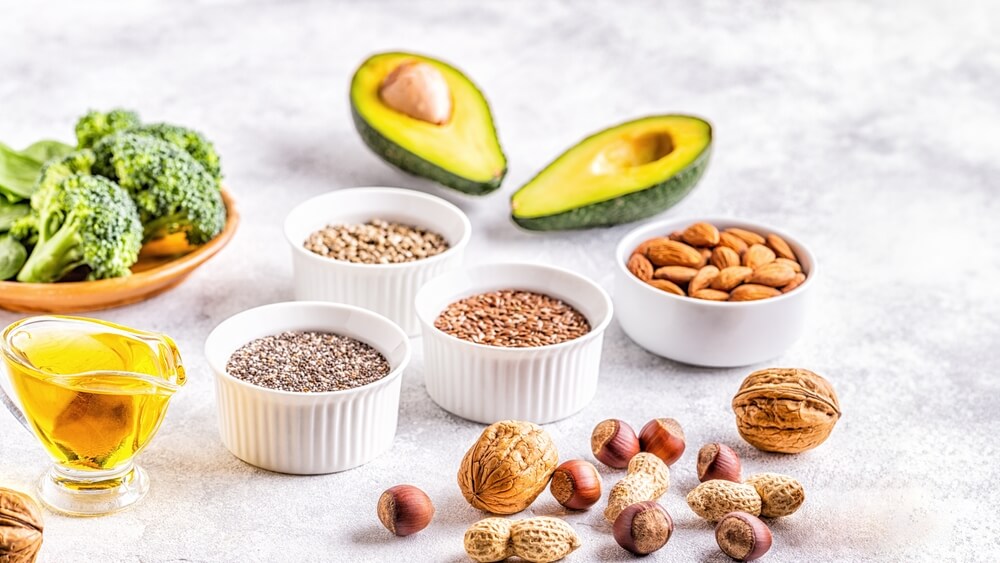
Vegans primarily meet their omega-3 requirements through the plant-based fatty acid ALA, which is found in abundance in linseed oil, chia seeds and walnuts. However, the body can only convert ALA into the important, biologically active forms EPA and DHA to a very limited extent.
To reliably meet the daily requirement for EPA and DHA, the targeted intake of algae oil supplements is therefore considered the most sensible option. These provide the marine omega-3 fatty acids directly and without any conversion losses, making them a suitable vegan alternative to fish oil.
What are the symptoms of an omega-3 deficiency?
A deficiency in omega-3 fatty acids can lead to a range of health problems affecting various systems in the body.
- Cognitive impairments: Possible signs include problems with memory, concentration and attention.
- Mood changes: Omega-3 fatty acids are involved in the regulation of neurotransmitters. A deficiency may therefore be associated with mood swings and an increased risk of depressive moods or anxiety.
- Developmental issues: In infants and children, a deficiency can impair physical and mental development, particularly in terms of cognitive and visual development.
- Vision problems: An omega-3 deficiency can affect the health of the retina and be associated with visual disturbances.
- Skin changes: Dry, flaky skin and a worsening of eczema or other inflammatory skin conditions are possible consequences.
- Cardiovascular problems: A deficiency may be linked to high blood pressure and elevated triglyceride levels in the blood, thereby increasing the risk of cardiovascular disease.
- Weakened immune system: Immune defences may be compromised, which can lead to an increased susceptibility to infections.
- Impaired bone metabolism: An omega-3 deficiency may be associated with reduced bone mineral density and an increased risk of fractures.
What is omega-9?
Omega-9 fatty acids belong to the group of monounsaturated fatty acids. They are not essential for the body, as it can produce them itself from saturated fatty acids. Nevertheless, the most important member of this group, oleic acid, is known for its health benefits. It supports the cardiovascular system by lowering LDL cholesterol levels, improving total cholesterol levels and maintaining stable HDL cholesterol levels.
Furthermore, oleic acid can promote the elasticity of blood vessels and the suppleness of the skin. This is achieved, amongst other things, by reducing the incorporation of saturated fatty acids and omega-6 fatty acids into cell membranes.
Olive oil, for example, contains high levels of omega-9 fatty acids and low levels of omega-6 fatty acids.
What is the difference between omega-3 and omega-6?
Omega-3 and omega-6 fatty acids are both essential, polyunsaturated fatty acids that the body cannot produce itself and must therefore obtain from food. The main difference lies in their chemical structure and biological functions.
Omega-3 fatty acids, found for example in oily fish or linseed oil, have a predominantly anti-inflammatory effect. They support cardiovascular function and play an important role in brain function.
In contrast, omega-6 fatty acids (e.g. from sunflower oil) are primarily pro-inflammatory – a function that is important for the immune response. As omega-3 and omega-6 fatty acids compete for the same enzymes in the body, the ratio in the diet is crucial. For good health, an omega-6 to omega-3 ratio of around 5:1 or lower is considered beneficial.
How can you recognise good omega-3 supplements?
When choosing an omega-3 supplement, particular attention should be paid to the content of the active fatty acids EPA and DHA. The sheer volume of oil is less indicative than the actual concentration of these two fatty acids.
An important quality indicator is the TOTOX value, which provides information about the oxidation of the oil. A low value (ideally below 10) indicates freshness and a low level of oxidation. Furthermore, the supplement should be tested for contaminants such as heavy metals.
The chemical form is also crucial for good absorption. The so-called re-esterified triglyceride (rTG) form is considered to be particularly bioavailable and can be utilised efficiently by the body.

Are there any downsides to taking omega-3?
As with many nutrients, the correct dosage is key when it comes to omega-3 fatty acids. Where there are benefits, side effects may also occur. A large meta-analysis of scientific studies has concluded that a daily intake of more than one gram of marine omega-3 fatty acids (for example, from fish oil or algae oil capsules) may be associated with an increased risk of cardiac arrhythmia. In particular, for people with existing or impending heart disease, taking high-dose omega-3 supplements may increase the risk of atrial fibrillation.
Omega-3 blood test: What does it measure and when is it useful?
The omega-3 blood test (also known as the omega-3 index) measures the percentage of the omega-3 fatty acids EPA and DHA relative to the total amount of fatty acids in the membranes of red blood cells. As these cells have a relatively long lifespan, the test provides an indication of long-term omega-3 intake over the past few months.
The test can be useful as part of general health screening, particularly for assessing cardiovascular risk. It is also suitable for individually adjusting the dosage of omega-3 supplements and for monitoring the success of treatment. An optimal target value lies between eight and eleven per cent.
New scientific studies on omega-3
Several large clinical trials and meta-analyses have investigated the significance of the omega-3 index and the efficacy of omega-3 fatty acids in various contexts. Both positive and potentially negative effects have been observed.
Positive aspects
- Framingham Heart Study (and meta-analyses): These studies played a key role in establishing the Omega-3 Index as a relevant marker. A target value of 8 to 11 per cent is associated with a lower risk of cardiovascular mortality.
- DO-HEALTH study: The study provided evidence that omega-3 supplementation – particularly in combination with other measures – can slow down biological ageing.
Negative aspects
- REDUCE-IT study: Although this study showed overall positive effects on the reduction of cardiovascular events, an increased rate of atrial fibrillation was observed in the high-dose group (4 g per day of an EPA derivative). Similar results have also been reported in other high-dose studies, such as the STRENGTH study.
- Risk of bleeding: Several studies suggest that omega-3 fatty acids affect platelet function and may therefore, in theory, increase the risk of bleeding. This is particularly relevant for people who are already taking blood-thinning medication.





