
A cold

Colds (flu-like infections): What really helps?
A flu-like infection, often referred to as a cold, is an infection of the nasal mucosa and the upper respiratory tract. A cold usually begins with a sore throat or a tickle in the throat, followed shortly afterwards by a runny nose. Depending on the pathogen and the severity of the cold, a cough, fever, aching limbs and a headache may also occur. In this article, you will learn all about the causes, symptoms and correct treatment of flu-like infections.

Exercise when you have a cold: when it’s okay and when you should take a break
You’ve caught a cold and are wondering whether exercising will help or do more harm than good. There’s no one-size-fits-all answer, as not every cold is the same: a mild sniffle is quite different from an infection that leaves you feeling really unwell. The key factors are therefore your symptoms, the intensity of the exercise and how you’re feeling overall. In this article, you’ll find out when light exercise may still be acceptable, when you absolutely must take a break, and how to safely get back into training afterwards.
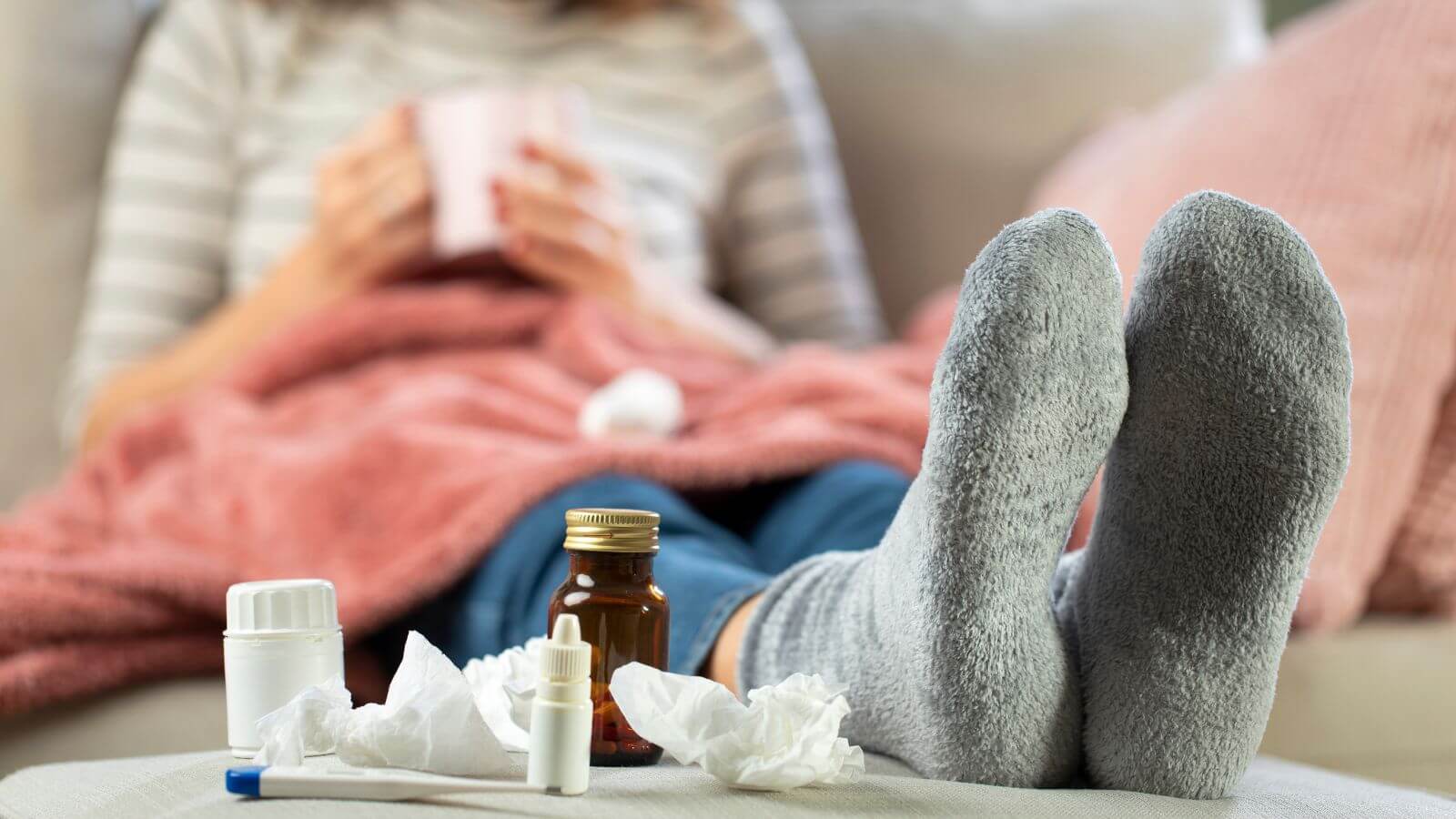
Sick again? What lies behind frequent colds
When a runny nose and a cough become constant companions, there’s often more to it than just bad luck. Your body is sending signals that your immune system needs a boost. In this article, you’ll find out what weakens your immune system and what targeted strategies you can use to finally break the cycle.

Flu, a cold or COVID-19: How to tell the difference
It is often not easy to tell whether it is flu, a cold or COVID-19, as the symptoms are very similar. Nevertheless, there are key differences in how they progress, their severity and the risks involved. Whilst a common cold usually starts gradually, the real flu often hits you like a blow, and COVID-19 continues to present a wide variety of variants. In this article, you’ll learn how to interpret your body’s warning signs correctly, what characteristics are typical of each pathogen, and when you should definitely see a doctor.