
What is rosacea?
Rosacea (also known as ‘copper rose’) is a chronic skin condition that causes persistent inflammation on the face. It progresses through three stages. Depending on the stage, symptoms may include, for example, redness, small blisters and nodules. The forehead, nose, cheeks and chin are particularly commonly affected. The typical redness associated with rosacea is caused by the dilation of blood vessels, which leads to increased blood flow to the face. Common symptoms associated with rosacea include itching and, in some cases, a burning sensation. Possible triggers for the symptoms include heat and extreme temperature fluctuations, as well as the consumption of alcohol or spicy foods. Rosacea is not contagious. The condition cannot be passed on to others through hugs or physical contact – not even if those affected have clearly visible inflammatory pustules.
What causes rosacea?
The exact causes of rosacea are not yet fully understood. However, several factors appear to play a role:
- Blood vessels and nerves: It is thought that the blood vessels and nerves in the face are weakened. This can lead to circulatory problems in the face.
- Inflammatory reaction to certain mites: One possible cause is hypersensitivity to the Demodex mite, which lives in the hair follicles. This mite is a natural part of the skin’s flora and is beneficial. In patients with rosacea, however, there is an excessive number of these mites, which triggers an inflammatory reaction.
- Inflammatory and immune response: It is certain that rosacea is an inflammatory condition. Studies show that the immune system overreacts in rosacea. In this process, certain proteins (antimicrobial peptides) are produced in excessive quantities. These proteins form part of the body’s own defence system and promote inflammation in the skin.
- Other factors: Conditions affecting the liver, stomach or gut may also influence the course of rosacea.
What are the symptoms of rosacea and how does the condition progress?
The severity of the condition can vary and it frequently affects the cheeks, chin, forehead and nose. In rarer cases, the scalp, neck or chest area may also be affected. Rosacea usually develops gradually and progresses in three phases, with flare-ups.
- Phase 1: Skin redness and dilated capillaries occur. Initially, any redness on the face usually disappears after a few hours. As the condition progresses, the redness occurs more frequently and no longer disappears.
- Phase 2: If rosacea remains untreated, pus-filled spots, small blisters and nodules may also form.
- Stage 3: Those affected suffer from thickening of the skin and overgrowth of tissue and sebaceous glands on the nose (rhinophyma). Rhinophyma is very rare – occurring mainly in men.
Associated symptoms: Many sufferers also experience itching, a burning sensation or stinging pain.
Can rosacea also affect the eyes?
In rare cases, rosacea also affects the conjunctiva of the eyes. There, it can lead, for example, to chronic conjunctivitis. This is often characterised by a sensation of a foreign body and a burning pain in the affected eye. Occasionally, vision may also be impaired. Rosacea affecting the eyes does not always occur alongside skin changes on the face. Symptoms on the forehead, nose, cheeks or chin and impaired vision can occur independently of one another. In most cases, however, rosacea affects only areas of the face. 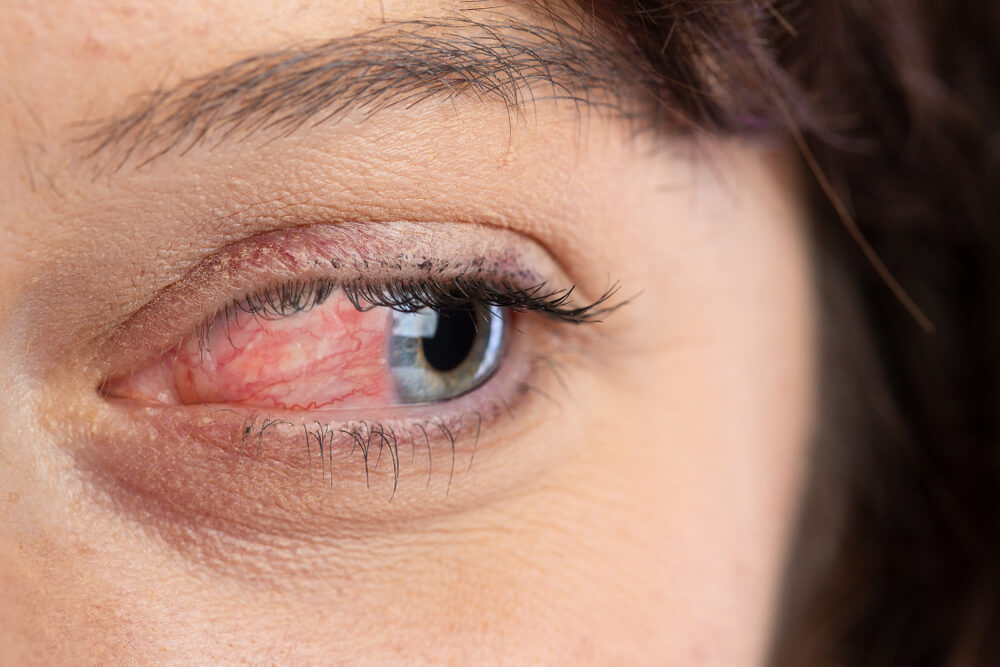
How is rosacea diagnosed?
A dermatologist can usually tell whether rosacea is present simply by looking at the typical skin appearance. In rare cases, the condition occurs alongside acne or displays similar symptoms. In such cases, a biopsy – in which the skin tissue is examined – can provide clarity. During a minor surgical procedure carried out under local anaesthetic, a tissue sample is taken from the affected area of skin. The doctor uses fine instruments, such as a scalpel, for this purpose. The sample is then examined in the laboratory.
How is rosacea treated?
Rosacea progresses through three stages, and the appearance of the skin changes depending on the severity of the condition. Different treatment options are used depending on the progression of the rosacea:
- Stage 1 – Skin redness and dilated capillaries: Treatment with antibiotic creams or gels, which cause the skin’s blood vessels to constrict.
- Stage 2 – Redness, pus-filled spots, nodules and blisters: In addition to creams and gels, antibiotics in tablet form are used. In this case, antibiotics do not act against bacteria as they normally would, but – when taken in low doses – primarily have an anti-inflammatory effect. They calm the overactive immune system.
- Phase 3 – Tissue growths, sebaceous glands on the nose (bulbous nose): In cases of severe skin thickening, surgical removal of the growths may be necessary.
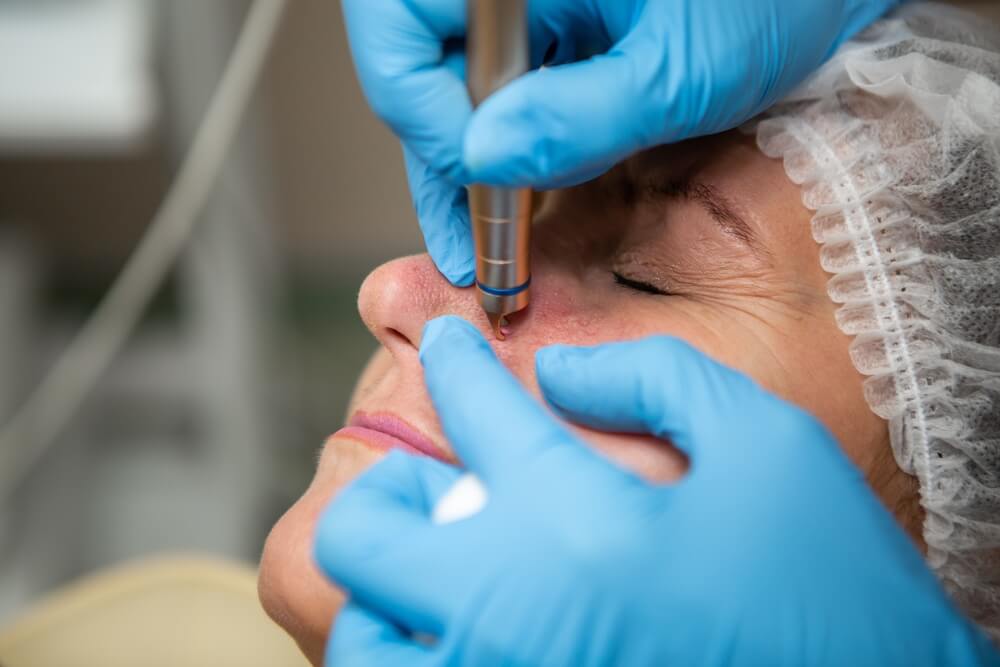
Laser treatment
Laser treatment is possible at all three stages. An IPL laser is often used. Depending on the severity of the condition, two to three sessions are required. There is usually a six-week break between appointments. This allows the skin to recover and the effectiveness of the treatment to be clearly assessed.
Photodynamic therapy
In certain cases, photodynamic therapy is used to treat rosacea. First, patients are given a substance that makes the skin more sensitive to light. This so-called photosensitiser accumulates in the affected areas of skin. These areas are then irradiated with light of a specific wavelength. This alters the structure of the photosensitiser, resulting in the destruction of damaged skin structures. All the methods listed here can significantly improve the appearance of the skin in cases of rosacea. A complete cure is not possible, but flare-ups and relapses can usually be largely prevented with the right treatment.
How can rosacea be prevented?
Rosacea cannot be cured, but those affected can significantly reduce flare-ups and symptoms if they know and avoid their personal triggers. Important measures include:
- Avoiding heat and sudden changes in temperature: Excessive heat and sudden changes in temperature can irritate the blood vessels and trigger a rosacea flare-up.
- Food and drink: Hot drinks, spicy foods and alcohol can trigger flare-ups.
- Sun and UV radiation: Those affected should also avoid prolonged exposure to the sun and protect themselves appropriately against UV radiation.
- Skin care: Some cosmetic products can also irritate the sensitive skin of people with rosacea. Those affected should therefore use low-fat creams and always cleanse their face thoroughly to remove make-up.
Can diet influence the course of rosacea?
Diet can play an important role in rosacea. There is no specific ‘rosacea diet’, but certain foods can worsen symptoms and should therefore be avoided where possible.
- Avoid or limit: Very spicy or hot foods such as chilli and curry, hot drinks and alcohol can exacerbate symptoms.
- Keep an eye on: People with rosacea should carefully monitor which foods, and in what quantities, are beneficial for them and whether their skin condition changes. Generally speaking, a healthy, balanced diet low in fat and sugar and rich in vegetables is helpful. This enables people with rosacea to prevent the pores on their face from becoming blocked. This, in turn, has a positive effect on the appearance of the skin.

Which doctor treats rosacea?
Rosacea is a skin condition and is therefore treated by specialists in dermatology (dermatologists).
What are the potential consequences of rosacea?
Rosacea puts a strain on the skin and can also have a significant impact on mental wellbeing. This is why early diagnosis and treatment are important. Sensitive skin Skin damaged by rosacea is extremely sensitive and easily irritated. Those affected often react very sensitively to skincare products, cosmetics and medicines.
Psychosocial consequences
Furthermore, the condition is known to have psychosocial consequences. Rosacea is visible to everyone, which is why those affected are often confronted with inappropriate reactions from those around them. Studies have shown that these prejudices can lead to considerable emotional distress, which is often underestimated. Many sufferers experience feelings of anxiety and shame, or have low self-esteem.
Timely and appropriate treatment
Without a diagnosis and proper treatment from a dermatologist, not only can the symptoms worsen, but so too can the psychological strain. A personalised and consistent rosacea treatment plan is therefore very important: only when the symptoms of rosacea have cleared up as completely as possible can patients, in the truest sense of the word, ‘feel comfortable in their own skin’ again.





