
General information about HPV
What is HPV?
HPV (human papillomavirus) refers to a large group of over 200 different virus types. Some of these are sexually transmitted and affect the skin and mucous membranes in the genital, anal or oral areas. A distinction is made between so-called low-risk and high-risk types.
Low-risk types can cause genital warts, whilst high-risk types can trigger cell changes that may develop into cancer over the course of several years – for example, in the cervix, the anal area, the penis or the mouth and throat.
HPV is very widespread: most sexually active people become infected with it at least once in their lifetime, often without realising it.
How common is HPV infection?
HPV is widespread and one of the most common sexually transmitted infections worldwide. It is estimated that up to 80–90 per cent of all sexually active people will be infected with the virus at least once in their lifetime.
What are the symptoms of an HPV infection?
In most cases, an HPV infection causes no symptoms. This means that many people affected do not realise they have been infected. In most cases, the virus clears up on its own.
If symptoms do occur, they usually appear on the skin or mucous membranes in the genital area. Genital warts are a typical symptom; these may appear as small, skin-coloured or reddish growths.
In rare cases, a long-standing infection can cause cellular changes that initially go unnoticed. Early signs may include unusual skin changes, sores that do not heal, bleeding or pain.
Why does HPV often cause no symptoms?
In most cases, an HPV infection causes no discomfort or symptoms. The immune system often recognises and fights off the virus, so the infection usually clears up on its own within one to two years.
How long is HPV contagious?
HPV is generally transmissible for as long as the virus is present in the body. As infections often go unnoticed, it is not possible to say exactly when someone is no longer infectious. Even after visible symptoms have subsided, transmission may still theoretically be possible.

What types of HPV are there?
Over 200 different types of HPV are known. Around 40 of these are sexually transmitted and affect the skin or mucous membranes in the genital, anal or oral areas.
A basic distinction is made between two groups:
- Low-risk types usually cause harmless skin changes such as genital warts. The most common of these are HPV 6 and 11.
- High-risk types can trigger cell changes that may develop into cancer over the course of several years. HPV 16 and 18 are particularly relevant.
Important to know: Not every HPV type is dangerous. Most infections are harmless and clear up on their own.
What does ‘HPV-positive’ mean?
An HPV-positive result means that human papillomaviruses have been detected in the body. This is not a cause for concern at first, as most infections are harmless.
In many cases, the infection goes unnoticed and is cleared by the immune system within one to two years. It is only if the virus remains in the body for a longer period that cell changes may occur.
Important: A positive test result is initially an indication of an infection and does not automatically mean that cancer is present. If an infection persists for a longer period, further investigations may be necessary to detect and treat any potential cell changes at an early stage.
The most important preventive measure is the HPV vaccination, supplemented by regular screening tests. You can read more about this here.
What are the risk factors for HPV?
The risk of becoming infected with HPV or of the infection persisting is influenced by various factors.
The most important of these include:
- frequent changes of sexual partners
- first sexual encounters before the age of 16
- a weakened immune system (e.g. due to illness or medication)
- smoking, as it can impair the immune system and cell health
- inconsistent use of condoms
Even without any risk factors, it is possible to become infected with HPV, as the virus is very widespread.
How is HPV treated?
There is no direct treatment for the HPV infection itself. In most cases, the immune system fights off the virus on its own within one to two years. Treatment therefore focuses primarily on the symptoms or complications that may arise as a result of HPV.
These include, for example, genital warts, which are removed locally using laser treatment, cryotherapy or surgery. In some cases, they can also be treated with ointments. It is crucial to have any changes investigated at an early stage.
What does HPV mean in a relationship?
An HPV infection is not unusual in a relationship. As the virus is very widespread and can often remain undetected in the body for a long time, it is usually impossible to trace when or by whom the infection was contracted.
This means that a positive test result is not an indication of infidelity. Many couples are already carrying the virus without realising it. In most cases, the immune system fights off the infection on its own without causing any health problems.
It is important to discuss the issue openly, to have regular screening tests and – where possible – to have the HPV vaccination as a protective measure.
HPV infection
How is HPV transmitted?
HPV is mainly transmitted through direct skin-to-skin and mucous membrane contact – usually during sex. This includes vaginal, anal and oral sex. Infection in the mouth and throat is also possible through oral sex.
Condoms can significantly reduce the risk of infection, but do not offer complete protection as they do not cover all affected areas of the skin.
Can you catch HPV without having sex?
Yes. HPV is transmitted through direct skin-to-skin contact. As the virus is transmitted not only via bodily fluids but also through direct skin-to-skin contact, infection can occur even without penetration. Even close contact in the genital area, such as during petting or intense kissing, can be sufficient.

How high is the risk during oral sex?
HPV can also be transmitted through oral sex. This can lead to an infection in the mouth and throat, which, in rare cases, is associated with an increased risk of certain types of cancer in this area. However, it is important to put this into perspective: cancer of the mouth and throat is rare overall. Only around 3 per cent of all cancers occur there, and only a proportion of these are caused by HPV.
Can you become infected from a regular partner?
Yes, it is possible. HPV can remain in the body for a long time without causing any symptoms. For this reason, it is often not possible to determine exactly when or from whom the infection originated.
This means that HPV can occur even within a committed relationship, even if both partners have been together for a long time. A positive test result is not an indication of infidelity.
Why do condoms not provide complete protection against HPV?
HPV is mainly transmitted through direct skin-to-skin contact and not just via bodily fluids. This is why areas of skin that are not covered by a condom can also become infected. Condoms can significantly reduce the risk of infection, but they do not offer complete protection.
Diagnosis and testing
What is an HPV test?
An HPV test directly detects specific types of human papillomavirus. To do this – similar to a Pap smear – a cell sample is taken from the cervix and examined in the laboratory.
The test shows whether there is an infection with high-risk types, which can cause cell changes in the long term. The aim of the test is to find out whether a woman is infected with HPV and therefore has an increased risk of developing cervical cancer.
What types of HPV tests are available?
There are two types of HPV test, both of which aim to detect an HPV infection. The so-called hybridisation test determines whether the pathogen detected is a high-risk or low-risk HPV type. (Low-risk HPV viruses can cause genital warts, whilst high-risk HPV viruses can lead to the development of various types of cancer.) The polymerase chain reaction (PCR) test makes it possible to identify the exact virus type or types.
What is the difference between a Pap smear and an HPV test?
The Pap smear and the HPV test serve different purposes:
- Pap smear: checks for the presence of any cellular changes
- HPV test: shows whether there is an infection with specific HPV types
Both tests complement each other: the HPV test identifies the risk at an early stage, whilst the Pap smear reveals any potential changes.

When should an HPV test be carried out?
Austrian Cancer Aid recommends that women aged 30 and over have an HPV test at least every three years, regardless of whether they have been vaccinated against HPV or not. Experts also point out that duplicate testing should be avoided; this means that the Pap test and the HPV test should be carried out alternately.
How does an HPV test work?
The procedure is simple and takes just a few minutes:
- A cell sample is taken from the cervix using a small brush
- Examination and analysis in the laboratory
- The doctor informs you of the result
The test is generally well tolerated.
Is an HPV test painful?
The HPV test is not usually painful. The collection of cells may feel slightly uncomfortable, similar to a Pap smear.
How reliable is an HPV test?
The HPV test is considered very reliable for detecting high-risk types.
A negative test result suggests that there is currently no increased risk of cell changes.
Can you get tested even if you have no symptoms?
Yes. You can have an HPV test even if you have no symptoms. As HPV infections often go unnoticed, the test can provide early indications.
How much does an HPV test cost?
The cost of an HPV test is usually only covered by health insurance if a Pap test has shown abnormal results. As a screening test, it is classified as an ‘optional service’ and costs around 50 euros if paid for privately.
HPV in boys and men
How common is HPV in men?
Studies show that around one in three men over the age of 15 is currently infected with at least one type of HPV. Men are affected by HPV just as frequently as women. In most cases, the infection is harmless and clears up on its own. Only a small proportion of those affected experience health problems, depending on the specific HPV type. You can read more about HPV in boys and men here.
Which doctor should you see for HPV?
Which doctor you should consult depends on where the symptoms are occurring. Your first point of contact may be a GP, who will refer you to a specialist if necessary.
If there are changes in the genital area, urologists are usually the specialists to consult. If symptoms occur in the anal area, it may also be advisable to see a proctologist or a dermatologist.
How is HPV treated in men?
There is no direct treatment for HPV infection. In many cases, the immune system fights off the virus on its own within a matter of months to a few years. Treatment therefore focuses primarily on symptoms or related conditions, such as genital warts, which can be removed locally or treated with medication. In the event of abnormal cell changes, treatment is determined by the findings.
Is there an HPV test for men?
There is currently no standardised HPV test for men. Whilst women can be specifically screened as part of routine healthcare, routine testing is not recommended for men. Instead, the focus is on medical assessment – particularly in the event of abnormal skin changes or symptoms.

Why should boys and men get vaccinated against HPV?
The HPV vaccine protects against the main types of HPV that can cause genital warts and the majority of HPV-related cancers. Boys and men also benefit directly from the vaccine, as it reduces their risk of developing the disease. At the same time, it helps to reduce the spread of the virus.
How can HPV be detected in men?
In most cases, an HPV infection in men goes unnoticed and causes no symptoms.
If symptoms do occur, they usually manifest as
- genital warts
- skin changes in the genital area
- rarely, symptoms in the mouth or throat
Many people carry the virus without realising it.
HPV vaccination
Who should be vaccinated against HPV?
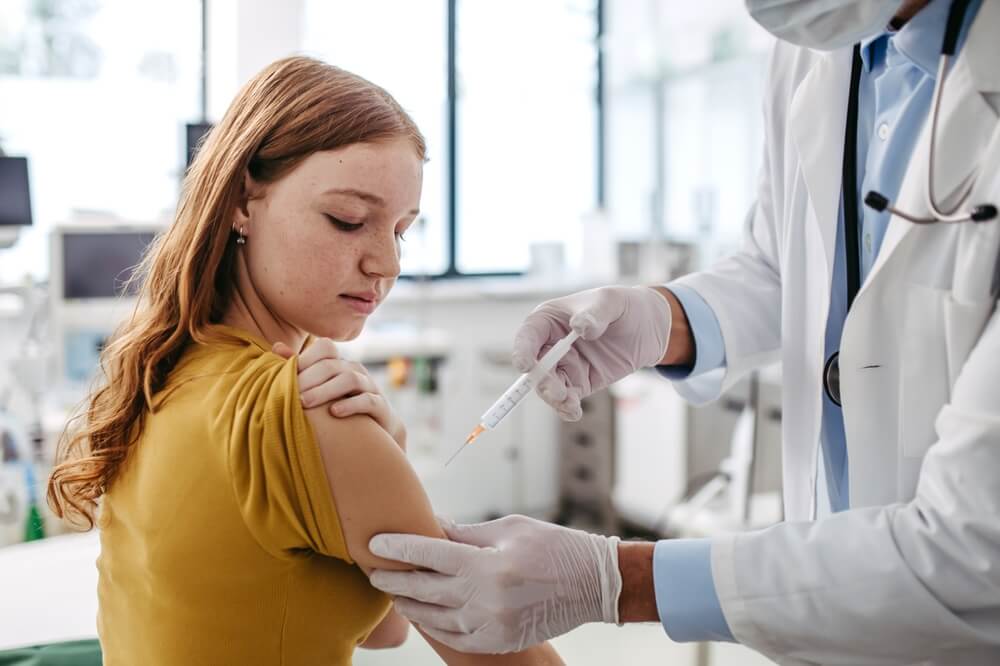
The HPV vaccination is recommended for girls and boys aged between 9 and 12. The ideal time is before they become sexually active, as the protection is most effective then.
However, the vaccine is still worthwhile even later on. Even if you are already sexually active, you can still benefit from protection against HPV types you have not yet come into contact with.
Why is the HPV vaccination important?
HPV is very common. Most people become infected at least once in their lifetime – often without realising it. The vaccine can significantly reduce the risk of several types of cancer.
The HPV vaccination protects against certain types of human papillomavirus (HPV) that can cause cancer. These include, in particular:
- Cervical cancer
- Cancer of the mouth and throat
- Anal and penile cancer
Can people who have already been sexually active also benefit from the vaccine?
Yes. Even if you are already sexually active, the HPV vaccine can still be beneficial. Important to know: The vaccine does not treat existing infections, but it does protect against HPV types with which you have not yet been infected. That is why the vaccine can still be beneficial even after you have become sexually active
Can the HPV vaccine be given alongside other vaccines?
Yes, the HPV vaccine can be administered alongside other vaccines without any problems. This is common practice, for example, with routine vaccinations during adolescence. It does not compromise the vaccine’s effectiveness or safety.
Does the HPV vaccine have any side effects?
The HPV vaccine is considered to be very well tolerated.
Any side effects are usually mild and temporary. These include:
- Pain or redness at the injection site
- mild tiredness
- occasional fever
These symptoms usually subside after a short time. Serious side effects, such as allergic reactions, are very rare.
Do you need a booster dose of the HPV vaccine?
Based on current knowledge, no booster dose is necessary after the full course of two to three doses.
How much does the HPV vaccine cost in Austria?
In many countries (including Austria), the HPV vaccine is offered free of charge to children, adolescents and young adults (aged 9–21) as part of the public vaccination programme. For adults aged 21 and over, the vaccine is subject to a charge in Austria. The cost varies depending on the provider.
Where can you get the HPV vaccine?
You can receive the HPV vaccination at various locations:
- from your GP
- from paediatricians
- at many public vaccination centres (district authorities, municipal offices, district offices, parental advice centres)
- as part of school vaccination programmes
How safe is the HPV vaccine?
The HPV vaccine is considered very safe. It has been extensively studied and has already been administered millions of times worldwide.
Large-scale studies and long-term follow-up studies show:
- high efficacy
- a very good safety profile
- Apart from isolated cases, there are no known persistent or long-term adverse effects.
Which HPV types does the vaccine protect against?
Modern vaccines protect against the most important HPV types, including:
- HPV 16 and 18 (which cause the majority of cancer cases)
- other high-risk types
- as well as types that cause genital warts
This provides broad protection against the most common and dangerous HPV variants.
Is using condoms an alternative to the HPV vaccine?
No. Condoms do not offer complete protection against HPV. HPV is transmitted through skin-to-skin contact – not just via bodily fluids. Condoms reduce the risk, but they are no substitute for the vaccine.






