Summary
CRP level
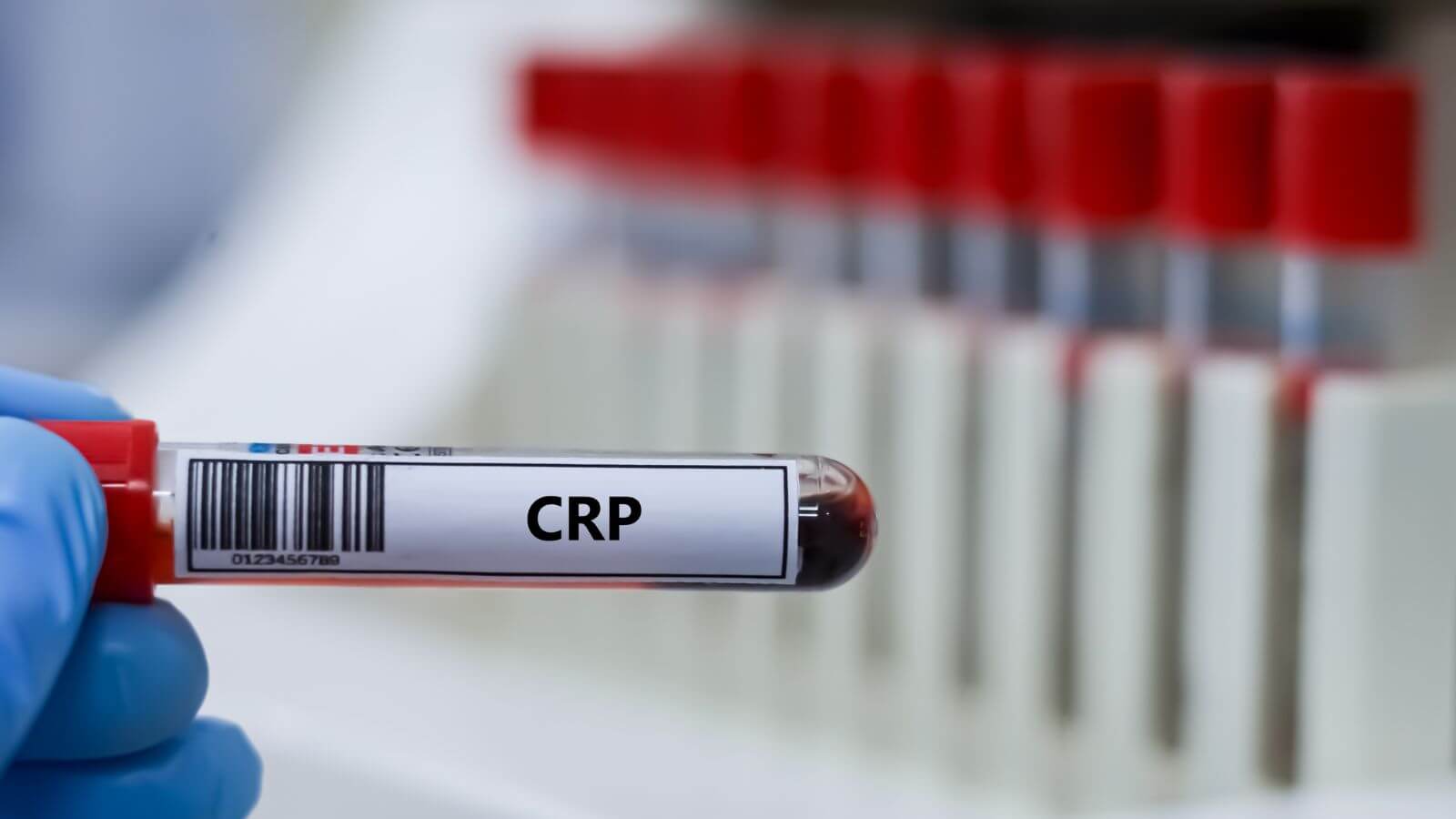
What is the CRP level?: The CRP level is a marker of inflammation in the blood. It indicates whether there is inflammation in the body and how severe it is.
What are normal CRP levels? A level below 5 mg/l is generally considered normal in adults. Higher levels may indicate an inflammatory response.
What does an elevated CRP level mean? An elevated level indicates inflammation, for example caused by infections, injuries or chronic conditions. The level provides an indication of the severity of the inflammation.
When is a CRP level dangerous? Very high or rapidly rising levels, particularly above 100 mg/l, should be investigated by a doctor as soon as possible. The underlying cause is always the decisive factor.
How quickly does the CRP level drop again? The level usually drops within 24 to 48 hours once the inflammation improves or is treated.
What can be done about an elevated CRP level? The CRP level itself is not treated. The key is to identify the cause of the inflammation and treat it specifically.
What is the CRP level and what does it indicate?
C-reactive protein, or CRP for short, is a protein produced in the liver. It is one of the so-called acute-phase proteins, the concentration of which in the blood rises rapidly when inflammation is taking place in the body.
In the event of infections or other inflammatory processes, the body releases messenger substances that stimulate the production of CRP. The CRP level can therefore rise significantly within just a few hours.
Put simply, it provides information on whether there is inflammation in the body and how severe it is. In medical practice, the level is primarily used to:
- detect inflammation
- assess its extent
- assess the course of a disease or treatment
CRP is considered a highly sensitive marker and reacts more quickly than many other inflammatory markers. At the same time, it is non-specific. This means it does not indicate where the inflammation is located in the body or what is causing it.
To determine the level, a blood sample is taken and analysed in the laboratory. For a reliable assessment, the CRP level is always interpreted in conjunction with the patient’s symptoms, the physical examination and other laboratory results.
When is the CRP level measured?
The CRP level is measured as part of a blood test and is one of the most commonly used diagnostic tests. It is primarily considered when inflammation or infection is suspected.
Typically, the level is measured:
- in cases of acute symptoms such as fever, pain or a severe feeling of being unwell
- when an infection is suspected, for example caused by bacteria or viruses
- in cases of unexplained symptoms, to rule out an inflammatory cause
- to monitor the progression of a condition or treatment
- following surgery or injury, to detect potential complications at an early stage
Particularly in cases of unclear symptoms, the CRP level can help to better interpret the findings. As the condition progresses, the level also indicates whether it is improving or worsening.

CRP reference ranges at a glance
A CRP level is always assessed in a clinical context. The only clearly defined reference range is:
- below 5 mg/l = normal in adults
Levels above this indicate an inflammatory response. The level of the CRP value allows for a rough assessment of the severity of the inflammation, even though these are not fixed cut-off values.
In practice, the following ranges are often used as a guide:
| CRP level (mg/l) | Classification |
|---|---|
| < 5 mg/l | Normal range |
| 5 – 50 mg/l | slightly to moderately elevated |
| 50 – 100 mg/l | significantly increased inflammatory activity |
| > 100 mg/l | highly elevated, often seen in severe inflammation |
A CRP level below 5 mg/l is generally considered normal in adults. As levels rise, the intensity of the inflammatory response usually increases as well.
However, it is important to note that this classification is for guidance only. Reference ranges may vary depending on the laboratory, and the exact significance always depends on the symptoms and the overall clinical picture.
The trend over time is also crucial. Changes observed across several measurements often provide more information than a single value.
What does an elevated CRP level mean?
An elevated CRP level indicates inflammation in the body. Slightly elevated levels are common in everyday infections. Significantly higher levels may indicate more severe inflammation. An elevated CRP level can have many causes and should always be investigated by a doctor.
Possible causes include:
- bacterial or viral infections such as a urinary tract infection, pneumonia, septicaemia or appendicitis
- chronic inflammatory bowel diseases, such as ulcerative colitis or Coeliac disease
- rheumatic conditions such as rheumatoid arthritis
- cardiovascular diseases
- injuries or operations
- in rare cases, tumours
It is important to note that CRP is a non-specific marker. The level therefore does not indicate exactly where the inflammation is located in the body or what is causing it. For this reason, it is always assessed in conjunction with symptoms, a physical examination and other laboratory results. The overall clinical picture is always the decisive factor.
How is an elevated CRP level treated?
An elevated CRP level is not treated directly. The key is always to identify the cause of the inflammation and treat it specifically.
Treatment therefore depends on the specific condition:
- Antibiotics for bacterial infections
- symptomatic treatment for viral infections
- anti-inflammatory medication for chronic conditions
It is important to note that the CRP level is frequently used to monitor the progress of treatment. If the level falls, this usually indicates that the treatment is successful. If it remains high or continues to rise, an adjustment to the treatment may be necessary.

What does a level that is too low mean?
A low CRP level is generally unremarkable and suggests the absence of acute inflammation. Many healthy people have levels that are barely detectable.
However, a normal level cannot rule out every condition. Particularly mild or chronic inflammation can also be associated with low CRP levels.
When is a CRP level dangerous?
A CRP level becomes a cause for concern if it is very high or rises rapidly whilst symptoms are present. However, there is no fixed ‘lethal’ CRP level.
As a guide:
- from around 50 mg/l, the CRP level usually indicates more severe inflammation and should be investigated by a doctor
- above 100 mg/l, there is usually significant inflammation and this should be investigated by a doctor as soon as possible.
What can be done about an elevated CRP level?
An elevated CRP level cannot be lowered directly. The key is to treat the underlying cause. As soon as the underlying condition improves, the CRP level will usually drop again.
The following measures may help:
- Treating infections: Bacterial infections are often treated with antibiotics. For viral infections, rest, fluids and measures to relieve symptoms are the main focus.
- Targeted treatment of inflammation: Anti-inflammatory medication is often used for chronic inflammatory or autoimmune conditions.
- Rest: Getting plenty of rest and sleep supports the immune system and the healing process.
- A balanced diet and moderate physical activity: A balanced diet and moderate physical activity can support the healing process.
- Avoiding alcohol and smoking
How quickly does the CRP level drop again?
The CRP level usually drops relatively quickly once the cause of the inflammation has been treated or the inflammation subsides on its own. This is because C-reactive protein has a short half-life in the body.
In many cases, the level begins to fall within 24 to 48 hours as the patient’s condition improves. After a few days, it may return to the normal range, particularly in the case of uncomplicated infections.
In the case of severe or chronic conditions, the decline may take longer. This is precisely why CRP is well suited for monitoring progress.
CRP vs. other inflammation markers
The CRP level is one of the most important markers of inflammation in the blood. It is often assessed alongside other laboratory test results to obtain a more accurate picture of inflammation in the body.
The most important comparative values include:
- Erythrocyte sedimentation rate (ESR): Reacts significantly more slowly than CRP. It often only rises after a few days and remains elevated for longer. The ESR is used more for assessing chronic inflammation.
- Leukocytes (white blood cells): These indicate how active the immune system is. They may be elevated in the event of infections, but they react less specifically and do not always correlate with CRP.
The main advantage of the CRP level is that it reacts very quickly to changes in the body. This makes it particularly well-suited to detecting acute inflammation and monitoring the course of a disease.
Other parameters, such as ESR and white blood cell count, provide additional information but are often less dynamic or less accurate. In practice, these laboratory results are therefore usually assessed together to enable the most reliable assessment possible.
FAQ
Yes, prolonged stress can cause a slight rise in CRP levels. Chronic stress promotes inflammatory processes in the body, which can also be detected in the blood. The increase is usually slight and significantly lower than that seen with infections or acute illnesses.
CRP levels may be slightly elevated in the case of a cold. As colds are usually caused by viruses, the increase is often moderate. Significantly higher levels are more likely to indicate a bacterial infection.
Yes, intense physical exertion can cause a short-term rise in CRP levels. A slight increase may occur, particularly after unfamiliar or very strenuous training sessions. This usually returns to normal quite quickly.
High-sensitivity CRP (hs-CRP) provides a more accurate measurement of very low CRP levels. It is primarily used to assess the risk of cardiovascular disease, as it can detect even minor inflammation in the blood vessels.
‘Inflammaging’ describes chronic, low-grade inflammation in old age. In this condition, inflammatory markers such as CRP are persistently slightly elevated. This condition is associated with age-related diseases such as cardiovascular disease.
There is no specific CRP level that is fatal. Very high levels may indicate a serious condition such as a bacterial infection or sepsis, but it is not the level itself that is decisive, but rather the underlying cause. Therefore, significantly elevated levels should always be investigated by a doctor.
Elevated CRP levels occur in many conditions associated with inflammation.
These include:
- bacterial and viral infections
- rheumatic diseases
- chronic inflammatory bowel diseases
- cardiovascular diseases
- autoimmune diseases
- in rare cases, tumours
Yes, smoking can raise CRP levels. Harmful substances in tobacco smoke promote inflammatory processes in the body and often lead to a chronic, low-grade increase.
This form of inflammatory activity is associated with an increased risk of cardiovascular disease. CRP levels can often return to normal after giving up smoking.
Elevated CRP levels can also occur in tumour-related conditions, usually as a result of an inflammatory reaction in the body. This has been observed, amongst other things, in:
- sarcomas
- Lymphomas
However, CRP is not a tumour marker and is not suitable for diagnosing cancer. The level is non-specific and can have many other causes.
A quantitative CRP level indicates the exact concentration of CRP in the blood, usually in mg/l. In contrast, qualitative or semi-quantitative tests merely indicate whether the level is elevated or not. Quantitative measurement allows for a more accurate assessment and monitoring of the patient’s progress.
Rapid CRP tests are generally reliable for an initial assessment and provide a result within a few minutes. However, their accuracy is slightly lower than that of a laboratory test, particularly when levels are low.
A standardised laboratory blood test is therefore usually preferred for monitoring progress and for an accurate diagnosis. Any abnormal result should always be confirmed and interpreted by a doctor.


https://www.mayoclinic.org/tests-procedures/c-reactive-protein-test/about/pac-20385228, accessed: April 2026
https://medlineplus.gov/lab-tests/c-reactive-protein-crp-test/, accessed: April 2026
https://my.clevelandclinic.org/health/diagnostics/23056-c-reactive-protein-crp-test, accessed: April 2026
https://www.gesundheit.gv.at/labor/laborwerte/infektionen-bakterien/crp.html, accessed: April 2026
https://www.internisten-im-netz.de/mediathek/blutbild-erklaerung/c-reaktives-protein.html, accessed April 2026
https://www.apothekerkammer.at/aktuelles/aktuelle-themen/innovative-gesundheitsangebote-in-apotheken/crp, accessed April 2026
https://www.gesundheitsinformation.de/c-reaktives-protein-crp.html, accessed: April 2026
https://flexikon.doccheck.com/de/C-reaktives_Protein, accessed: April 2026
https://www.pharmazeutische-zeitung.de/was-die-entzuendungswerte-aussagen-143037/, accessed: April 2026
https://www.hausarztpraxis-am-romanplatz.de/gesundheit/crp-blutwert/, accessed: April 2026
https://www.rosenfluh.ch/media/arsmedici/2004/06/C-reaktives-Protein-ein-Praediktor-fuer-Darmkrebs.pdf, accessed: April 2026