
Preventative medical check-up (health check)
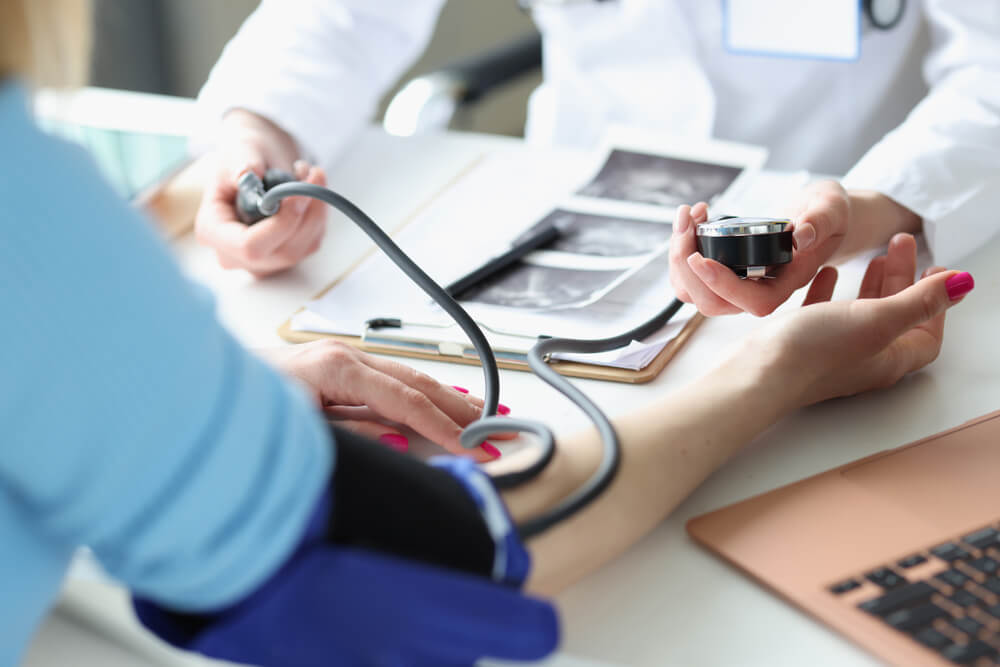
What is a preventive medical check-up (health check)?
The preventive medical check-up, also known as a health check-up, is a free service provided by the statutory social insurance scheme in Austria. It is available free of charge once a year to all insured persons aged 18 and over.
The aim of the preventive medical check-up is to identify health risks at an early stage, even before symptoms appear. The check-up can help detect, amongst other things, cardiovascular diseases, metabolic disorders such as diabetes, and certain types of cancer at an early stage. In addition, individual risk factors such as a lack of exercise, diet or smoking are discussed.
The results of the check-up form the basis for a personalised medical consultation. Doctors can use this information to make recommendations aimed at preventing diseases and reducing existing risks.
What is assessed during a health check-up?
Following a consultation during which the doctor takes a medical history, assesses lifestyle and determines the individual’s risk profile, the following tests are carried out:
- Physical examination: measurement of height, weight and blood pressure to calculate BMI, as well as a general physical assessment
- Blood test: measurement of blood sugar, total cholesterol, HDL cholesterol and triglycerides
- Urine test: Check for sugar, protein, traces of blood and other abnormalities
In addition, depending on age and gender, further cancer screening tests are offered:
- For women: a Pap smear for the early detection of cervical cancer, and mammography screening for the early detection of breast cancer from the age of 40
- For men aged 50 and over: screening to detect prostate cancer
- From the age of 50: colorectal cancer screening via a faecal occult blood test and the option of a colonoscopy
Who should attend the health check-up?
All adults should take advantage of the health check-up to assess their state of health and to identify and reduce individual health risks at an early stage. The check-up is particularly important for people with risk factors such as being overweight, smoking, a lack of exercise or an unhealthy diet.
Based on the results of the individual tests, targeted measures can be taken. Furthermore, for everyone, this enables the early detection of certain diseases that do not show any noticeable symptoms for a long time.
Why should you have a health check-up?
A health check-up helps to detect diseases as early as possible, which can significantly increase the chances of successful treatment. In addition, patients receive personalised advice on how to specifically reduce lifestyle risk factors such as smoking, diet or a lack of exercise, and to prevent diseases.
How often can you have a health check-up?
You can have a health check-up once a year free of charge. If you have not had a health check-up in the last 365 days, you are eligible for one again.
Where can you have a health check-up?
The health check-up can be carried out by any doctor who has a contract to provide screening services. This includes, amongst others, GPs and specialists in internal medicine. The health check-up is also offered at selected health centres.
What should you bring with you to a health check-up?
All you need to bring to the health check-up is your e-card. Even people without health insurance are entitled to the health check-up. You will need a replacement e-card, which you can obtain from the social insurance customer centre in your respective federal state upon presentation of your registration certificate.
It may also be helpful to bring a current list of any medication you take regularly, any existing medical reports and your vaccination record.
How much does the health check-up cost?
The health check-up is a free service provided by the social insurance scheme, available to everyone living in Austria.
Cancer screening / early detection of cancer
Why is cancer screening important?
Many types of cancer do not cause any noticeable symptoms in the early stages. The aim of cancer screening is to detect these diseases as early as possible or to prevent them from developing by identifying and removing precancerous lesions in good time. This significantly increases the chances of recovery, and in many cases, less invasive treatments are possible.
What cancer screening tests are available for women?
The recommendations for cancer screening for women include the following tests:
- Cervical cancer: Screening begins at an early age. From the age of 20, women should have a regular Pap smear as part of their routine gynaecological check-up for the early detection of cervical cancer.
- Breast cancer: Breast cancer can often be detected at a very early stage by means of a mammogram. This X-ray examination is generally recommended every two years for women aged 40 and over.
What cancer screening tests are available for men?
Prostate cancer: Elevated levels of prostate-specific antigen (PSA) may indicate prostate cancer. The PSA test, along with a prostate examination by a doctor, is recommended on a regular basis for men aged 45 and over.
What screening tests are available for women and men?
The following screening tests are recommended for both women and men:
- Bowel cancer: From the age of 50, two bowel cancer screening tests are available. These include a faecal occult blood test and a colonoscopy. If the initial results are normal, a colonoscopy is usually recommended every ten years.
- Skin cancer: Skin cancer screening involves examining the skin for moles, liver spots and other abnormalities using a dermatoscope, a special microscope with a light source. This screening is recommended for everyone every three years; for those at increased risk, it is recommended annually.
Skin cancer screening / skin cancer prevention (mole check-up)

Why should you go for skin cancer screening?
Skin cancer screening is important because the number of skin cancer cases has risen in recent years. Regular screening enables the early detection of precancerous skin lesions, allowing for timely treatment.
How does a skin cancer screening and mole check work?
The skin cancer screening begins with a preliminary consultation to discuss possible risk factors. The doctor then examines the entire skin, including areas that are difficult to see. The assessment is carried out with the naked eye and with the aid of a special microscope, known as a dermatoscope, to examine moles more closely. If any abnormalities are found, a tissue sample may be taken for further investigation.
Who should have regular skin cancer screening?
Skin cancer screening is important for everyone. However, people at increased risk in particular should have it carried out regularly.
These risk groups include:
- People with fair skin
- People with a large number of moles, particularly more than 40
- People who frequently suffered sunburn during childhood and adolescence
- People with a family history of skin cancer
- People with high occupational exposure to UV radiation or who regularly use sunbeds
- Patients with a weakened immune system, for example following an organ transplant
Please note: Any new or changing skin lesion should be examined by a doctor immediately.
How often should a check-up be carried out?
According to medical guidelines, a check-up is generally recommended every three years, or once a year for high-risk patients.
How much does a skin cancer screening cost?
Until recently, skin cancer screening in Austria was free as part of routine preventive care. In future, the examination will have to be paid for privately and will cost between 60 and 90 euros.
Eye screening

Why are regular eye examinations important?
Regular eye examinations make it possible to detect and treat eye diseases at an early stage, before permanent vision loss or blindness occurs. Many serious eye conditions, such as glaucoma or age-related macular degeneration, do not cause any pain or noticeable symptoms over a long period of time.
What happens during an eye examination?
The procedure for an eye examination is tailored to the individual needs of the patient.
The following tests are usually carried out:
- Medical history: This involves recording current symptoms and the patient’s medical history.
- Eye test: This assesses how clearly you can see at a distance and up close, both with and without glasses or contact lenses. Charts or screens displaying letters and numbers in descending order of size are used for this purpose.
- Refraction: This involves determining the eye’s refractive power or objectively measuring the current prescription for spectacles.
- Tonometry: This involves measuring intraocular pressure, usually by directing a brief puff of air onto the cornea.
- Slit-lamp examination: A special microscope is used to examine the anterior and middle sections of the eye.
- Fundoscopy: This examination is used to assess the back of the eye, in particular the retina, macula and optic nerve. Eye drops are usually administered beforehand.
Who should visit an ophthalmologist for a check-up?
In principle, a routine eye check-up is advisable for everyone. It is particularly important for children, for people aged 40 and over, for patients with chronic conditions such as diabetes or high blood pressure, and for people with a family history of eye problems.
How often should eye examinations be carried out?
- Children: The eye examinations specified in the Mother and Child Health Record should be carried out regularly.
- Adults up to the age of 40: If there are no symptoms or specific risk factors, a routine eye check-up is recommended every two to three years.
- Adults aged 40 and over: A check-up should be carried out at least every two years.
- People aged 60 and over: Annual eye examinations are recommended for this age group.
Who covers the costs?
Preventative eye care that does not require any special additional tests is free of charge for insured people seeing optometrists or ophthalmologists who have a contract with the health insurance fund.
Dental check-up

Why are regular dental check-ups important?
Dental conditions such as tooth decay or periodontitis usually develop gradually and often cause no symptoms at first. Regular dental check-ups allow them to be detected and treated at an early stage, which can often prevent the need for lengthy or painful procedures.
In
addition, professional oral hygiene can be carried out. This helps to prevent gum disease and tooth loss. Untreated inflammation in the mouth can also increase the risk of cardiovascular disease and strokes, or make it more difficult to manage conditions such as diabetes. Regular visits to the dentist are therefore also important for general health.
What does the dentist do during a check-up?
During a check-up, the dentist assesses your overall oral health to identify potential problems such as tooth decay or periodontitis at an early stage, before pain sets in or more extensive treatment becomes necessary.
Following a brief discussion of your medical history to clarify any current symptoms, the dentist examines your teeth and gums using a mirror and probe. This involves checking any existing fillings and dentures, as well as the condition of your gums and oral mucosa.
A periodontitis screening
may be carried out, during which the depth of the gum pockets is measured. This aids in the early detection of gum disease. If necessary, an X-ray examination is also carried out to identify hidden problems such as tooth decay between the teeth or inflammation of the tooth roots. The dentist will also remove hard plaque and discuss the results of the check-up.
Who should go for a dental check-up?
Everyone, regardless of age, should have regular dental check-ups to identify oral health problems at an early stage. This applies even if you are not in any pain or if you wear dentures.
How often should you have a dental check-up?
For children and teenagers, a dental check-up is generally recommended twice a year.
Adults should go for a check-up once or twice a year. If you belong to a high-risk group – for example, patients with diabetes or periodontitis – more frequent check-ups may be advisable, subject to individual consultation.
How much does a dental check-up cost?
The annual dental check-up is free of charge for anyone who has it carried out by a dentist registered with the National Health Service or at a National Health Service health centre.
Gynaecological screening

Why are gynaecological check-ups important?
Gynaecological screening is important as it enables the early detection of cancers such as cervical and breast cancer. They also allow inflammatory conditions, hormonal imbalances and infections to be diagnosed and treated at an early stage, often before any symptoms appear. Furthermore, gynaecological check-ups provide an opportunity for advice on topics such as contraception, planning a family and symptoms associated with the menopause.
What examinations are involved?
The core components of a gynaecological check-up include:
- Medical history and consultation: a discussion about your general state of health, your menstrual cycle, contraception and any existing symptoms.
- Pap test and examination of the reproductive organs: taking a cell smear from the cervix for the early detection of cervical cancer, as well as a palpation examination of the uterus and ovaries.
- Breast and armpit examination: Palpation of the breasts and armpits for the early detection of any changes associated with breast cancer.
Additional examinations, such as ultrasound or mammography, are recommended depending on age, individual risk or any abnormal findings.
When should you start having these check-ups, and how often?
Provided there are no abnormalities, a gynaecological check-up, a breast examination and a PAP test are recommended once a year.
Who covers the costs?
Gynaecological screening is free of charge at the recommended intervals.
Urological screening

Why are urological check-ups important?
Urological screening is important as it enables the early detection of urological cancers such as prostate, kidney and bladder cancer. Furthermore, benign prostate enlargement, bladder dysfunction and kidney disease can be diagnosed and treated at an early stage.
What examinations are included?
The key components of a urological screening include:
- Medical history: A discussion about family history, previous illnesses and current symptoms, for example relating to urination.
- Laboratory tests including a urine analysis: A urine sample is examined for blood, protein, signs of inflammation and other abnormalities that may indicate diseases of the bladder, kidneys or urinary tract.
- Blood test for men: Measurement of the PSA level (prostate-specific antigen) as a potential marker for prostate cancer, as well as a check of relevant kidney function values.
- Physical examination of the genitals in men: Palpation of the testicles and penis for the early detection of testicular cancer and other abnormalities.
- Digital rectal examination for men: Palpation of the prostate via the rectum to assess its size, shape and consistency, and to rule out any hardening.
- Ultrasound examination: Ultrasound of the kidneys to detect tumours, cysts or stones, and ultrasound of the bladder to determine residual urine volume after urination.
Where necessary, a urine flow measurement – also known as uroflowmetry – may also be carried out to check for any possible problems with bladder emptying. If the results are abnormal, further investigations such as a cystoscopy or a specialised ultrasound scan of the prostate may follow.
When should you start having screening, and how often?
Men are advised to have an annual digital rectal examination of the prostate and genitals from the age of 45. Patients with risk factors (family history, smokers, etc.) should start having these check-ups from the age of 40.
Who covers the costs?
For men aged 50 and over, screening for prostate cancer (usually a digital rectal examination) is part of the free screening programme. The PSA test (blood test) is also offered free of charge as part of this screening programme to men aged between 50 and 69 who are not at increased risk, if they wish.
For women, there is no specific urological cancer screening included in the list of services covered by the preventive health check-up programme. However, the examinations are free of charge if carried out by doctors contracted to the health insurance scheme.





