Summary
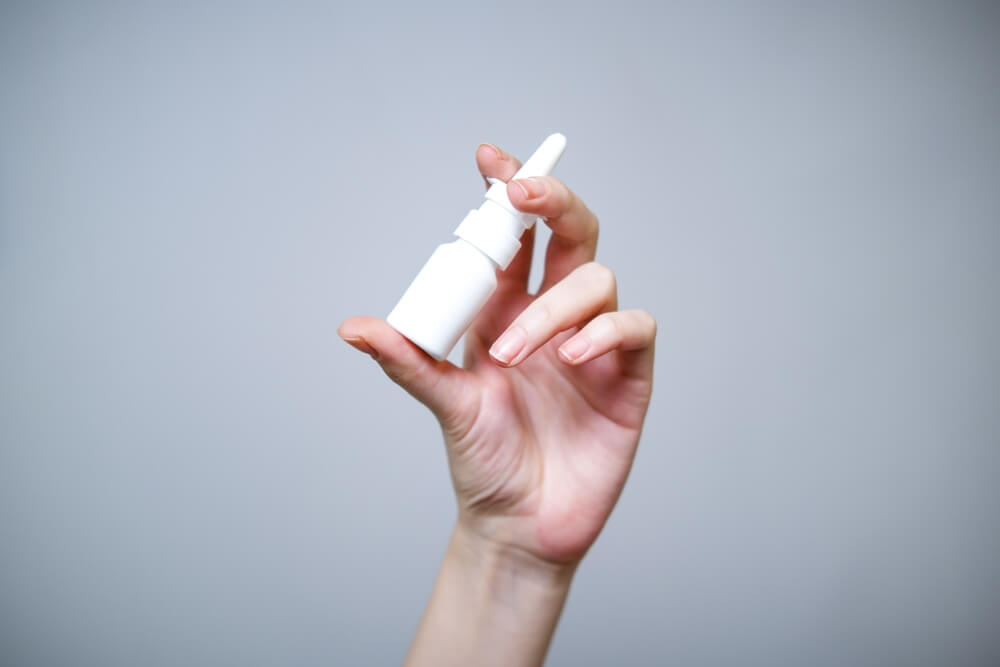
Flu vaccination via nasal spray
Definition: a needle-free alternative to the traditional injection, developed
specifically for children and young people. Vaccine: a live vaccine containing
attenuated, replicating viruses. Duration of protection: 6–12 months
. Side effects: blocked or runny nose, loss of appetite, feeling of weakness, headache, slightly elevated temperature, nosebleeds, temporary rash
What is the flu vaccine as a nasal spray?
The flu vaccine as a nasal spray is a needle-free alternative to the traditional injection, developed specifically for children and young people. In Austria, it is known under the trade name Fluenz (or Fluenz Tetra).
Nasal spray or injection: what’s the difference?
The main difference lies in the type of vaccine and how it is administered: Whilst the nasal spray is a live-attenuated vaccine containing viruses with limited replicative capacity and is authorised for children and young people aged 2 to 17, the injection contains an inactivated vaccine consisting solely of inactive viral components. It is the standard vaccine for adults and children aged six months and over.
How does the nasal spray vaccine work compared to the injection?
Unlike the injection, which usually contains an inactivated vaccine with inactivated viruses, the nasal spray is a live vaccine. However, the influenza viruses it contains are so greatly attenuated that they cannot cause actual flu.
It is also worth noting that the viruses can only multiply in the cooler nasal mucosa to trigger an immune response, but not in the warmer lungs. As the vaccine works where natural influenza viruses usually enter the body – in the nose – it builds up protection directly at the site of entry.
How effective is the flu vaccine as a nasal spray?
The effectiveness of the flu vaccine as a nasal spray is very good in children and young people and is generally comparable to that of the traditional injection. Studies show an efficacy of around 75 to 80 per cent in children against the strains contained in the vaccine. In some seasons, the nasal spray has even performed better than the injection in children, as it triggers a broader immune response (including directly in the mucous membranes).
Furthermore, the vaccine can significantly reduce the risk of severe illness. In Austria, the nasal spray is particularly recommended for the first vaccination, as it trains the immune system of children who have never been exposed to influenza viruses particularly effectively.
Who should not use the nasal spray?
The nasal spray vaccine is not suitable for:
- Children under two years of age
- Children with severe, uncontrolled asthma or current wheezing
- Children and adolescents with immunodeficiency (e.g. due to certain medical conditions or immunosuppressive therapies)
- Children and adolescents currently being treated with acetylsalicylic acid (ASA) due to the risk of Reye’s syndrome
- People with severe allergic reactions to any of the ingredients
- Hypersensitivity to active substances or other ingredients such as gelatine
The nasal spray vaccine is not authorised for adults. It is also not recommended during pregnancy.
Important: Anyone who is not eligible for the nasal spray can usually switch to an inactivated vaccine administered by injection.
From what age is the nasal spray authorised?
In Austria, the nasal spray vaccine is authorised for children and young people aged between two and 17 years inclusive.
From the age of 18, the nasal spray vaccine is no longer authorised; in such cases, an inactivated vaccine administered by injection is used instead.
Which strains does the nasal spray protect against?
In line with the recommendation of the World Health Organisation (WHO), the nasal spray will be a so-called trivalent, i.e. triple, vaccine from the 2025/2026 season onwards.
According to the Austrian Ministry of Social Affairs and the WHO, the strains for the current 2025/2026 season (Northern Hemisphere) are:
- Influenza A (H1N1): a strain similar to A/Victoria/4897/2022.
- Influenza A (H3N2): a strain similar to A/Croatia/10136RV/2023.
- Influenza B (Victoria lineage): a strain similar to B/Austria/1359417/2021.
What side effects might occur in children?
The most common side effects are mild and indicate that the immune system is working. These include:
- A blocked or runny nose (very common)
- Loss of appetite (very common)
- General feeling of being unwell (very common)
- Headache (common)
- Fever (common)
- Muscle pain (common)
- Nosebleeds (occasional)
- Temporary rash (occasional)
- Allergic reaction (occasional)
These symptoms usually subside on their own after one to two days. If the reactions persist or if you experience unexpectedly severe symptoms, please seek medical advice. The nasal spray vaccine cannot cause the actual flu.
What are the advantages of a nasal spray over an injection?
The nasal spray offers three key advantages over the traditional injection:
- No needle: There is no prick and therefore no painful injection – this is a relief, particularly for children who are afraid of injections.
- Mucosal immunity: As the vaccine is administered directly into the nose, the body produces antibodies (particularly IgA) in the very place where influenza viruses usually first come into contact with the mucous membrane. It therefore blocks the pathogen right at the point of entry.
- Broader protection for children: The live vaccine often stimulates children’s immune systems more comprehensively. It can still offer some protection even if the circulating viruses differ slightly from the vaccine strains.
When is the best time to get a flu jab?
In Austria, the recommended period for the flu jab is generally between mid-October and the end of November. This gives the body sufficient time to build up effective protection before the peak of the flu season – usually in January or February.
Getting vaccinated later in the season can still be beneficial throughout the season. Children receiving their first influenza vaccination, who require two doses, should start as early as possible in the season.
How long does the nasal spray vaccine provide protection?
The nasal spray vaccine provides protection for around six to twelve months, thus covering an entire flu season.
Who covers the cost of the nasal spray flu vaccination?
In Austria, the cost of the nasal spray flu vaccination is fully covered under the Public Influenza Vaccination Programme (ÖIP). This means that the vaccination is free for children and young people from the age of two up to and including 18.
FAQ
Generally speaking, no. Although the child may shed weakened viruses for a short time, these are so greatly weakened that they do not usually pose a risk of infection to healthy people.
Please note: Only during the first one to two weeks after vaccination should the child avoid close contact with people who have an extremely weakened immune system.
Here are the points parents should be aware of:
- The child should be free from infection on the day of the vaccination (no fever, no acute wheezing). A mild cold without a fever is usually not a problem.
- If this is the child’s very first flu vaccination and they are under nine years old, they will need a second dose after four weeks.
-
For two weeks after the vaccination, no medicines containing acetylsalicylic acid (ASA, e.g. aspirin) should be given (risk of Reye’s syndrome).
- As the vaccination is free of charge in Austria, you must bring your E-Card for billing purposes and your vaccination record for documentation.
The ideal time is from mid-October to the end of November. This ensures that immunity (which takes around 14 days to build up) is fully established just in time for the start of the winter flu season.
It depends on the severity of the symptoms: if the child has a runny nose but no fever, they can usually still be vaccinated, as this does not generally affect the spray’s effectiveness. However, if the child has a fever (38.5°C or above) or seems noticeably unwell, the vaccination should be postponed until they are well again. Also, even if the nose is completely ‘blocked’, the active ingredient may not be absorbed as effectively. In this case, you should discuss this with your doctor.
Yes. Under normal circumstances, the child may return to nursery or school straight away. They may take part in sport provided they are feeling well.
The patient information leaflet explicitly states that the nasal spray must not be used in children with severe asthma or who are currently experiencing wheezing. In cases of unstable asthma, there is a risk that the live vaccine could temporarily irritate the airways. For safety reasons, the inactivated vaccine (injection) is therefore recommended for these patients. Furthermore, the National Immunisation Committee (NIG) emphasises that, whilst children with chronic respiratory conditions should be given priority for vaccination, the injection is preferable in cases of acute symptoms or high-dose corticosteroid therapy.
Yes, the nasal spray can generally be administered at the same time as other vaccinations. According to the Austrian Immunisation Schedule, live vaccines such as the nasal spray can be given on the same day as other inactivated vaccines (e.g. TBE or diphtheria/tetanus). It is also possible to administer it at the same time as other live vaccines (such as MMR – measles, mumps and rubella). However, if they are not administered on the same day, a safety interval of four weeks is often recommended.
Yes, the flu jab needs to be repeated every year, as influenza viruses are constantly mutating. The composition of the vaccine is therefore adjusted annually by the WHO to ensure it is effective against the strains currently in circulation. Furthermore, the antibodies built up by the vaccination start to wane after around six to twelve months. As the flu season flares up anew every year, the protection from the previous year is no longer sufficient.


Federal Ministry of Labour, Social Affairs, Health, Care and Consumer Protection (BMASGPK),
Austrian Vaccination Schedule 2025/2026, Version 1.1 dated 10 October 2025
https://impfen.gv.at/impfungen/influenza
, accessed January 2026
https://www.pei.de/DE/arzneimittel/impfstoffe/influenza-grippe/influenza-node.html, accessed January 2026
, accessed January 2026
https://www.rki.de/SharedDocs/FAQs/DE/Impfen/Influenza/FAQ-Liste_gesamt.html
, accessed January 2026
https://www.infovac.ch/de/impfunge/nach-krankheiten-geordnet/grippe
, accessed January 2026
6-in-1 vaccination

Chickenpox vaccination