
Why are routine health checks for children so important?
Routine health checks for children are designed to ensure that children grow up healthy and have the best possible conditions for their physical, mental, emotional and social development. These checks enable congenital abnormalities, illnesses and developmental disorders to be detected at an early stage, so that appropriate action can be taken in good time.
Growth and development are monitored regularly. In addition, vaccination status is checked and any necessary vaccinations are recommended. Later on, mental health issues, behavioural problems, difficulties at school or risky behaviour can also be discussed. Furthermore, the check-ups offer parents the opportunity to ask questions and seek advice on their child’s development.
What is a child health check-up?
A child health check-up (also known as a Parent-Child Pass check-up) refers to regular medical examinations that take place at fixed intervals. Their primary purpose is to detect illnesses, abnormalities and developmental disorders at an early stage. The child’s development is systematically assessed, parents are given advice, and all examination results are documented.
What check-ups are included in the Parent-Child Health Record?
The Parent-Child Health Record (formerly the Mother-Child Health Record) is a key tool for preventive healthcare and is aimed at both pregnant women and children up to the age of five. It sets out the medical check-up appointments prescribed in the Mother-Child Health Record Ordinance. These comprehensive check-ups are equally important for the health of both mother and child and are offered free of charge when carried out by healthcare providers contracted to health insurance funds.
What examinations are included?
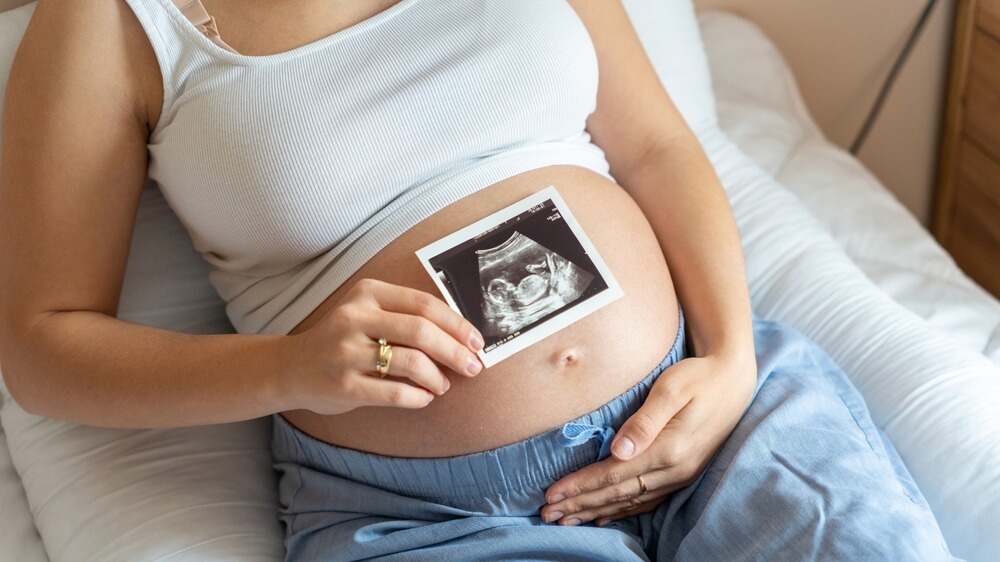
The examination programme of the Parent-Child Health Record (EKP) includes five gynaecological examinations of the mother prior to birth. These include three mandatory ultrasound scans, two laboratory tests and a general medical check-up. In addition, it has recently become possible to make use of a midwife consultation.
After the birth, ten check-ups for the child are provided for. In addition to general health checks, these also cover specialist areas such as orthopaedics, ear, nose and throat medicine, and ophthalmology.
Are EKP check-ups compulsory or voluntary?
EKP check-ups are generally voluntary; however, they are linked to the receipt of the childcare allowance. In order to receive the full amount of this allowance, proof of the first ten Parent-Child Pass check-ups must be provided to the relevant social security provider.
At what ages do the check-ups take place?
The first five EKP check-ups take place before the child is born. The first check-up is scheduled by the end of the 16th week of pregnancy; further check-ups take place during the course of the pregnancy, including an ultrasound scan between the 18th and 22nd weeks of pregnancy.
After the birth, ten check-ups for the child are scheduled. These take place from the first week of life up to the 62nd month of life.
What is assessed during each of the child’s check-ups?
| Check-up | Period | Programme |
|---|---|---|
| 1 | First week of life | -Measurement of body weight and height-Collection of observations from the parents/one parent and a medical history-Medical examination of the child-Assessment of the need for further investigations |
| 2 | Weeks 4–7 |
-Measurement of weight and height-Collection of observations from the parents/one parent and medical history-Medical examination of the child-Orthopaedic examination-Assessment of the need for further investigations |
| 3 | 3rd–5th month of life | -Measurement of body weight and height-Collection of observations from the parents/one parent and a medical history-Medical examination of the child-Assessment of the need for further investigations |
| 4 | 7th–9th month of life |
-Measurement of weight and |
| 5 | 10–14 months | -Measurement of weight and height-Collection of observations from the parents/one parent and a medical history-Medical examination of the child , including an eye examination-Assessment of the need for further investigations |
| 6 | 22–26 months | -Measurement of body weight and height-Collection of observations from the parents/one parent and a medical history-Medical examination of the child-Eye examination by a specialist in ophthalmology and optometry-Assessment of the need for further investigations |
| 7 | 34–38 months | -Measurement of body weight and height-Collection of observations from the parents/one parent and a medical history-Medical examination of the child-Assessment of the need for further investigations |
| 8 | 46–50 months | -Measurement of body weight and height-Collection of observations from the parents/one parent and a medical history-Medical examination of the child-Assessment of the need for further investigations |
| 9 | 58–62 months | -Measurement of body weight and height-Collection of observations from the parents/one parent and a medical history-Medical examination of the child-Assessment of the need for further investigations |
There are also a tenth and eleventh check-up:
- The 10th check-up, at 7–8 years of age, assesses motor development and behaviour.
- The 11th check-up, at 9–10 years of age, assesses school performance, social development and behaviour, and also includes advice on nutrition, sport, stress and media.
What check-ups are carried out immediately after birth?
The most important check-ups immediately after birth assess the newborn’s vital signs as quickly as possible and are designed to detect rare but serious congenital conditions at an early stage.
These include:
- 1. EKP examination (in the delivery room):
- APGAR test: Immediate assessment of vital functions such as breathing, heart rate and reflexes
- Measurements and checks: recording of weight, height and head circumference
- In the first few days of life (as part of the Parent-Child Health Record):
- Extended newborn screening: Heel prick blood test for the early detection of rare metabolic disorders
- Hearing screening: Examination for the early detection of hearing impairments
Junior Health Check (from school age)
The Junior Health Check is available free of charge once a year to all children and young people aged between six and 17. The aim is to identify health risks at an early stage and to raise health awareness.
In addition to general physical examinations, there is a focus on preventive measures to address lack of physical activity, unhealthy eating habits, impaired lung function, as well as allergies and substance use (e.g. alcohol, cigarettes). The health check also aims to provide support during key developmental stages, such as starting school or puberty.
The adolescent health check-up (ages 15–17)
The adolescent health check supports preventive healthcare for young people, many of whom already suffer from health issues such as poor posture, dental problems or visual impairments. The aim of the check-up is not only the early detection of diseases, but also to provide important information and health-promoting advice.
The check-up is free of charge, can be carried out once a year and takes place during a confidential consultation with a doctor.
School medical examinations
In addition to private preventive check-ups, there is a statutory school medical examination for all pupils once a year. This is carried out by a school doctor directly at the school. During the examination, the pupil’s readiness for school is assessed, general health checks are carried out and advice is provided. Parents may be present during the examination if they wish.
Who covers the costs of preventive medical check-ups?
The costs of preventive medical check-ups are covered once a year by the relevant social insurance scheme (e.g. ÖGK or SVS) for everyone living in Austria. The check-up can be carried out by doctors with a relevant preventive medical check-up contract or at the social insurance health centres.
How can parents prepare their child for check-ups?
Parents play a crucial role in preparing their child for check-ups. They can help alleviate any fears and ensure their child is well prepared for the check-up:
- Open conversation: Explain honestly what will happen, without causing fear. Emphasise that the check-up is important and usually over quickly.
- Playful practice: Play ‘doctor’ at home (especially with very young children) or read suitable books.
- Truth rather than lies: Do not promise that vaccinations will be pain-free, but reassure your child that it will only hurt for a moment.
- Build trust: Take a cuddly toy or other toy with you and stay calm. Your calmness will rub off on your child.
- Documents and clothing: Have your child’s vaccination record, health check-up booklet and e-card ready. Dress your child in comfortable clothes that are easy to take off.
- Make a note of questions: Write down any observations or questions you have for the doctor in advance.
What are the limitations of routine check-ups?
Routine check-ups are an important tool for maintaining good health. However, they do have certain limitations:
- False results: Test results can be false-positive or false-negative.
- Overdiagnosis and overtreatment: Sometimes conditions are detected and treated that would never have caused any symptoms.
- No guarantee: Screening tests can reduce the risk of certain conditions, but they do not offer 100 per cent certainty. Conditions can also develop between two screening appointments or go unnoticed
- Mental strain: The wait for results can be associated with worry and stress.
This means that whilst there are minor risks, such as unnecessary worry or treatment, the benefits of screening outweigh these risks in most cases.





