
What is thrombocytosis?
Thrombocytosis means that there are too many thrombocytes in the blood. Thrombocytes are blood platelets. They help the body to stop bleeding and play a part in haemostasis and blood clotting.
An elevated platelet count simply indicates that more platelets have been detected than is expected within the reference range. The figure alone does not provide a definitive explanation as to why this is the case. Often, the body is reacting to some other stressor, such as an infection, inflammation, blood loss, an operation or iron deficiency.
Less commonly, the cause lies in the bone marrow itself. In such cases, the body continuously produces too many platelets. A distinction is also made between primary (essential) and secondary (reactive) thrombocytosis.
When is a condition classified as thrombocytosis?
Thrombocytosis is diagnosed when the platelet count is above the reference range. A value of more than 450,000 platelets per microlitre of blood is often used as the cut-off point. However, the specified normal range may vary slightly depending on the laboratory.
A slightly elevated count is not automatically dangerous. What matters is whether the count is only temporarily elevated – for example, following an infection or an operation – or whether it persists during follow-up tests. The level of the count, other blood test results and any symptoms also play a role.
Platelet counts above 600,000 per microlitre of blood are usually clinically significant. Significantly elevated or persistently elevated platelet counts should be assessed by a doctor. The doctor will then investigate whether there is a reactive cause, such as inflammation, iron deficiency or blood loss, or, more rarely, whether a bone marrow disorder is the underlying cause.
What symptoms can occur with elevated platelet counts?
Elevated platelet counts often do not cause any direct symptoms, but are only noticed when a complete blood count is carried out. If symptoms do occur, they are often related to the underlying cause, such as an infection, inflammation, iron deficiency or another underlying condition.
In some cases, where platelet levels are severely or persistently elevated, symptoms may occur that are linked to circulatory problems or changes in blood clotting.
These include, for example:
- Headaches
- Dizziness
- Visual disturbances
- Tinnitus
- Calf cramps
- Night sweats
It is important to note that such symptoms can have many possible causes. They do not automatically indicate the presence of thrombocytosis. However, they should be assessed by a doctor if platelet counts are significantly elevated, the symptoms are new, or other blood test results are abnormal.

What causes elevated platelet counts?
Elevated platelet counts can have various causes. Often, the underlying cause is not a disorder of blood formation itself, but rather the body’s reaction to another process. Less commonly, the cause lies in the bone marrow, where platelets are produced.
Secondary (reactive) thrombocytosis
Most cases of thrombocytosis are secondary. This means that the platelet count does not rise because of a disorder in blood formation itself, but rather as a reaction to another process in the body.
This increase in platelet count is often temporary. It can occur, for example, in cases of acute infection, following bleeding, after surgery, in cases of iron deficiency or during pregnancy. Certain medicines, such as glucocorticoids or erythropoietin, can also affect the platelet count.
However, secondary thrombocytosis may also persist for longer if it is caused by an underlying chronic condition. These include chronic inflammatory conditions such as rheumatoid arthritis, inflammatory bowel disease, sarcoidosis, tuberculosis or certain types of vasculitis. Tumours, a removed spleen or impaired spleen function may also be associated with elevated platelet counts.
Primary (essential) thrombocytosis
Less commonly, the cause of elevated platelet counts lies directly in the bone marrow. In such cases, the body continuously produces too many platelets without there being a reactive cause such as an infection, iron deficiency, blood loss or inflammation. This is referred to as primary thrombocytosis.
One important form is essential thrombocythaemia. It is classified as a myeloproliferative neoplasm. These are conditions in which the bone marrow produces excessive numbers of certain blood cells. In essential thrombocythaemia, this primarily affects the platelets. The platelet count rises uncontrollably.
If there are too many platelets, the risk of blood clots increases. However, it is also possible for those affected to be prone to bleeding despite an elevated platelet count, particularly if the platelet count is very high or if their function is impaired.
A blood count alone cannot reliably determine whether primary thrombocytosis is present. It is important first of all to rule out reactive causes. If the count remains significantly elevated over the long term or if there is no obvious explanation, further investigation by a haematologist may be advisable. Depending on the situation, this may require additional blood tests, genetic tests or a bone marrow examination.
Treatment depends on the individual’s risk profile. Factors such as age, symptoms, a history of thrombosis, a tendency to bleed and the platelet count all play a role. Some patients initially only need regular check-ups, whilst others require medication to reduce the risk of blood clots or to inhibit platelet formation.
Elevated platelet levels due to iron deficiency
Iron deficiency can be a cause of an increase in the platelet count in the blood. In such cases, it is usually a form of secondary thrombocytosis.
It is not yet fully understood why iron deficiency can lead to elevated platelet levels. However, research at the Medical University of Vienna shows that iron deficiency can stimulate platelet production and may be linked to an altered tendency to clot. This link has been investigated in particular, amongst others, in people with chronic inflammatory bowel diseases, where blood and iron loss may play a role.
Blood tests often reveal not only elevated platelet counts but also signs of iron deficiency or iron-deficiency anaemia, such as low ferritin levels or abnormal red blood cell counts. It is therefore important to consider not only the platelet count but also iron status.
The cause of the iron deficiency should also be investigated. Possible causes include, for example, heavy menstrual bleeding, blood loss in the gastrointestinal tract, a diet low in iron, or an increased need for iron. Iron supplements should not simply be taken on suspicion alone. It is advisable to seek medical advice based on laboratory results.
Once the iron deficiency has been treated, the platelet count may return to normal. If the levels remain elevated despite iron levels being balanced, further investigation is needed to determine whether there is another underlying cause.

Should you be concerned about thrombosis if your platelet count is high?
Not every case of thrombocytosis automatically increases the risk of thrombosis. Platelet counts are often only temporarily elevated, for example in cases of infection, inflammation, iron deficiency, following blood loss or after surgery. In such cases, the condition is referred to as reactive or secondary thrombocytosis.
With reactive thrombocytosis, the risk of blood clots is usually significantly lower than with primary forms. However, the overall picture is crucial: how high is the count? Does it remain elevated over a prolonged period? Are there any other risk factors such as smoking, high blood pressure, vascular disease, a history of thrombosis or chronic inflammation?
The situation is different in the case of primary thrombocytosis, for example in essential thrombocythemia. In this condition, the bone marrow continuously produces too many platelets. Here, the risk of thrombosis may be increased, depending on age, pre-existing conditions, previous vascular events and other blood test results. Thrombosis is one of the most common complications of primary thrombocytosis.
It is therefore important to note that an elevated platelet count on its own does not constitute a diagnosis and is no cause for panic. However, it should be assessed by a doctor if it is significantly elevated, persists during follow-up checks, or is accompanied by symptoms. Prompt medical attention is essential if there are any signs of thrombosis, such as swelling in one leg, chest pain, shortness of breath, sudden visual disturbances, speech difficulties or signs of paralysis.
How is thrombocytosis diagnosed?
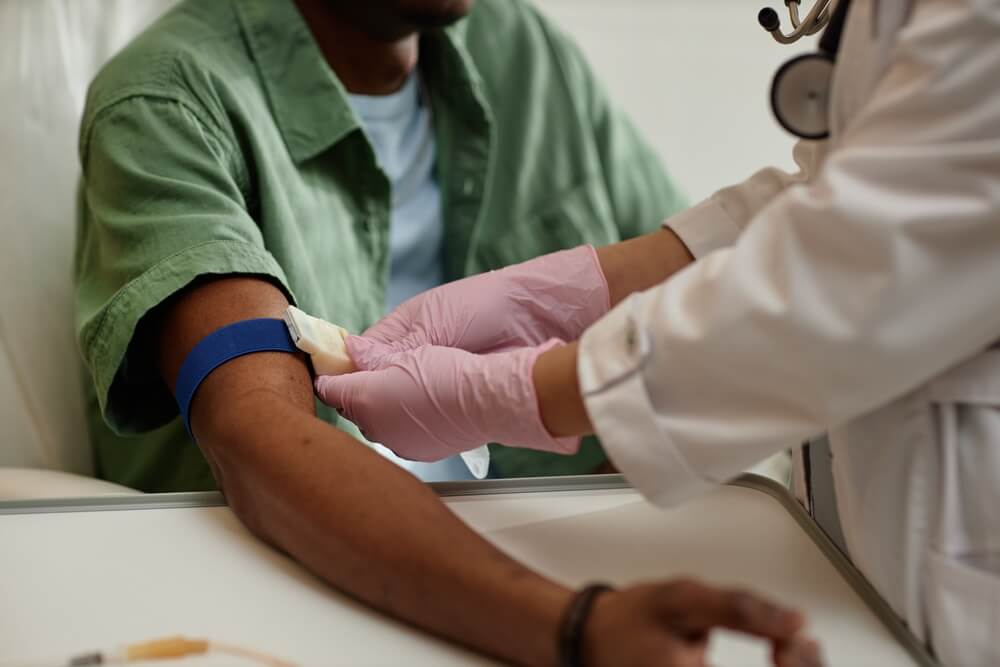
If platelet counts are elevated, the result is first assessed in the context of the full blood count. A single elevated platelet count should generally be verified by taking a further blood sample. This allows doctors to check whether the level remains elevated or was only temporarily so.
Basic diagnostic tests usually include a complete blood count with a differential count, as well as markers of inflammation such as CRP. This involves examining not only the platelets, but also red and white blood cells, haemoglobin and other blood count parameters. This makes it easier to determine whether only the platelet count is elevated or whether there are other abnormalities.
It is particularly important to investigate reactive causes. These include, for example, infections, inflammation, iron deficiency, blood loss, surgery, injuries, impaired spleen function or tumours. Iron status should also be checked, as iron deficiency can be a common cause of elevated platelet counts.
If the platelet count remains persistently elevated or if no obvious reactive cause can be identified, further investigation is advisable. This allows for an assessment of whether primary thrombocytosis is present, such as essential thrombocythemia.
Further diagnostic investigations are often carried out by specialists in haematology and oncology. Depending on the situation, additional laboratory tests, genetic tests, cytogenetic analyses or a bone marrow examination may be necessary. The appropriate steps to take depend on the overall clinical picture.
How is thrombocytosis treated?
How thrombocytosis is treated depends primarily on the cause. Treatment therefore focuses not on the elevated count in the blood test, but on the underlying condition or situation.
In the case of reactive or secondary thrombocytosis, the focus is on the underlying cause. If, for example, an infection, inflammation, blood loss or iron deficiency is responsible, treatment is tailored accordingly. The platelet count often returns to normal as soon as the underlying cause subsides or is specifically treated.
In the case of primary thrombocytosis, such as essential thrombocythemia, treatment is determined by the individual’s risk and the severity of the condition. Factors such as age, symptoms, a history of thrombosis, signs of bleeding and the platelet count all play a role. Some patients initially require only regular monitoring and no further treatment. In other cases, low-dose blood thinners may be used to reduce the risk of blood clots.
It is important to note that medicines such as ASA (acetylsalicylic acid) or other anticoagulants should not be taken without medical advice simply because platelet levels are elevated. Whether treatment is necessary and which course of treatment is appropriate should always be decided by a doctor.
Thrombocytosis: What complications can arise?
Thrombocytosis does not always lead to complications. Particularly in the case of reactive or secondary thrombocytosis, the risk of blood clots or bleeding is usually lower than with primary forms. The count often returns to normal once the underlying cause has been treated or has subsided.
If platelet counts remain persistently high, the risk of circulatory disorders or blood clots may increase.
Possible consequences include, for example:
- thrombosis
- Strokes
- Heart attacks
However, the risk depends not only on the platelet count, but also on the cause, age, pre-existing conditions, previous episodes of thrombosis and other risk factors such as smoking, high blood pressure or vascular disease.
Can elevated platelet counts be prevented?
There is only limited scope for preventing elevated platelet counts. Thrombocytosis often develops as a reaction to other processes in the body, such as an infection, inflammation, blood loss, iron deficiency or surgery. In such cases, the focus is not on the platelet count itself, but on the underlying cause.
Above all, it is advisable to ensure that any known underlying conditions are properly managed and to have any abnormal blood test results monitored. This also includes having a possible iron deficiency assessed by a doctor and treated appropriately. Iron supplements should only be taken if there is actually a deficiency.
A healthy lifestyle can support vascular health, but does not guarantee the prevention of thrombocytosis. This includes regular exercise, not smoking, a balanced diet and the management of risk factors such as high blood pressure or elevated blood lipid levels. If platelet counts are significantly elevated or remain high during follow-up checks, this should be assessed by a doctor.





