Summary
Pneumococcal vaccination
Definition: Inactivated vaccine against the most common strains of pneumococci
Dosage: Children: 3 doses; adults: 2 doses
Recommended for: all children and adults aged 60 and over, or aged 50 and over if they are at increased risk; regardless of age in cases of high risk
Contraindications: Hypersensitivity to the active substances or other components of the vaccine, as well as severe febrile illnesses
Cost: free or approx. 100 euros
What are pneumococci?
Pneumococci are bacteria of the genus Streptococcus pneumoniae, of which there are many strains, and which colonise the nasopharyngeal cavity. They are transmitted via droplet infection – a sneeze or a cough is enough to spread them from person to person. These bacteria are transmitted via droplet infection, which means they can be passed from person to person through coughing, sneezing or close physical contact. Pneumococci can cause serious illnesses. Not every exposure to pneumococci leads to illness, but there are certain risk groups that are particularly vulnerable. These include babies and young children, whose immune systems are not yet fully developed, and people with a weakened immune system.
What illnesses are caused by pneumococci?
Pneumococci are responsible for a wide range of illnesses, including:
- Pneumonia: The most common symptoms of pneumonia are a high fever, a cough and shortness of breath. It can progress very rapidly and, in some cases, prove fatal. Furthermore, the bacteria may spread throughout the body, which can lead to blood poisoning (sepsis) or inflammation of the heart lining (pericarditis).
- Acute middle ear infection: Middle ear infections occur mainly in children and can lead to serious complications such as meningitis or cerebral venous thrombosis.
- Acute purulent meningitis: Meningitis can lead to high fever, headaches, nausea, vomiting, impaired consciousness, convulsions and loss of consciousness, and may even result in death. Long-term effects such as deafness, brain damage or paralysis are relatively common.
- Sinusitis: This condition is characterised by a runny nose, a blocked nose, and pain in the face and head.
- Endocarditis: Endocarditis causes a high fever, chills, weakness, a rapid heartbeat, and muscle and joint pain, and can progress to altered consciousness, heart and kidney failure, and organ failure.
- Peritonitis: This condition is accompanied by severe abdominal pain, a distended abdomen, fever, nausea and loss of appetite. It can also lead to circulatory problems, rapid breathing or an increased heart rate.
- Arthritis: This form of arthritis involves painful, inflammatory processes within the joint.
Who is at increased risk of a severe pneumococcal infection?
The following groups are particularly at increased risk of developing a severe pneumococcal infection:
- Children under the age of two: In this age group, the immune system is not yet fully developed, which increases susceptibility to infections.
- Older people: As people age, the efficiency of the immune system declines, making older people particularly susceptible to serious illnesses.
- People with weakened immune systems: People with chronic illnesses, those undergoing immunosuppressive therapy, or those with other conditions that weaken the immune system also belong to the high-risk groups for severe pneumococcal infections.
What is the pneumococcal vaccination?
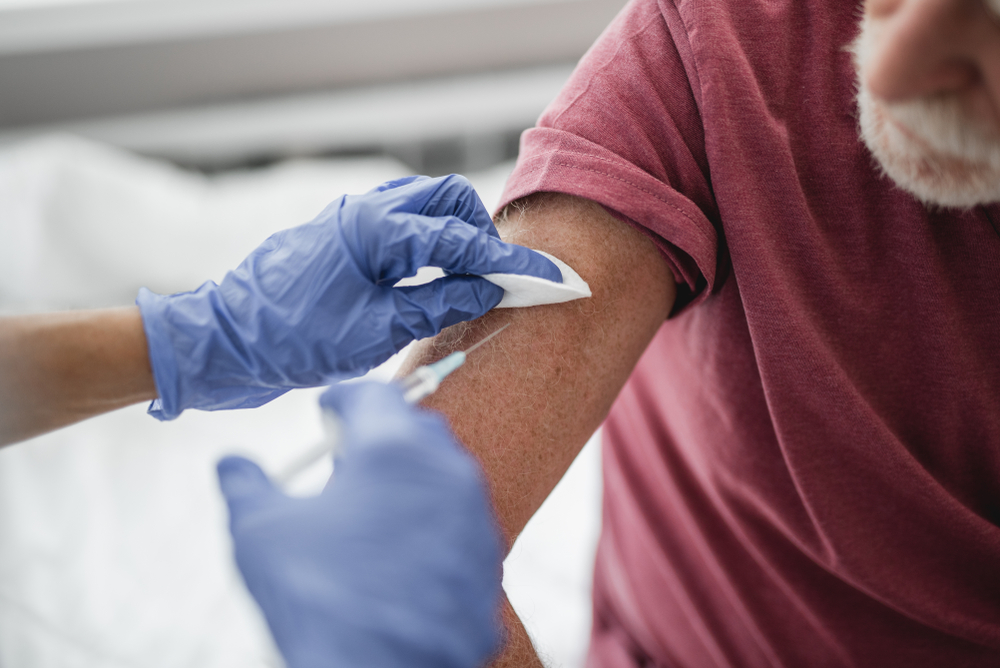
The pneumococcal vaccine is an inactivated vaccine against the most common strains of pneumococcus. It reduces the risk of contracting a pneumococcal disease by up to 90 per cent.
What vaccines are available, how do they differ and how do they work?
There are two vaccines available against pneumococci:
- Polysaccharide vaccines: These vaccines target the most common serotypes of pneumococci and contain the pathogen’s antigen. They have been in use for some time.
- Conjugate vaccines: These are newer vaccines in which a part of the pathogen that triggers antibody production is bound to a protein; the protein acts as a carrier and triggers a stronger immune response. These vaccines were developed primarily for children, as their immune systems do not initially respond adequately to vaccines that contain only the pathogen’s antigen.
How often and when is the pneumococcal vaccine administered?
Ideally, children are vaccinated three times. The first dose is given at three months of age, followed by a second dose at five months and a third dose between 12 and 14 months of age.
A two-dose vaccination is recommended for adults over 60 and people at increased risk of pneumococcal disease. The doses are administered one year apart. In addition, individual booster doses may be required; the need for these and the timing should be determined by the treating doctor.
Who should be vaccinated?
In general, the pneumococcal vaccination is recommended for all children and adults aged 60 and over. People aged 50 and over should also be vaccinated if they are at increased risk.
People at high risk: Regardless of age, the vaccination is particularly important for people with higher health risks. These include people with spleen problems, immune deficiencies, HIV infection, those who have undergone organ or stem cell transplants, and people suffering from chronic lung diseases.
Adults: For healthy adults, the vaccine is recommended from the age of 60. For people at increased risk – such as those who smoke, have high blood pressure or subchronic bronchitis – the recommendation applies from the age of 50.
Babies and children: As children are particularly at risk of developing severe pneumococcal disease during their first two years of life, they should be vaccinated. The first dose should be given at three months, the second at five months and the third between 12 and 14 months of age to ensure optimal protection.
What are the possible side effects?
The following side effects may occur after the pneumococcal vaccination:
- Local reactions at the injection site, such as pain or swelling
- Swelling of the regional lymph nodes
- Fever
- Fatigue
Serious side effects, including seizures or facial swelling, are extremely rare.
How much does the pneumococcal vaccination cost?
The pneumococcal vaccination is included in the free childhood vaccination programme for children up to their second birthday. Children at particularly high risk receive the vaccination free of charge up to their fifth birthday. For everyone else, the pneumococcal vaccination costs around 100 euros.
The costs for the pneumococcal vaccination are structured as follows:
- For children up to the age of two, the vaccination is part of the free childhood vaccination programme.
- Children at particularly high risk also receive the vaccination free of charge until they reach the age of 5.
- For everyone else, the cost of the pneumococcal vaccination is around 100 euros, plus a vaccination fee.
Where can you get vaccinated?
You can have the vaccination administered by paediatricians or GPs in private practice, or at public vaccination centres.
Where can you find further information on the pneumococcal vaccination?
Further detailed information on the pneumococcal vaccination can be found, for example, in the Austrian Immunisation Schedule:
https://www.sozialministerium.at/Themen/Gesundheit/Impfen/Impfplan-Österreich.html
FAQ
According to vaccination experts, the pneumococcal vaccine can be administered alongside other inactivated vaccines. However, this may cause stronger reactions to the vaccine.
Local reactions at the injection site, fever, irritability, loss of appetite and sleep disturbances are common but harmless reactions to vaccination in babies.
Any suspected serious side effects can be reported to the vaccinating doctor or to the Federal Office for Health Safety (BASG). In Austria, all suspected cases are recorded by the BASG.
Yes, because the pneumococcal vaccine is an inactivated vaccine that does not contain any infectious material capable of replicating; it cannot therefore cause the infectious disease that the vaccine is designed to prevent, and can thus be administered during pregnancy.


Gesenhues S and A: A Practical Guide to General Practice. 9th edition, Urban & Fischer 2020.
Federal Ministry of Social Affairs, Health, Care and Consumer Protection: Austrian Immunisation Schedule 2023 (Version 1.1 of 23 December 2022)
https://www.sozialministerium.at/Themen/Gesundheit/Impfen/Impfplan-Österreich.html, accessed January 2024
https://www.ages.at/mensch/krankheit/krankheitserreger-von-a-bis-z/pneumokokken?mdrv=www.ages.at&cHash=e9f2c12482c3141174cac7b30c268a51, accessed January 2024
https://www.rki.de/DE/Themen/Infektionskrankheiten/Impfen/Impfungen-A-Z/Pneumokokken/pneumokokken-node.html, accessed January 2024
Pletz M et al: Pneumococcal vaccines, Internist (Berl). 2021; 62(8): 807–815.
https://www.ncbi.nlm.nih.gov/pmc/articles/PMC8274268/, accessed January 2024
https://www.medmedia.at/aerzte-krone/neue-empfehlungen-zur-pneumokokken-impfung/, accessed January 2024
https://www.rund-ums-impfen.at/kleinkinder-impfungen/pneumokokken-impfung/, accessed January 2024
Treatment of pneumonia