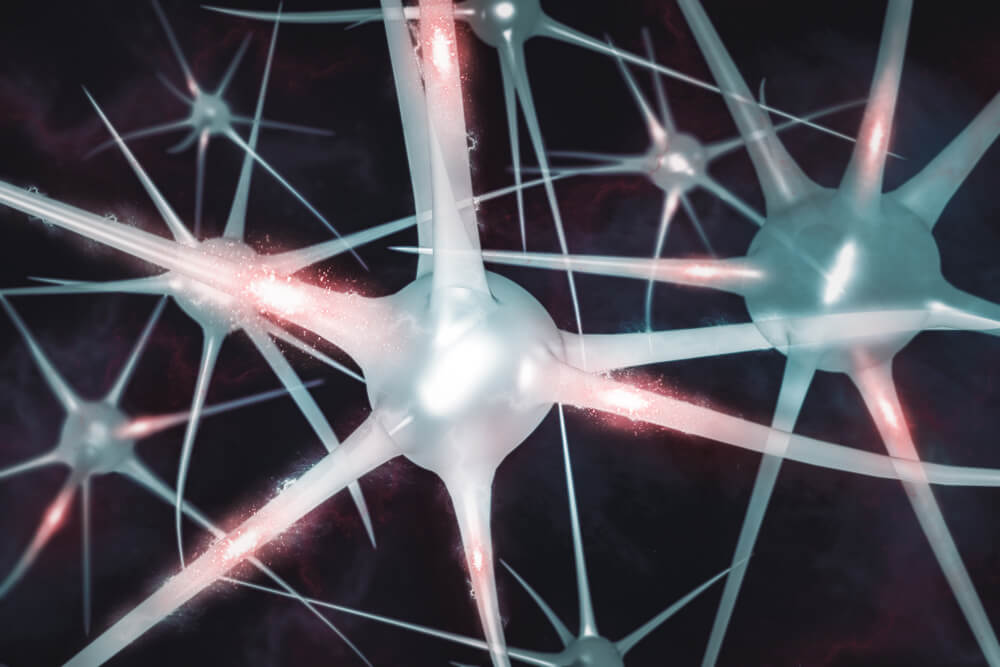
Nerve cells are long-lived, but in the case of neurodegenerative diseases such as amyotrophic lateral sclerosis (ALS) or frontotemporal dementia (FTD), they are no longer able to regenerate. The clumping of proteins in the cell nucleus plays a central role in the development of such diseases. Researchers at the Medical University of Graz, together with international colleagues, have identified a mechanism that normally prevents the disease-causing clumping of RNA-binding proteins.
In many neurodegenerative diseases, pathological protein deposits form in the cell nucleus of nerve cells, triggering the death of these cells. The result is a gradual impairment of physical and mental abilities. In cases where ALS and FTD are genetically determined, so-called DPR proteins (dipeptide repeat proteins) are formed through the duplication of hexanucleotide repeats in the C9orf72 gene. The research team investigated whether these aggregation-prone DPR proteins can be protected from clumping by the body’s own proteins, specifically importin proteins.
Their investigations into these endogenous nuclear import receptors demonstrate that such proteins can indeed prevent the clumping of DPR proteins and neutralise their toxic effects. “We found this discovery fascinating, and it could have therapeutic implications, as it suggests that therapeutics bearing similarities to import proteins could be promising for the treatment of ALS and FTD,” explained Tobias Madl of MedUni Graz. However, it will likely take several more years to develop new therapeutics.
References:
MedUni Graz; LMU, Munich; University of Pennsylvania; DZNE, Munich; University of Zurich
“Nuclear Import Receptors Directly Bind to Arginine-Rich Dipeptide Repeat Proteins and Suppress Their Pathological Interactions”, Cell Reports 2020, 33:12
https://www.sciencedirect.com/science/article/pii/S2211124720315278